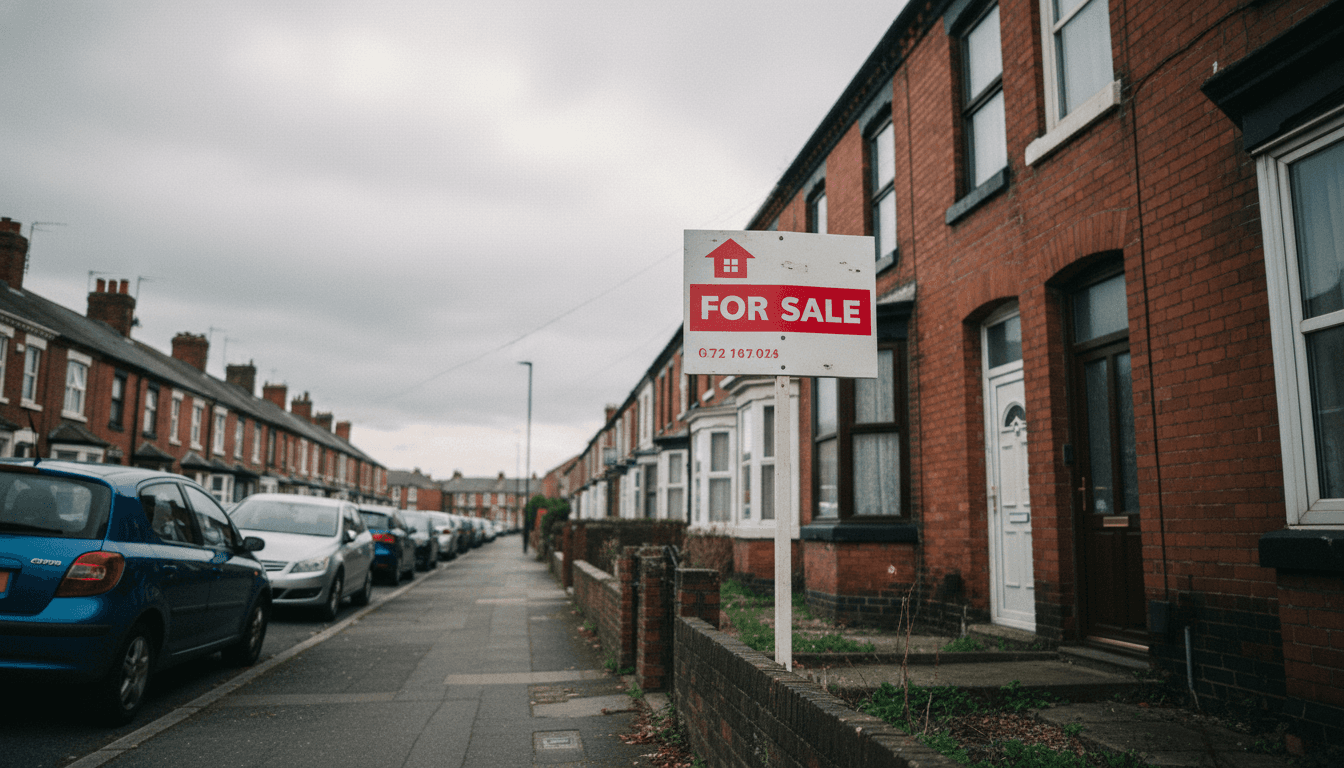
The UK housing market posts monthly price fall, a significant development reported on Monday, June 1, 2026, as rising mortgage rates exert downward pressure on property values. This marks a notable shift in the country’s real estate landscape, signaling a potential cooling period after what has been a tumultuous few years for homebuyers and sellers alike.
The Traders Union report on June 1, 2026, explicitly states that the UK housing market experienced a monthly price fall. This decline is directly attributed to an increase in mortgage rates, a factor that invariably impacts affordability and buyer demand. While the specific percentage of the price fall or the extent of the mortgage rate hike was not detailed, the report’s emphasis on a ‘monthly price fall’ indicates a measurable and recent contraction in property values across the UK.
Impact Analysis of UK Housing Market Posts Monthly Price Fall
The immediate impact of the UK housing market posts monthly price fall is a potential re-evaluation for both prospective buyers and current homeowners. For buyers, particularly first-time purchasers, this could present an opportunity for improved affordability, assuming the rise in mortgage rates does not completely offset the price reductions. However, higher borrowing costs might still deter some, leading to a more cautious market. For existing homeowners, especially those on variable-rate mortgages or looking to remortgage soon, the combination of falling property values and increased interest payments could create financial strain. This shift could also affect developer confidence and new housing starts, as a softer market might reduce the incentive for large-scale projects.
This development has broader implications for the UK’s economic stability. The housing market is a significant component of the national economy, influencing consumer spending, construction employment, and financial sector health. A sustained period of price falls, coupled with rising interest rates, could lead to a broader economic slowdown. Conversely, a managed correction could help to cool an overheated market and bring prices more in line with long-term affordability metrics.
Context & Background
The UK housing market has navigated a complex path over recent years, characterized by periods of rapid appreciation driven by low interest rates, government incentives, and a persistent supply-demand imbalance. The post-pandemic era, in particular, saw a surge in demand for larger homes and properties outside urban centers, further inflating prices. However, global inflationary pressures have prompted central banks, including the Bank of England, to increase interest rates in an effort to curb rising costs. These rate hikes inevitably filter through to mortgage products, making borrowing more expensive.
Prior to this report, many analysts had been anticipating a cooling period, with some forecasting modest price corrections. The current monthly price fall, as reported by Traders Union, suggests that these predictions are now materializing. This aligns with broader industry trends where central bank policies are beginning to have a tangible effect on asset markets, including real estate. For further insights into market dynamics, readers can explore related real estate articles on our platform, which frequently cover the interplay between interest rates and property values.
“The interplay between rising mortgage rates and property values is a fundamental dynamic in any housing market, and the UK is currently experiencing a classic demonstration of this economic principle. A monthly price fall, while potentially concerning for some, could be a necessary recalibration.”
What’s Next
Looking ahead, the UK housing market is likely to remain under scrutiny. Key indicators to watch include future decisions by the Bank of England regarding interest rates, which will directly influence mortgage costs. Further rate hikes could exacerbate the monthly price fall, while a pause or reduction could stabilize the market. The volume of transactions, buyer sentiment surveys, and the availability of new housing stock will also be crucial in determining the market’s trajectory. Analysts will be closely monitoring whether this monthly price fall is an isolated event or the beginning of a more prolonged downturn. Economic forecasts will also play a role, with any signs of recession potentially dampening demand further.
The government’s housing policies, including any potential support for first-time buyers or initiatives to boost supply, will also be instrumental in shaping the market’s future. Developers may adjust their strategies, potentially delaying new projects or focusing on more affordable housing segments if the market continues to soften. The broader economic context, including inflation rates and employment figures, will provide the backdrop against which these real estate dynamics unfold.
Key Takeaway
The news that the UK housing market posts monthly price fall due to rising mortgage rates is a significant indicator of shifting economic realities. It underscores the sensitivity of property values to borrowing costs and signals a potential pivot from a seller’s market to one where buyers may gain more leverage. This development is not merely a statistical blip but a reflection of broader monetary policy impacts on everyday financial decisions, from homeownership to investment strategies. As mortgage rates continue to be a dominant factor, the coming months will reveal whether this monthly decline evolves into a sustained trend or a temporary market adjustment, significantly influencing the financial landscape for millions across the United Kingdom. For more detailed analysis on how global economic shifts affect local markets, readers can consult our in-depth real estate reports.