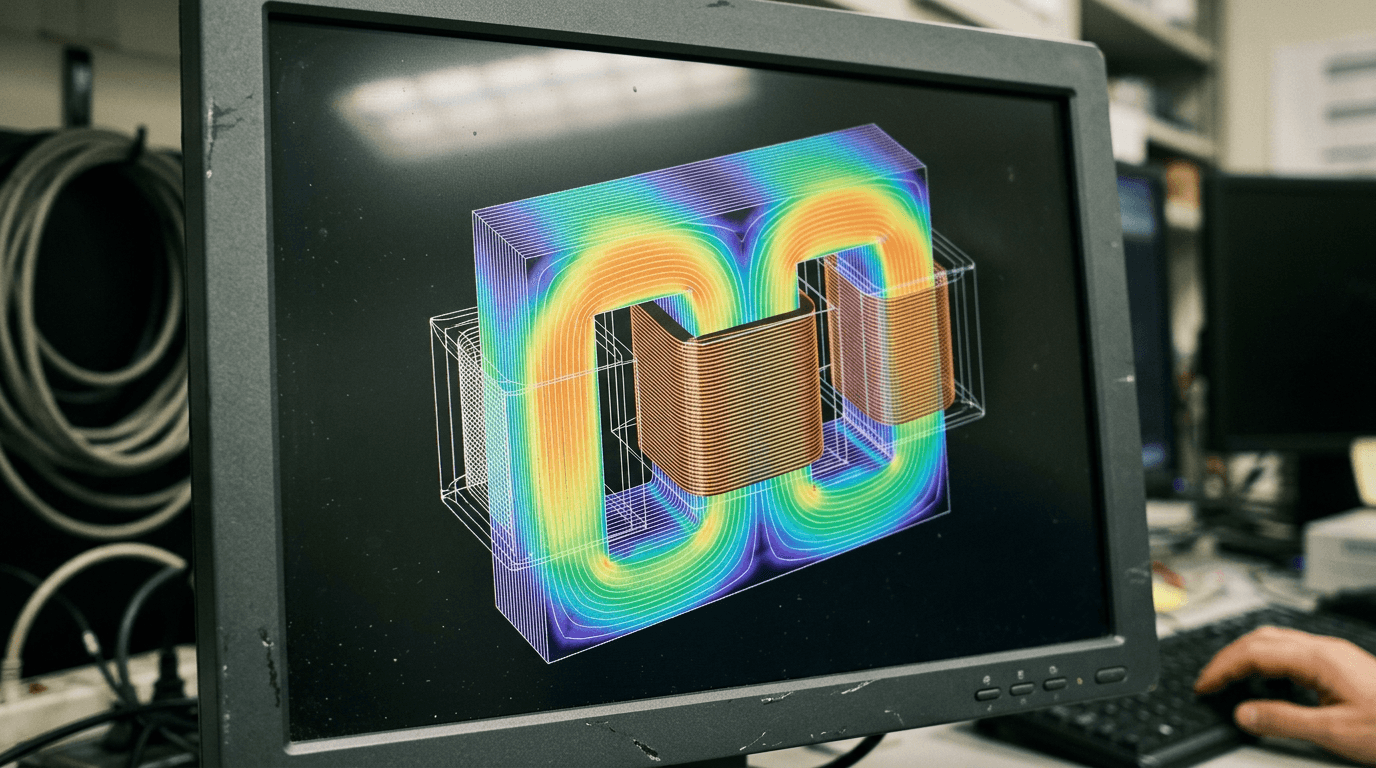
Transformer Harmonic Analysis serves as a cornerstone for modern industrial power systems, providing engineers with the data needed to prevent catastrophic failures before they occur. As the global energy landscape shifts toward more complex, non-linear loads, the ability to predict how high-voltage equipment will react under stress is no longer a luxury—it is a financial and operational necessity. By utilizing finite-element methodologies, operators can now visualize electromagnetic behavior with unprecedented precision, ensuring that the backbone of our electrical infrastructure remains resilient against the rising tide of harmonic distortion.
The integration of advanced modeling techniques represents a significant leap forward from traditional empirical testing. Historically, transformer performance was validated through physical prototypes, a process that was both time-consuming and prohibitively expensive. Today, the industry is pivoting toward a simulation-first approach. This shift allows for the assessment of magnetic field distribution and current behavior long before the first piece of copper is wound. For investors and stakeholders in the related Industries news sector, this transition translates to lower capital expenditures and a faster time-to-market for critical infrastructure projects.
“The ability to simulate transient states allows us to identify structural vulnerabilities that physical testing might miss, effectively de-risking the entire lifecycle of the asset.”
The Financial Impact of Predictive Modeling
From a senior financial perspective, the move toward digital twin technology in the power sector is a clear play for long-term margin protection. When a transformer fails in the field, the costs are not limited to the replacement of the unit; they include grid downtime, industrial production losses, and potential regulatory fines. By integrating Transformer Harmonic Analysis into the design phase, manufacturers can optimize the turns-ratio accuracy and material usage, ensuring that each unit is over-engineered for safety but lean in terms of production cost.
Solver configuration remains the most technical hurdle in this process. Engineers must balance the granularity of the finite-element mesh with the computational power required to process complex harmonic data. However, as cloud computing and specialized solvers become more accessible, even mid-sized utility providers are beginning to adopt these sophisticated analytical tools. This democratization of technology is leveling the playing field, allowing smaller players to compete with global energy giants in terms of grid reliability and service uptime.
How Transformer Harmonic Analysis Prevents Grid Failure
The primary value proposition of Transformer Harmonic Analysis lies in its ability to uncover saturation and imbalance within the transformer core. Harmonic distortion, often caused by the proliferation of renewable energy inverters and industrial electronics, can lead to localized overheating and insulation degradation. Through finite-element modeling, engineers can identify high-flux regions that are susceptible to these stresses. By visualizing the magnetic flux density in a virtual environment, they can adjust the core geometry or material specifications to mitigate these risks.
Furthermore, transient analysis allows for the simulation of sudden events, such as lightning strikes or switching surges. These events can create massive mechanical stresses within the transformer windings. Understanding how these forces distribute through the structure enables the design of more robust bracing and support systems. Consequently, leveraging Transformer Harmonic Analysis to identify flux imbalances ensures that the equipment can withstand the rigors of a modern, fluctuating power grid.
The Transition from Physical to Digital Testing
As we look toward the year 2026 and beyond, the reliance on physical testing will continue to wane. The accuracy of finite-element models has reached a point where result validation techniques are now as rigorous as the physical tests they replace. This digital transformation is not merely about convenience; it is about the ability to innovate at scale. New core materials and winding configurations can be tested in a virtual sandbox, allowing for rapid iteration that would be impossible in a physical laboratory.
The adoption of Transformer Harmonic Analysis represents a shift in the industry’s risk appetite. Rather than reacting to failures, the sector is moving toward a proactive stance of total asset awareness. This trend is particularly relevant as the world moves toward the electrification of everything, from heavy transport to heating systems. The demand on the grid will only increase, and the equipment serving that demand must be designed with the highest possible level of analytical scrutiny.
In conclusion, the future of Transformer Harmonic Analysis in smart grids is bright. By providing a detailed roadmap of electromagnetic behavior, these finite-element approaches allow for the creation of more efficient, durable, and cost-effective power components. For the financial world, this means more stable energy markets and a reduction in the unforeseen costs associated with infrastructure failure. As simulation technology continues to evolve, the gap between virtual modeling and real-world performance will close entirely, ushering in a new era of industrial precision.