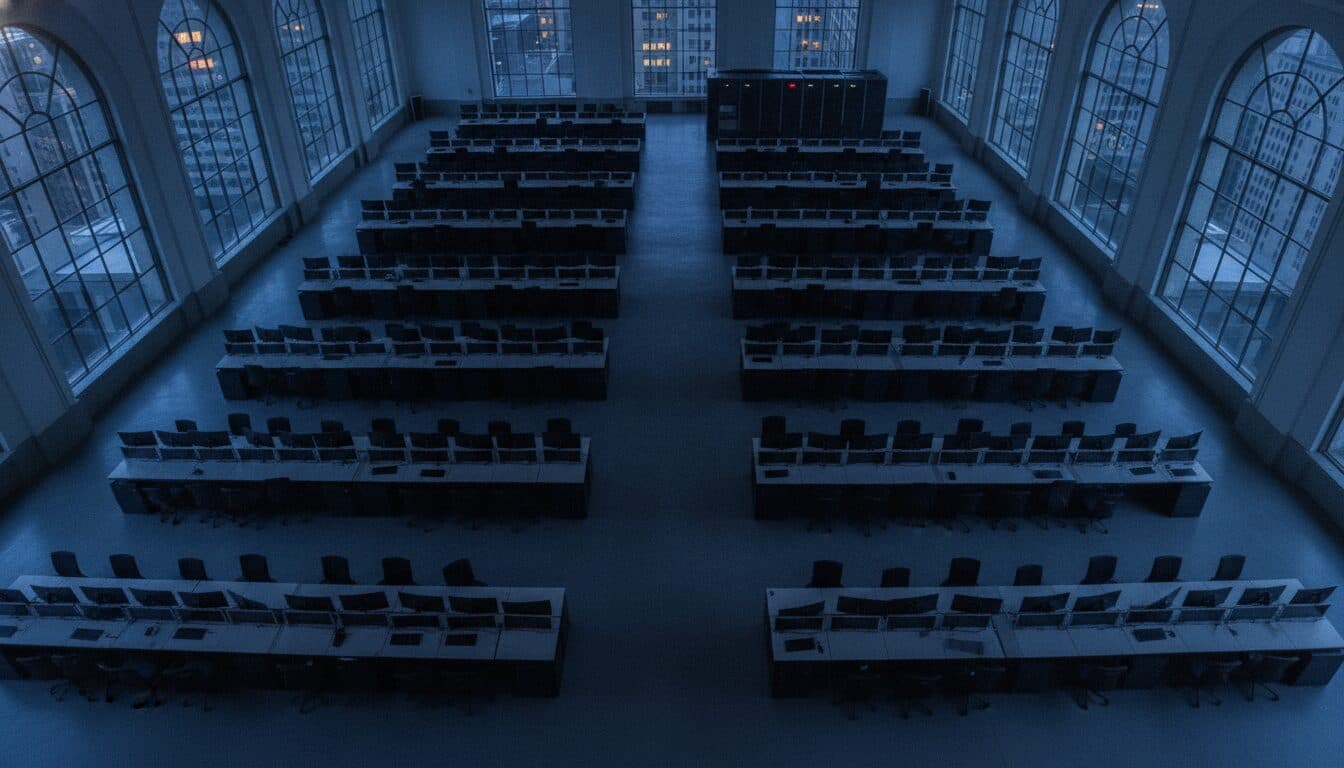
The Lathe of Heaven, Ursula K. Le Guin’s profound science fiction narrative, recently resurfaced for a new generation of viewers, featured on Naked Capitalism’s ‘The Sunday Morning Movie.’ This 1980 made-for-television film adaptation, running 1 hour and 37 minutes, offers a chilling exploration of power, ethics, and the unforeseen consequences of altering reality, themes that resonate deeply in today’s complex financial and social landscapes.
Directed by David Loxton and Fred Barzyk, with significant creative input from Le Guin herself, the film stars Bruce Davison as George Orr, a man whose dreams possess the terrifying ability to reshape the world. Kevin Conway portrays Dr. William Haber, an ambitious oneirologist who, upon discovering Orr’s unique gift, begins to exploit it for what he believes are benevolent purposes. Margaret Avery rounds out the main cast as Heather LeLache, a lawyer drawn into the escalating ethical dilemma. The teleplay, crafted by Roger Swaybill and Diane English, meticulously translates Le Guin’s intricate philosophical questions to the screen.
The Lathe of Heaven: A Visionary Sci-Fi Classic
At its core, The Lathe of Heaven delves into the perilous territory of human hubris. Dr. Haber, armed with his ‘Augmentor’ device, attempts to guide Orr’s dreams to ‘improve’ a world plagued by overpopulation and pollution. However, each intervention leads to catastrophic, often ironic, outcomes. A dream to solve overpopulation results in a devastating plague. An attempt to end conflict manifests an alien invasion, uniting humanity against a common foe. Even a seemingly benign effort to eradicate racism creates a world where everyone possesses gray skin, a stark visual metaphor for the flattening of identity.
“The film masterfully explores the philosophical conundrum of interfering with the natural order, a concept with striking parallels to the unintended consequences often seen in economic policy and market interventions.”
The narrative is set in a near-future Portland, Oregon, initially in 1998 and later 2002, a period where environmental decay and societal pressures mirror concerns we face today. The film, produced in 1979 and debuting on January 9, 1980, holds the distinction of being PBS’s first-ever made-for-television movie, a testament to its ambitious scope and the network’s commitment to speculative fiction.
PBS’s Pioneering Sci-Fi Endeavor
Produced as part of New York City public television station WNET’s Experimental TV Lab project, the directors aimed to carve out a niche for more sophisticated, artistically driven science fiction amidst a cinematic landscape dominated by blockbusters. Le Guin’s involvement, a condition for the adaptation, ensured a faithful translation of her novel’s complex themes. Despite a tight two-week shooting schedule and a modest $250,000 budget (significant for PBS at the time), the production achieved a remarkable depth, successfully conveying the author’s nuanced exploration of reality, power, and the human condition. For those interested in the financial underpinnings of cultural production, this project offers a fascinating case study in maximizing impact with limited resources, a common challenge in related Finance news.
Enduring Themes in a Modern Context
The enduring relevance of The Lathe of Heaven lies in its timeless questions about ethical responsibility and the limits of human intervention. As financial markets grapple with complex algorithms, AI-driven decisions, and global economic policies, the film’s cautionary tale about unintended consequences serves as a powerful reminder. It prompts reflection on whether well-intentioned efforts to ‘optimize’ or ‘improve’ can inadvertently lead to unforeseen disasters, a critical consideration for investors, policymakers, and anyone navigating the intricate web of modern finance.