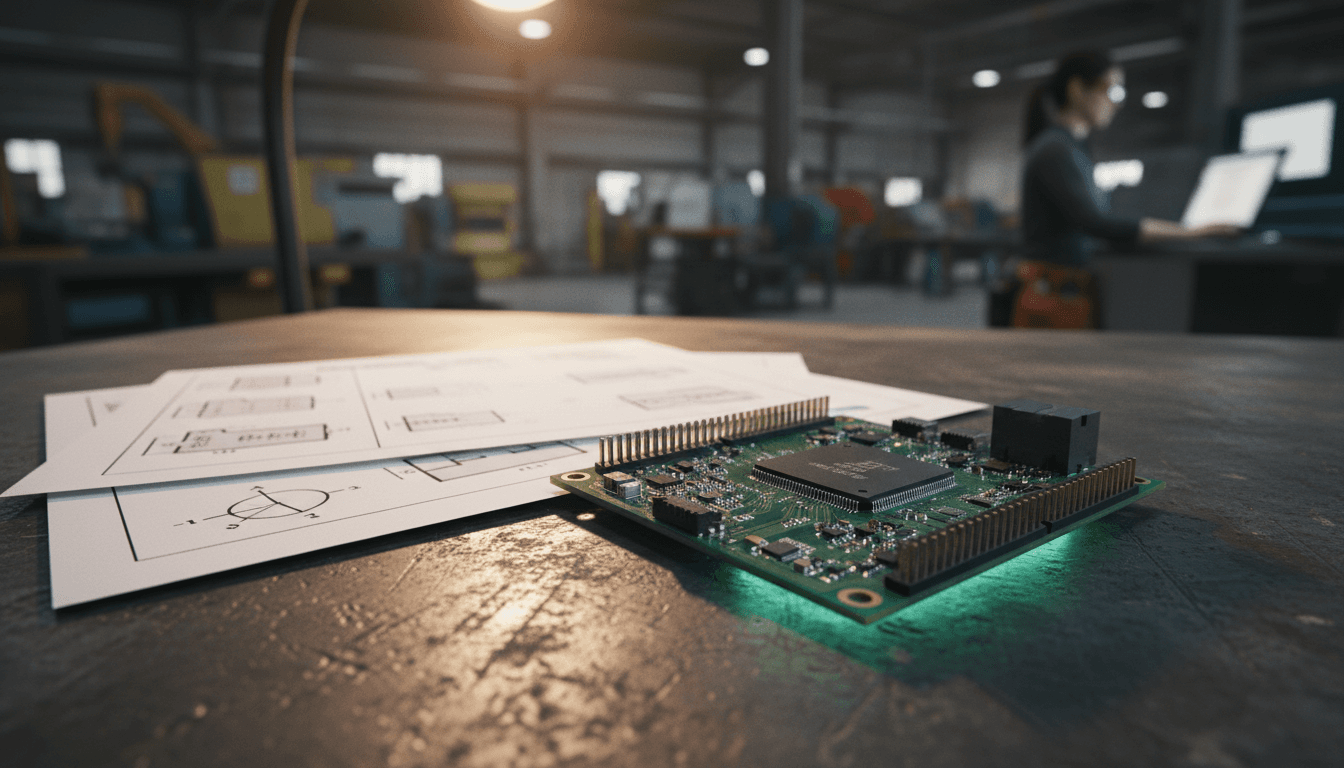
A ternary RISC processor achieves non-binary computing, marking a significant leap in computational architecture as detailed in a recent Hackaday article. Published on March 16, 2026, this innovative project introduces the 5500FP, a 24-trit balanced ternary RISC processor implemented on an Efinix Trion T20F256 FPGA, moving beyond theoretical models to tangible hardware.
The 5500FP: A New Paradigm in Computing
Developed by Claudio Lorenzo La Rosa, the 5500FP stands as a testament to the potential of non-binary logic. Unlike the familiar binary systems that rely on bits (0s and 1s), ternary computing employs “trits,” capable of three states: -1, 0, and 1. This isn’t merely a simulation; the 5500FP is actual hardware, boasting physical ±3.3V ternary signals on its external buses. Currently, a minimal operating system kernel is running on the processor, with a Rust-inspired memory-safe language under active development. Notably, the hardware design is open-source, adhering to the CERN OHL-P v2 license, fostering collaborative innovation.
The announcement of this working processor and its accompanying research paper appeared on Reddit via its creator on March 13 and 14, 2026, generating considerable interest within the tech community. This hardware-level implementation of a ternary RISC processor achieves non-binary computing, demonstrating a practical application of a concept long discussed in theoretical computer science.
“The development of a physical ternary processor with balanced trits offers a compelling alternative to traditional binary systems, potentially redefining efficiency and data density.”
Why Ternary Logic is Gaining Traction
The core motivation behind exploring ternary computing stems from its inherent benefits over binary. Each trit, with its three states, can store more information than a binary bit, leading to a denser data representation. The choice of a “balanced ternary” system (-1, 0, 1) is particularly advantageous, allowing for the natural representation of both positive and negative numbers without the need for a dedicated sign bit. Negating a number becomes remarkably simple, achievable by merely inverting all its trits.
Theoretically, ternary computers promise greater efficiency, requiring less hardware and consuming less power for an equivalent amount of information processed. These attributes—increased information density and potential for lower power consumption—are increasingly vital as advancements in conventional binary processor designs face diminishing returns, often constrained by the limits of Moore’s Law. This renewed interest in non-binary logic, particularly as a ternary RISC processor achieves non-binary computing, is driven by the escalating demands of emerging technologies like Artificial Intelligence.
Future Implications for AI and Beyond
The potential implications of ternary logic for AI are profound. Faster and more efficient AI models, substantial energy savings, and even hardware-level intelligence could be within reach. As the computational burden of AI continues to grow, solutions that offer improved efficiency and information density become critical. The successful implementation of the 5500FP on an Efinix Trion T20F256 FPGA demonstrates that the transition from theoretical advantage to practical application is not only possible but actively underway.
This breakthrough could pave the way for a new generation of computing devices, offering enhanced performance and reduced energy footprints across various related Industries news. The ongoing development of a memory-safe language further solidifies the long-term viability and potential widespread adoption of this intriguing non-binary approach.
The development of the 5500FP marks a pivotal moment in computing, showcasing how a ternary RISC processor achieves non-binary computing with real-world hardware. This innovation not only challenges the long-standing dominance of binary systems but also opens new avenues for energy-efficient, information-dense computation, particularly relevant for the future of AI and advanced processing.