Suspicious Polymarket bets have prompted France’s national weather forecasting office, Météo-France, to file a police complaint following unusual temperature spikes recorded at its Charles de Gaulle International Airport weather station in Paris. These anomalies on April 6 and April 15, 2026, coincided with a surge of successful, low-probability wagers placed on the prediction market platform Polymarket, leading to allegations of tampering with an automated data processing system critical for flight safety and Polymarket contract settlements.
Unusual Temperature Spikes Trigger Investigation
The first incident on April 6 saw the temperature at the Charles de Gaulle weather station unexpectedly rise by 4 to 5 degrees Celsius (approximately 7 to 9 degrees Fahrenheit) within minutes, reaching 21°C (70°F) around 7:00 PM local time. A Polymarket user, whose account was created that same month, capitalized on this improbable event, profiting nearly $14,000 from a bet of less than $30. The implied probability of this temperature reaching 21°C was a mere 0.2% when the bet was placed, raising immediate red flags.
A similar, equally suspicious event occurred on April 15. The same sensor registered another sudden jump, with temperatures spiking by several degrees from around 18°C to 22°C (71.6°F) in minutes, before quickly falling back down around 9:00 PM local time. Another Polymarket user made over $21,000 from a $119 bet that the temperature would exceed 18°C, when the contract’s price suggested a probability of about 0.5%. In total, well-timed Polymarket bets on Paris temperatures on these two days saw traders walk away with over $35,000.
Météo-France Alleges Data Tampering
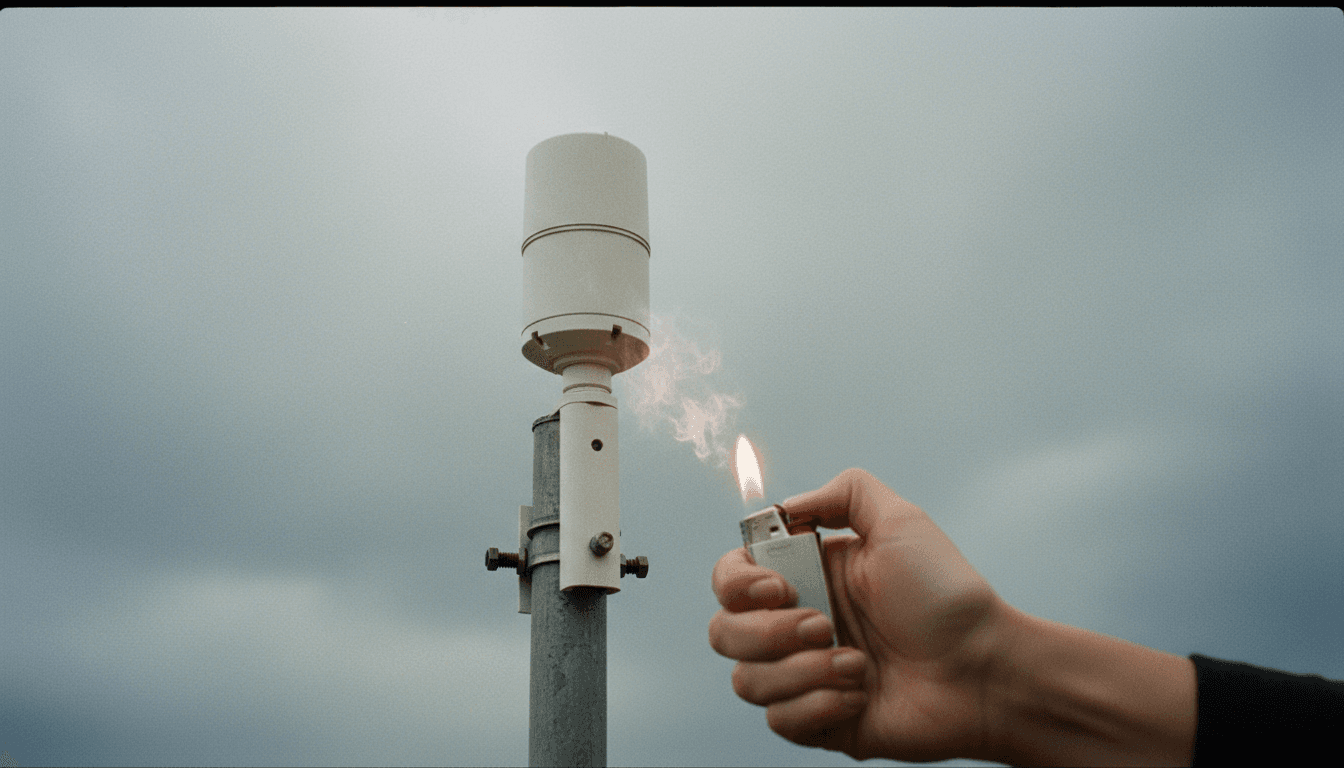
Meteorologist Ruben Hallali, CEO of HD Rain and a former Météo-France employee, was among those who reported the anomalous data. He described such temperature variations as “very unlikely,” suggesting that the sensors might have been interfered with by someone knowledgeable about their function to validate a bet. Online forums have humorously speculated on the use of everyday items like a hairdryer or lighter to manipulate the sensor, with an AI-generated image circulating on Polymarket Discord channels depicting such a scenario.
“Such temperature variations are very unlikely and suggest the sensors might have been interfered with by someone knowledgeable about their function to validate a bet.”
Météo-France’s formal complaint was filed with airport authorities, alleging tampering with its data system. The French police’s cybercrime division has launched an investigation into the matter, highlighting the serious implications for data integrity and flight safety. The automated data processing system in question is not only crucial for aviation but also serves as the reference point for settling Polymarket’s weather contracts, making the alleged tampering a significant concern for both regulatory bodies and the financial market.
Polymarket Responds Amidst Scrutiny of Suspicious Polymarket Bets
In response to the controversy surrounding the suspicious Polymarket bets, Polymarket has changed the reference sensor for its Paris weather contracts from Charles de Gaulle to Paris-Le Bourget Airport, effective April 19. However, the platform did not cancel the resolved contracts or refund the bets that generated the substantial profits. The total betting volume for these specific Paris temperature contracts on Polymarket reached approximately $1.4 million, more than double the typical volume for similar contracts in April, underscoring the unusual interest and activity surrounding these particular predictions. This incident raises critical questions about the security of data used in prediction markets and the potential for manipulation in related Finance news sectors.
The ongoing investigation into the alleged tampering at Météo-France’s Charles de Gaulle weather station underscores the growing challenges in securing data integrity, especially when it intersects with financial markets. The incident involving suspicious Polymarket bets highlights the vulnerabilities that can arise when real-world data, vital for critical infrastructure like aviation, is also used to settle high-stakes financial contracts, prompting a need for heightened scrutiny and robust security measures.