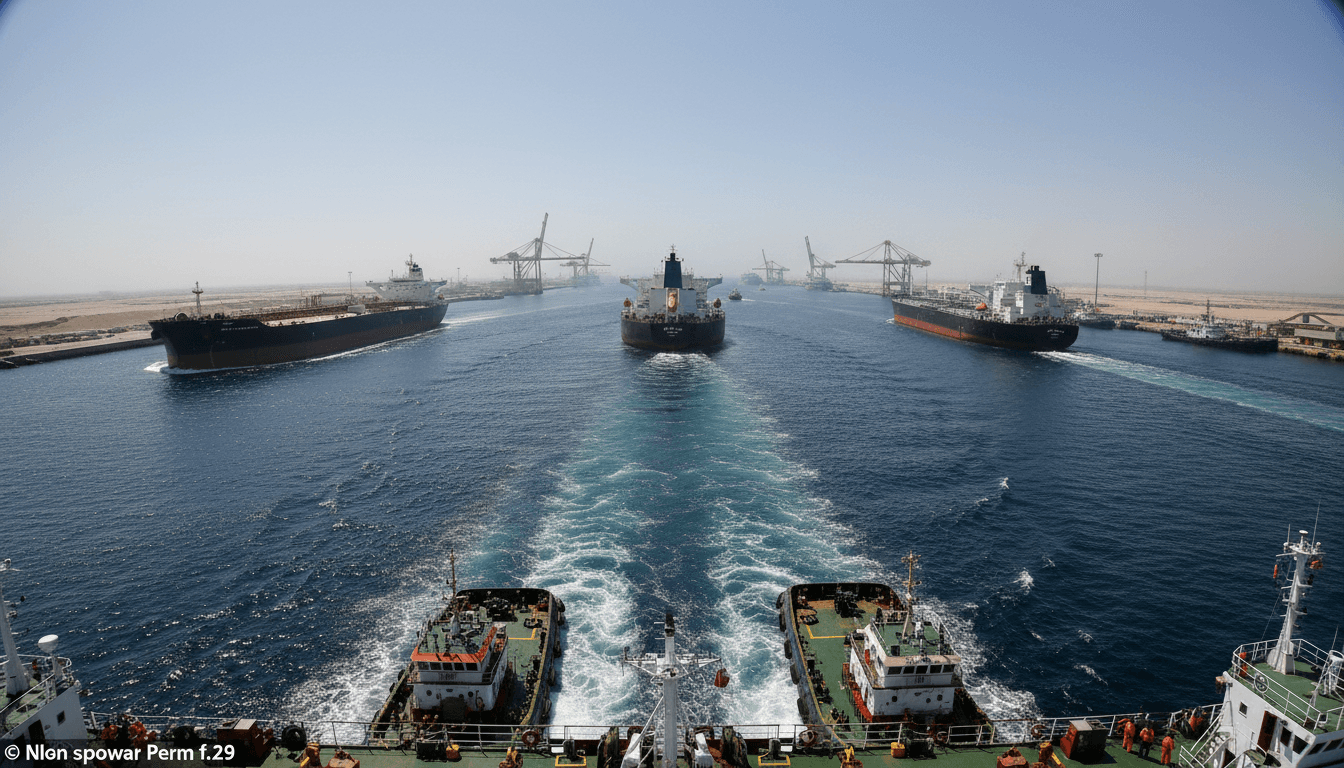
The full reopening of the Strait of Hormuz will be crucial to global oil markets, as the world grapples with over a month’s worth of devastating infrastructure damage and production losses in the Middle East following the Iran war. While the exact timeline remains uncertain, the complex logistics of rebuilding and repairing the region’s energy infrastructure are paramount to restoring stability.
“The world has already hemorrhaged a quarter-billion-plus barrels, with losses mounting by the day,” stated Manish Raj, managing director at Velandera Energy Partners, underscoring the severe impact on global supply.
The Complexities of Restoring Oil Flow
June Goh, a senior oil-market analyst for Sparta Commodities, warns that the logistics for reopening the Strait of Hormuz will be “messy.” This sentiment reflects the intricate challenges involved, extending far beyond simply clearing a shipping lane. It encompasses the monumental task of repairing pipelines, storage facilities, and processing plants that have sustained significant damage. The interconnected nature of the global energy supply chain means that disruptions in one critical artery, like the Strait of Hormuz, send ripple effects worldwide, impacting crude oil prices (CL.1) and Brent crude futures (BRN00).
Rebuilding Middle East Energy Infrastructure
Beyond the immediate shipping concerns, the long-term stability of global oil markets hinges on the successful and rapid reconstruction of energy infrastructure across the Middle East. This involves substantial investment, coordinated efforts from international partners, and a secure environment for workers and equipment. The scale of destruction means that even with the Strait of Hormuz fully reopened, the capacity to transport oil will be limited if production facilities remain crippled. This rebuilding phase will dictate the pace at which lost output can be recovered and prices can stabilize. Investors are closely monitoring developments, understanding that this process will have profound implications for energy sector investments and overall economic forecasts. For more insights into market dynamics, explore our related Finance news.
Impact on Global Supply and Pricing
The prolonged closure and subsequent slow reopening of the Strait of Hormuz, coupled with ongoing infrastructure damage, have led to a significant depletion of global oil reserves. The market has witnessed crude oil prices surge, reflecting the scarcity and uncertainty. As efforts to fully reopen the Strait of Hormuz progress, the market will scrutinize every step of the recovery. The ability to quickly bring damaged production sites back online will be a critical determinant of future oil prices and the broader economic outlook. The global oil markets are at a pivotal juncture, where the physical reconstruction on the ground will directly translate into financial market movements.
In conclusion, while the reopening of the Strait of Hormuz is a necessary step, the true measure of recovery for global oil markets lies in the extensive and arduous process of rebuilding the underlying energy infrastructure. The “messy” logistics and the quarter-billion-plus barrels already lost highlight the profound and lasting impact of the conflict, making the restoration of regional production capacity the ultimate crucial factor for global energy stability.