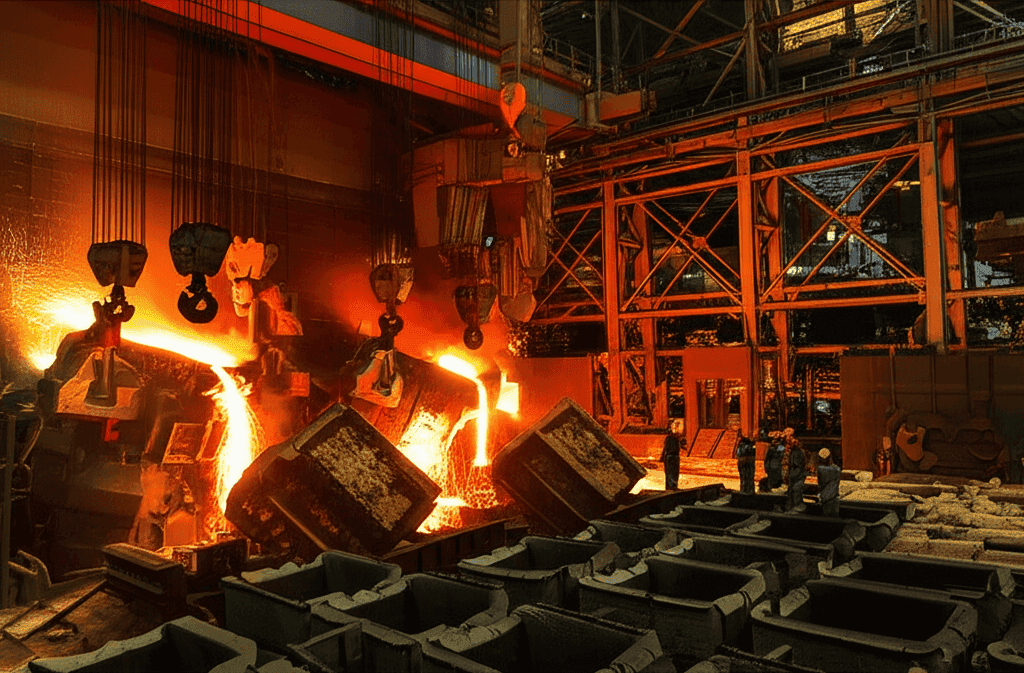
Steel prices are facing downward pressure as investors react to the potential easing of tariffs, a phenomenon some are calling the ‘TACO trade’. Shares of steel and aluminum producers were taking a hit Friday, as investors expressed disappointment that President Donald Trump may be softening his trade stance again amid increasing backlash from consumers about affordability.
The Financial Times reported that the Trump administration is reviewing a list of steel and aluminum products that were hit with tariffs of up to 50% last summer, as part of the president’s plan to scale back levies and exempt some items. The shift in stance comes as officials at the U.S. Commerce Department believe the tariffs are hurting consumers by raising prices for goods containing metal products, such as auto parts and food and drink cans, the FT report said, citing people familiar with the matter. It also comes as Trump’s approval ratings have fallen to new lows, according to the New York Times, and ahead of midterm elections in November.
The softening tone on global tariffs is an example of what Wall Street has called the “TACO trade.” The acronym, which was popularized by an FT columnist last year, stands for Trump Always Chickens Out. It often leads to rallies of stocks of companies hurt by tariffs that were later cut. But for steel and aluminum companies, the trade is working in the opposite direction.
While steelmaker stocks held their losses, they bounced off their worst levels, after Peter Navarro, a senior counselor to President Trump for trade and manufacturing, wrote in a social-media post that the FT story was “fake news.”
The ‘TACO Trade’ and Steel Prices
The market’s reaction to potential tariff reductions highlights the sensitivity of steel prices to geopolitical factors and policy decisions. Companies like Steel Dynamics, Nucor, and Reliance saw their stock prices dip following the report, though they recovered slightly after Navarro’s denial. The volatility underscores the uncertainty surrounding trade policies and their potential impact on the industry.
“Tariffs, even the threat of tariffs, can significantly influence commodity prices and investor sentiment.”
Shares of Steel Dynamics shed 1.7% in recent afternoon trading, but had been down as much as 7.3% earlier in the session. The selloff follows a 3.1% pullback on Thursday from Wednesday’s record close of $205.78.
Nucor’s stock fell 2.9% on Friday, to pare earlier intraday loss of 6.2%, after closing at a near two-year high on Wednesday. Reliance shares shed 2.9% after reaching a record on Wednesday.
Impact on Aluminum Companies
The aluminum sector also felt the impact of the news. Alcoa’s stock gave up 1.9%, after being down 6.2% at its intraday low, and Kaiser Aluminum shares slumped 1.6%. These movements reflect similar concerns about the future of tariffs and their effect on the competitiveness of domestic aluminum producers.
In the aluminum business, Alcoa’s stock gave up 1.9%, after being down 6.2% at its intraday low, and Kaiser Aluminum shares slumped 1.6%.
Beneficiaries of Lower Steel Prices
Conversely, some companies are poised to benefit from potentially lower steel prices. Companies that rely on steel and aluminum as key inputs in their manufacturing processes, such as auto parts suppliers and food and beverage manufacturers, could see their costs decrease, boosting their profitability.
There were some companies that investors seem to believe will benefit from Trump’s shift in stance; for them, lower prices on steel and aluminum could help spark renewed consumer interest in their products.
Advance Auto Parts topped fourth-quarter sales expectations but provided a downbeat outlook for the year. But the stock still gained 2.5% in afternoon trading Friday. Shares of fellow auto-parts seller AutoZone rose 2%. Meanwhile, shares of canned-soup seller Campbell’s tacked on 1.8%, Ford Motor’s stock advanced 2% and General Motors shares were up 1.7%.
The potential shift in trade policy highlights the complex interplay between tariffs, consumer prices, and corporate performance. As the situation unfolds, investors will be closely monitoring developments to assess the long-term implications for the steel, aluminum, and related industries. For more insights, check our related Finance news.
Source: MarketWatch