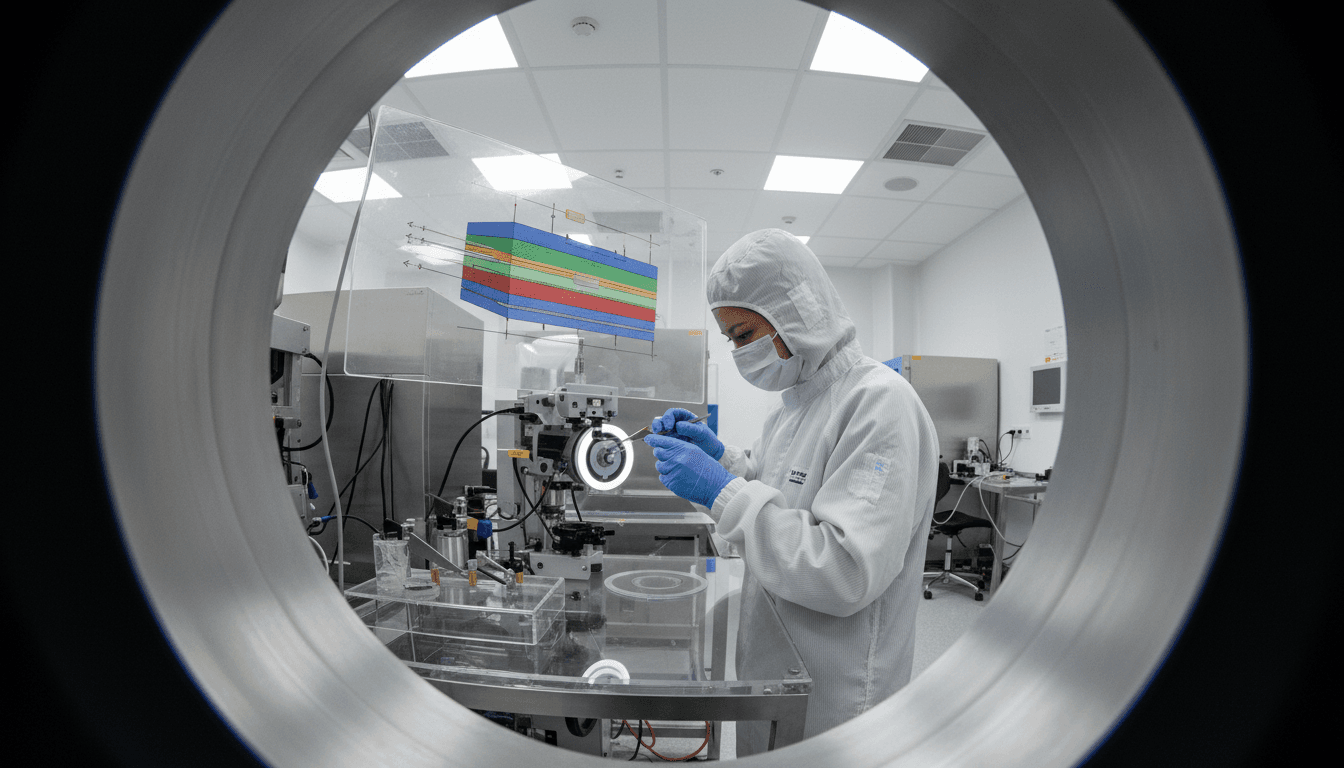
The Shockley 4-Layer Diode in 2026 is experiencing an unexpected resurgence, prompting a re-evaluation of its potential in modern electronics, a surprising turn for a component often relegated to historical footnotes. Physicist William Shockley, renowned for his pivotal role in the invention of the transistor and his notoriously challenging management of Shockley Semiconductor, left behind a complex legacy. While his name is often associated with the ‘Traitorous Eight’ and the birth of Silicon Valley, the specific device that bears his name – the four-layer diode – has largely remained in the shadows compared to its more celebrated semiconductor brethren.
The Enduring Legacy of William Shockley
William Shockley’s contributions to semiconductor physics are undeniable, even if his managerial style ultimately led to the exodus of key talent from his eponymous company. His theoretical work laid much of the groundwork for modern electronics. The initial promise of the Shockley diode was its simple bistable switching characteristic, making it an early contender for applications requiring a clear ON/OFF state without complex control circuitry. However, its limitations in speed and integration density quickly saw it superseded by more advanced transistors and integrated circuits.
“The re-examination of older technologies often uncovers overlooked efficiencies or new applications in a vastly different technological landscape.”
Fast forward to 2026, and the landscape of electronics is vastly different. The drive for ultra-low power consumption, robust switching in harsh environments, and the exploration of novel computing paradigms has opened doors for devices previously deemed obsolete. Researchers are now looking at the fundamental properties of the Shockley 4-Layer Diode, not as a direct competitor to microprocessors, but as a specialized component for specific niches where its inherent characteristics offer unique advantages. This includes areas like power control, sensor interfaces, and even certain types of neuromorphic computing elements where its simple, non-linear switching behavior can be leveraged.
The Shockley 4-Layer Diode In 2026: New Applications Emerge
The renewed interest in the Shockley 4-Layer Diode in 2026 isn’t about replacing transistors but augmenting them. Modern fabrication techniques allow for greater control over material properties and device geometries, potentially mitigating some of the original limitations. For example, its inherent regenerative switching could be beneficial in creating robust, self-latching circuits for industrial control or high-reliability systems where environmental noise is a concern. The simplicity of its structure also presents opportunities for cost-effective manufacturing in specific applications.
Furthermore, the growing demand for energy-efficient solutions in the Internet of Things (IoT) and edge computing environments is prompting engineers to explore every avenue for power optimization. A device like the Shockley diode, with its potential for very low standby current and clear switching thresholds, could find a niche in battery-powered devices where every milliwatt counts. The exploration of its properties in new material systems, beyond traditional silicon, also presents exciting possibilities for enhanced performance and integration.
What This Means for the Semiconductor Industry
While it’s unlikely the Shockley 4-Layer Diode will ever reclaim the prominence of the transistor, its re-evaluation in 2026 highlights a broader trend within the semiconductor industry: the continuous search for optimal solutions for highly specialized problems. This isn’t just about pushing the boundaries of miniaturization and speed, but also about rediscovering and re-engineering older concepts to meet contemporary challenges. Companies investing in niche semiconductor solutions or exploring novel device physics may find unexpected value in revisiting the foundational work of pioneers like Shockley. This trend underscores the cyclical nature of innovation, where yesterday’s ‘obsolete’ can become tomorrow’s ‘specialized solution’ with the right technological advancements and market demand. For more insights into evolving technologies, explore our related Industries news.
In conclusion, the surprising re-emergence of the Shockley 4-Layer Diode in 2026 serves as a compelling reminder that technological evolution is rarely linear. As engineers and researchers grapple with the complex demands of modern electronics, even the most historical components can find new relevance, demonstrating the enduring power of fundamental physics and innovative material science to reshape our technological future.