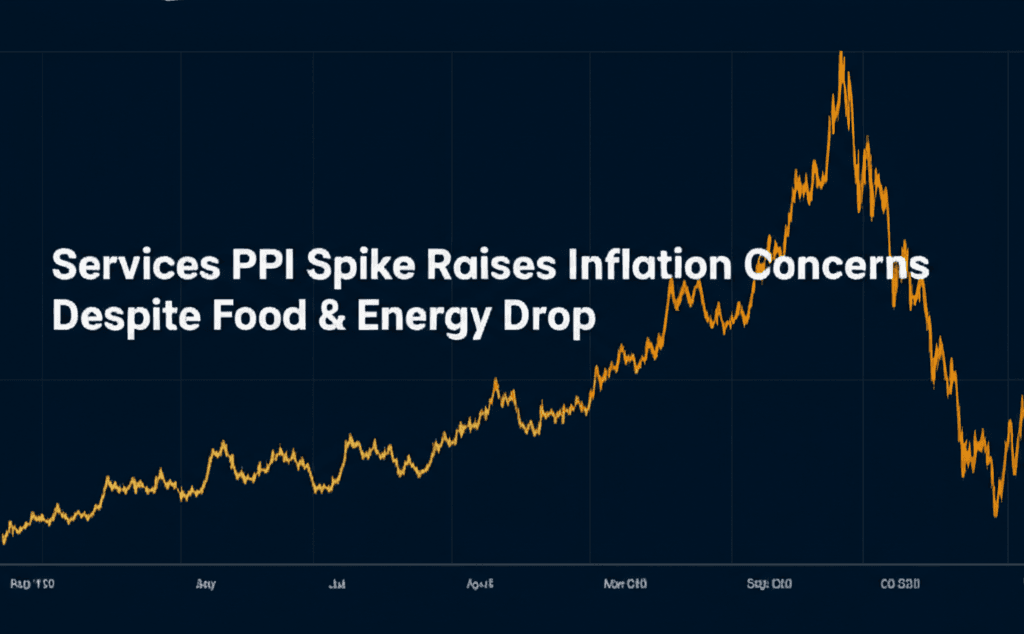
The Producer Price Index (PPI) delivered a mixed bag of economic signals in December, raising concerns about persistent inflation despite falling food and energy prices. Data released today revealed a significant jump in the services PPI, overshadowing the impact of lower costs in other sectors. This development warrants close attention as it suggests underlying inflationary pressures are more entrenched than previously anticipated.
PPI Overview: A Tale of Two Sectors
The overall PPI Final Demand increased by 0.49% in December, translating to an annualized rate of 6.0%. This rise was primarily fueled by a substantial surge in the services PPI, which climbed by 0.74% month-over-month, or 9.3% annualized. In contrast, the goods PPI remained unchanged, benefiting from declines in both food and energy prices. However, excluding these volatile components, the “core” goods PPI still managed a 0.42% increase, equivalent to a 5.2% annualized rate.
The six-month average of the overall PPI, which provides a smoother view of the trend, rose by 4.2%, marking the second-highest level since September 2022, trailing only January 2025. Year-over-year, the PPI Final Demand increased by 3.0%, consistent with the previous month and maintaining a stable range since July.
The Services PPI Spike: A Cause for Concern
The most disconcerting aspect of the latest PPI report is the significant increase in the services PPI. This sector carries substantial weight in the overall index, accounting for approximately 68% of the total. The 0.74% monthly increase translates to a 9.3% annualized rate, signaling a potentially accelerating trend in service-related inflation. The six-month average for the services PPI also rose, reaching an annualized rate of 4.4%.
Digging deeper into the components of the services PPI reveals specific areas of upward pressure. Trade services, which represent 19% of the overall PPI, experienced a notable increase of 1.7% month-over-month. Within this category, machinery and equipment parts and supplies wholesaling (+3.0%), machinery and vehicle wholesaling (+5.8%), and professional and commercial equipment wholesaling (+3.7%) all contributed to the rise. Health, beauty, and optical goods retailing also saw a significant increase of 4.2%.
“The spike in the services PPI is particularly concerning because services are not directly impacted by tariffs, suggesting that other factors, such as wage pressures or increased demand, are driving prices higher.”
Furthermore, the PPI for portfolio management, a component that feeds directly into the Fed’s preferred PCE Price Index, jumped by 2.0% month-to-month in December, following increases of 1.4% and 3.8% in the prior two months. This consistent upward trend in portfolio management fees suggests that inflationary pressures are impacting the financial services sector as well. Year-over-year, the services PPI rose by 3.2%.
Goods Prices: Tariffs and Core Inflation
While food and energy prices declined month-to-month (-0.3% and -1.4%, respectively), preventing an overall increase in the goods PPI, the core goods PPI (excluding food and energy) still rose by 0.42% month-to-month (5.2% annualized). This indicates that underlying inflationary pressures persist even when volatile components are removed. The six-month average for the core goods PPI rose by 4.2%.
The report suggests that tariffs are gradually making their way through the goods categories, as companies attempt to pass on these costs to each other. However, consumer-facing businesses are reportedly resisting price increases, as they struggle to pass them on to consumers without experiencing a decline in sales. Year-over-year, the core goods PPI rose by 3.7%, the highest level since March 2023.
In summary, the “core PPI Final Demand,” which includes all goods and services except food and energy, spiked by 0.66% month-to-month (8.2% annualized). This pushed the six-month average to +4.3%, the highest since January 2025. Year-over-year, the core PPI accelerated to +3.3%.
“The diverging trends between goods and services PPI highlight the complexity of the current inflationary environment, making it more challenging for policymakers to effectively manage price pressures.”
The latest PPI data presents a complex picture of the U.S. economy. While falling food and energy prices offer some relief, the significant spike in the services PPI raises concerns about persistent inflationary pressures. The Federal Reserve will closely monitor these trends as it considers future monetary policy decisions. The fact that services are experiencing significant inflation despite not being subject to tariffs suggests that domestic factors, such as wage growth and strong demand, may be playing a more prominent role in driving prices higher.
Source: Wolf Street