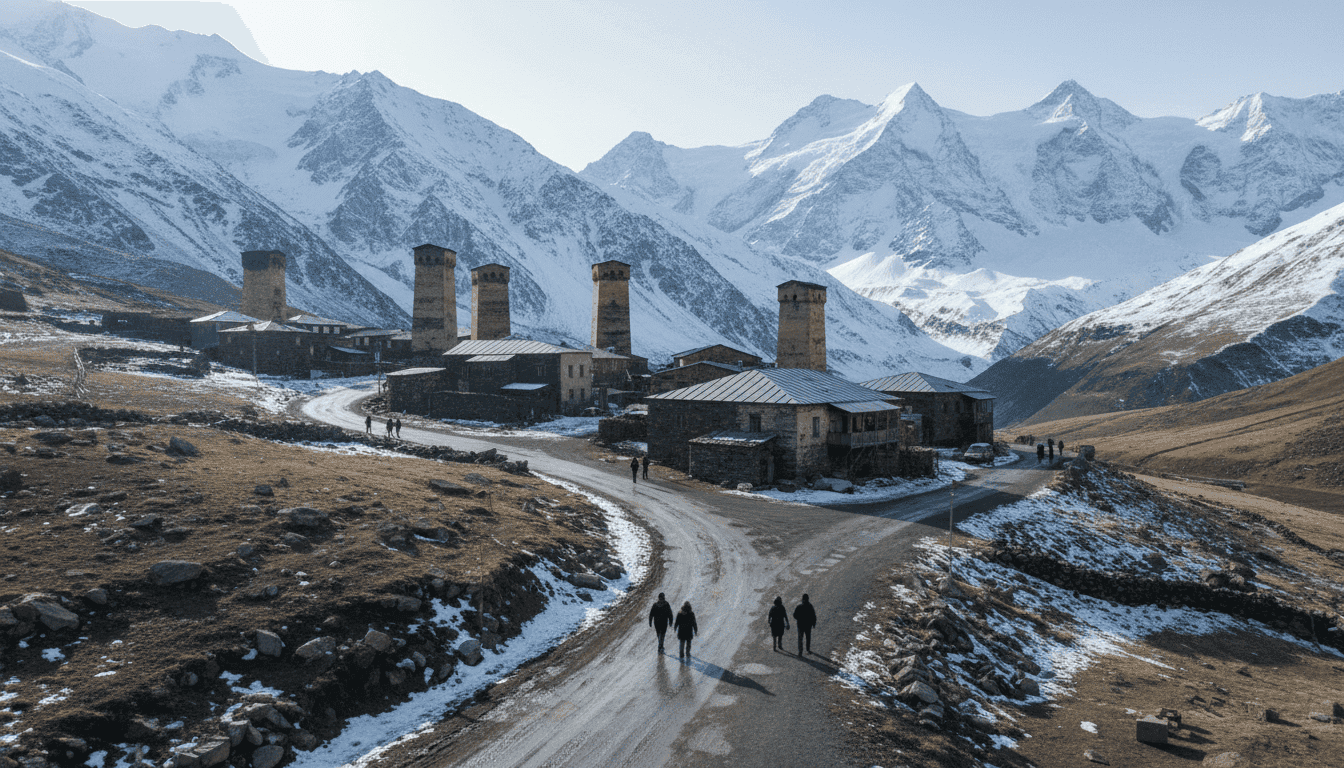
“Salt for Svanetia” (1930), a remarkable Soviet silent documentary film, offers a stunning portrayal of life in the remote Svanetia region of Georgia, highlighting the acute challenges faced by its isolated people. Directed by Mikhail Kalatozov, this 49-minute cinematic gem, also known by its Georgian title “Marili Svanets” and Russian title “Sol’ Svanetii,” masterfully blends ethnographic observation with fictional elements to depict the harsh realities of a community grappling with extreme isolation and scarcity. Its reappearance on platforms like Naked Capitalism on Sunday, March 15, 2026, underscores its enduring relevance and artistic power within financial and historical discourse.
The Dire Scarcity of a Vital Commodity
The core narrative of “Salt for Svanetia” revolves around the critical scarcity of salt, an indispensable commodity for both food preservation and the sustenance of livestock in the region. The film opens with a potent quotation from Lenin, setting the stage by emphasizing the persistence of patriarchal and clan-based societal structures in the distant reaches of the Soviet Union. Visually, Kalatozov establishes Svanetia as a land “cut off from civilization by mountains and glaciers,” enduring eight months of relentless snowfall annually, a stark backdrop to the struggle for survival. The desperate need for salt is graphically illustrated, showing animals resorting to licking human sweat and urine, a powerful testament to the severity of the situation.
Artistic Innovation Amidst Hardship
Kalatozov, who also served as the director of photography, employed innovative techniques to capture the primitive texture of Svan life. Using stunning compositions and Dutch angles, and featuring nonprofessional Svan actors, the film showcases the daily routines of the Svan people: sheep rearing, wool and yarn production, and barley threshing using rudimentary methods. It starkly highlights their technological underdevelopment, depicting wool spinning predating the spinning wheel and barley threshed by cattle dragging a stone-studded platform. These scenes, while ethnographically rich, also served to underscore the Soviet narrative of the need for modernization. The film also delves into their customs, such as tailoring clothes, making hats, cutting hair, and elaborate funeral rituals, which Soviet authorities often viewed as economically wasteful and regressive.
‘Salt for Svanetia’: A Glimpse into Soviet Modernization
The film builds towards a powerful climax where the Soviet government intervenes to alleviate the salt shortage through the construction of a vital road. This infrastructure project symbolizes modernization and the integration of the isolated region into Soviet civilization, directly tying into Stalin’s first Five-Year Plan (1928–1932). This plan aimed to develop infrastructure and “sovietize” traditional life in underdeveloped regions like Svanetia. Originally conceived as a fictional feature by Sergei Tretyakov, the film was ultimately edited into an ethnographic documentary by Viktor Shklovsky, aligning with Party expectations to promote the Five-Year Plan and its transformative agenda. Despite its propagandistic undertones, the film has garnered immense praise for its artistic merit and pioneering techniques, with film scholar Jay Leyda calling it “the most powerful documentary film I have ever seen.” It remains a significant early example of ethnographic cinema, capturing a vanishing world with poetic visuals and innovative editing, providing invaluable insights into a critical period of Soviet history and its impact on remote communities. Explore more related Finance news for insights into historical economic strategies.
“‘Salt for Svanetia’ stands as a powerful testament to human resilience against environmental adversity and the sweeping societal changes imposed by early Soviet policy.”
In conclusion, “Salt for Svanetia” transcends its original propagandistic intent to emerge as a timeless piece of cinema. Its vivid depiction of a remote community’s struggle for survival and the dramatic intervention of state-led modernization offers profound insights into both historical ethnography and political ideology. The film’s enduring artistic recognition, despite early criticisms, solidifies its place as a critical document of a bygone era and a masterclass in documentary filmmaking.