
Salt casting techniques are experiencing a surprising renaissance, with innovative applications emerging across various industries. The traditional use of salt, primarily sodium chloride (NaCl), is being reimagined through novel casting processes, pushing the boundaries of material science and offering cost-effective alternatives for decorative and potentially industrial applications. Robinson Foundry’s recent experiments highlight the intriguing possibilities of this unconventional approach.
The Robinson Foundry Experiment
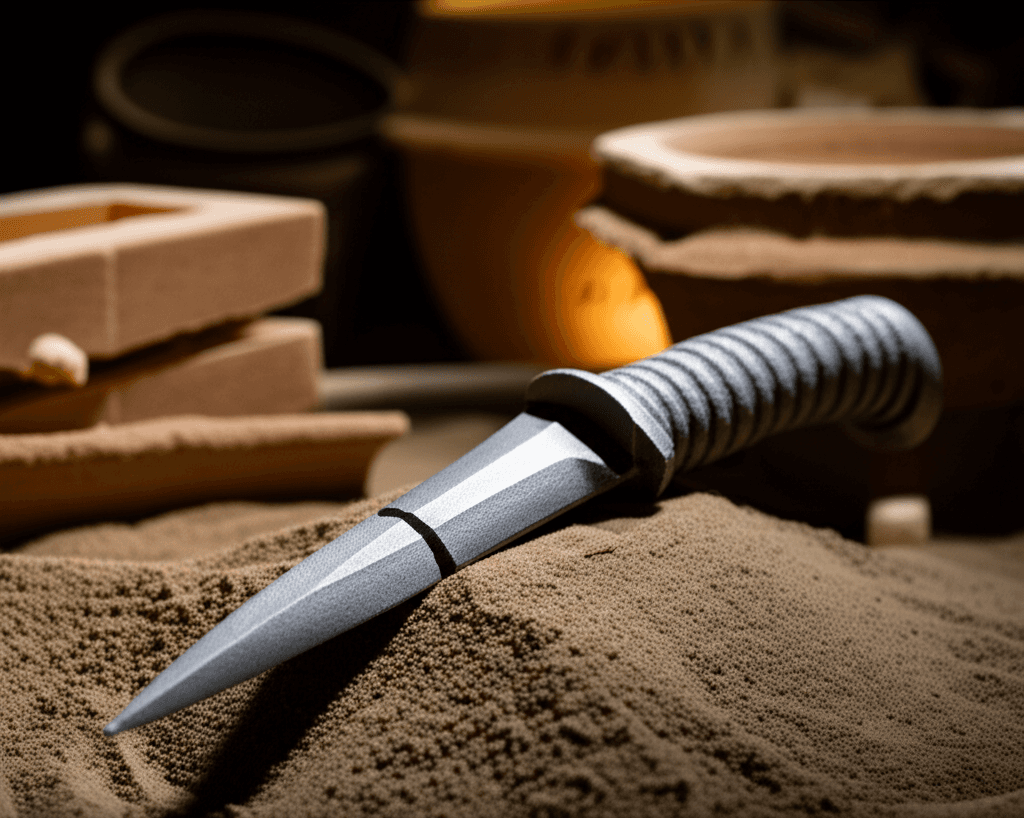
Robinson Foundry embarked on a fascinating journey to determine if salt could be cast like metal. Their experiments involved two distinct methods: a glass-like casting approach using a ceramic mold and an electric kiln, and a metal-like casting process employing a crucible and sand molds. The sand casting method proved more successful, resulting in parts with a unique gunmetal finish, a result of the reaction between the molten salt and the sand.
Salt Casting Techniques: Glass vs. Metal
The glass-style casting yielded larger, more translucent crystals, but the salt remained trapped within the ceramic mold. This suggests the need for a glazed ceramic surface to facilitate extraction. The metal-like sand casting, on the other hand, produced parts that resembled metal in appearance, although their inherent brittleness betrayed their true composition. Despite the fragility, the technique proved effective for creating decorative items like busts and megalodon teeth. These salt casting techniques show great promise.
Applications and Implications
While salt-based castings possess vastly different physical properties compared to metal, their affordability and unique aesthetic appeal make them suitable for decorative applications. The gunmetal finish achieved through sand casting offers an attractive alternative for creating visually appealing objects at a fraction of the cost of traditional metal casting. The potential for creating salt crystal salt shakers, as suggested by Hackaday, is another intriguing possibility, although careful consideration must be given to the safety of any coatings used.
“Salt casting offers a cheap and visually pleasing alternative to traditional metal casting for decorative purposes.”
The application of molten salt extends beyond decorative castings. Molten salt is also used in specialized applications such as nuclear reactors and homemade batteries, showcasing the versatility of this material. Further research and development could unlock even more diverse uses for salt casting techniques.
The Future of Salt Casting Techniques
The exploration of related Industries news like salt casting techniques represents a shift towards innovative and sustainable material utilization. While the immediate applications may be limited to decorative items, the potential for future advancements in material science and engineering could expand the scope of salt casting. As metal prices fluctuate and the demand for cost-effective alternatives grows, salt casting may find its niche in various industries, offering a unique blend of affordability and aesthetic appeal.


