
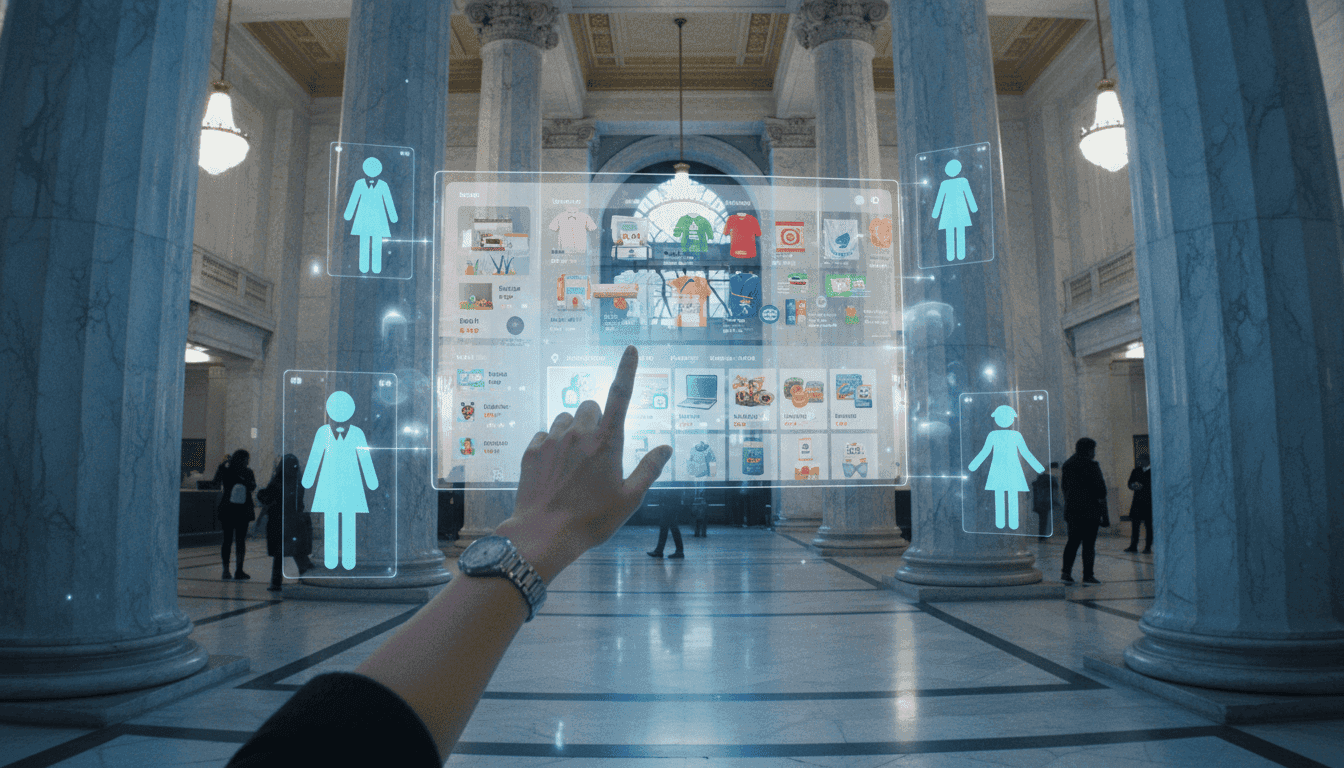
AI shopping assistants are undergoing significant refinement as retailers like Amazon, Walmart, and Target strive to enhance customer service and streamline the purchasing journey. Despite years of investment and executive enthusiasm for artificial intelligence, the practical application of AI in retail has often been hampered by glitches, inconsistencies, and a struggle to deliver truly personalized and predictive experiences for consumers. This ongoing ‘tinkering’ reflects a critical phase in AI adoption, where the focus has shifted from mere implementation to achieving tangible, superior service.
Amazon (AMZN) recently underscored this industry trend by announcing the integration of its Rufus AI shopping assistant with its Alexa+ platform, creating a new service dubbed Alexa for Shopping. This strategic consolidation aims to provide a more cohesive and helpful experience for shoppers, leveraging Rufus’s deep product knowledge and Alexa+’s personalized data. While Amazon stated no specific issues with Rufus, the move suggests a push towards a more unified and powerful AI offering, capable of assisting with everything from product recommendations to home repairs.
The Evolution of AI in Retail Customer Experience
The journey to perfect AI in retail has been far from smooth. Early iterations of AI assistants, while promising, often fell short on consistent service, grappling with issues like ‘hallucinations,’ inaccurate product availability, and concerns over data privacy and trust. Analysts like Sky Canaves from eMarketer point out that the shopping process with many AI assistants remains cumbersome, frequently redirecting users to traditional websites to complete transactions. This friction undermines the perceived convenience of AI, often making conventional website navigation more straightforward for consumers.
“One of the bigger challenges for AI shopping assistants and the chatbots is really trying to get to true personalization that’s both predictive and meaningful,” said Sky Canaves, a retail and e-commerce analyst at eMarketer.
Canaves emphasizes that even with vast datasets of purchase histories, companies like Amazon struggle to proactively recommend products consumers didn’t know they wanted. The key, she suggests, lies in predictive personalization that anticipates shopper needs rather than just reacting to past behavior. Alexa for Shopping, available on Amazon’s website, app, and Echo Show devices, aims to tackle this by combining Rufus’s product expertise with Alexa+’s broader internet search capabilities and user history, potentially offering richer, less awkward responses.
Challenges and Innovations Across the Sector
The pursuit of effective AI shopping assistants extends beyond Amazon. Retail giants like Walmart (WMT) and Target (TGT) have also deployed their own AI tools. Travel platforms, including Airbnb (ABNB), are increasingly integrating AI to refine user experiences, from summarizing reviews to offering granular detail on rental locations. However, the path is riddled with technical hurdles, as evidenced by OpenAI’s decision to halt its Instant Checkout platform, opting instead for app integrations that direct users to retailers’ websites.
Even restaurant chains like Starbucks (SBUX) and Little Caesars are experimenting with ChatGPT apps for order assistance, though these typically guide customers to their websites for final purchases. Airbnb CEO Brian Chesky articulated a widespread sentiment, noting that “no one has figured out AI for travel or e-commerce yet.” He highlighted issues like overly verbose chatbot responses, the inconvenience of typing queries versus clicking price filters, and the difficulty AI has with visual comparisons or navigating maps for complex choices like rental locations.
The Future of Personalized Retail AI
The ongoing efforts to enhance AI shopping assistants signal a broader industry commitment to harnessing artificial intelligence for competitive advantage. While initial implementations have revealed significant gaps in delivering seamless, truly intelligent service, the continuous iteration and consolidation of platforms, as seen with Amazon’s Alexa for Shopping, represent a strategic evolution. The goal remains to move beyond basic chatbot functions to create AI systems that are not only helpful but also intuitive, predictive, and deeply integrated into the consumer’s purchasing journey, ultimately driving better engagement and sales in the dynamic retail landscape. For more insights on financial market trends, explore our related Finance news.


