
Raspberry Pi FireWire utility is experiencing a renewed, albeit niche, interest as a recent Hackaday article, published on March 27, 2026, highlights its ongoing relevance on these versatile single-board computers, particularly in anticipation of impending Linux support discontinuation. This development offers a brief window for enthusiasts and professionals to leverage legacy audiovisual equipment with modern, compact computing.
FireWire, officially known as IEEE 1394 or Sony’s i.LINK, emerged from Apple’s innovation labs in the late 1980s and early 1990s. It was engineered as a high-speed serial bus interface for real-time data transfer, quickly becoming the preferred choice for connecting high-end digital cameras, audio interfaces, and external storage. Its advantages over early USB iterations were significant: superior sustained data transfer rates (FireWire 400 at 400 Mbps, FireWire 800 at 800 Mbps), reduced CPU load, and robust peer-to-peer communication, enabling direct device-to-device connections without a host. FireWire also boasted daisy-chaining capabilities for up to 63 devices and could supply power over the cable, a feature ahead of its time.
The Sunset of a Standard: Why FireWire Faded
Despite its early technological edge, FireWire’s prominence began to wane in the 2000s. The rapid evolution of USB 2.0 (offering 480 Mbps) and subsequent advancements like USB 3.0 and Thunderbolt presented comparable or superior speeds, greater versatility, and, critically, lower manufacturing costs. Apple, once FireWire’s staunchest advocate, started transitioning to Thunderbolt in 2011, with the last Macs featuring FireWire ports released in 2012. The final nail in the coffin from Apple came with macOS 26 “Tahoe,” which officially dropped support. Similarly, Microsoft ceased bundling FireWire drivers by default in Windows 10, marking its transition into a legacy technology.
Raspberry Pi FireWire Utility and Linux’s Extended Lifeline
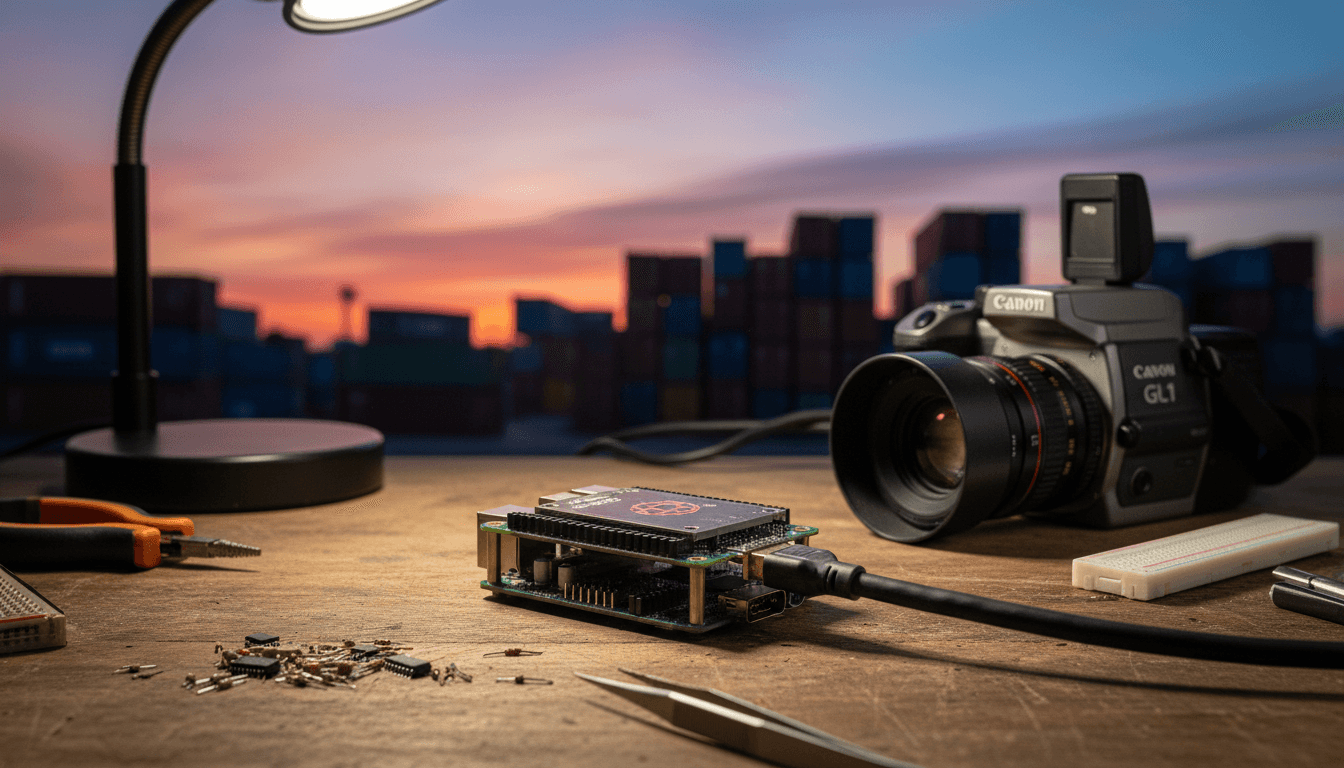
The Hackaday article delves into the dedicated efforts of individuals like Jeff Geerling, who successfully demonstrated the Raspberry Pi FireWire utility on a Raspberry Pi 5. This intricate setup involves integrating a Mini PCIe HAT onto the Raspberry Pi 5, followed by the insertion of a Mini PCIe to FireWire adapter. A crucial step involves recompiling the Linux kernel with FireWire support enabled and meticulously configuring the Raspberry Pi’s PCIe bus for 32-bit DMA support, a necessity for older FireWire controllers that may not handle 64-bit access. Geerling’s success story includes capturing video from a vintage 1999 Canon GL1 video camera via a FireWire 400 port using the `dvgrab` utility, showcasing the potential for repurposing older hardware.
“The ability to breathe new life into legacy FireWire devices using a modern Raspberry Pi offers significant value for archivists, hobbyists, and those with specialized equipment.”
Linux has maintained FireWire support since kernel version 2.3.40, with the later implementation of the JuJu kernel driver stack enhancing its capabilities. While FireWire is undeniably a legacy technology, a critical development occurred in 2023 when Linux maintainer Takashi Sakamoto volunteered to oversee the FireWire subsystem. This commitment extends official support until at least 2029, providing a crucial grace period for users to integrate their FireWire gear with Linux-based systems, including the Raspberry Pi. After 2029, the future of FireWire support in Linux will hinge on its ability to compile without a dedicated maintainer, potentially leading to its complete deprecation from the kernel. This extended support offers a unique opportunity for businesses and individuals with significant investments in FireWire-dependent equipment to plan for future transitions or to continue utilizing their existing infrastructure with related Industries news.
In conclusion, while FireWire’s golden age has passed, its continued, albeit specialized, functionality on platforms like the Raspberry Pi, bolstered by a temporary extension of Linux support, highlights the enduring value of robust serial bus interfaces. This niche utility provides a valuable bridge for legacy hardware in a rapidly evolving technological landscape.


