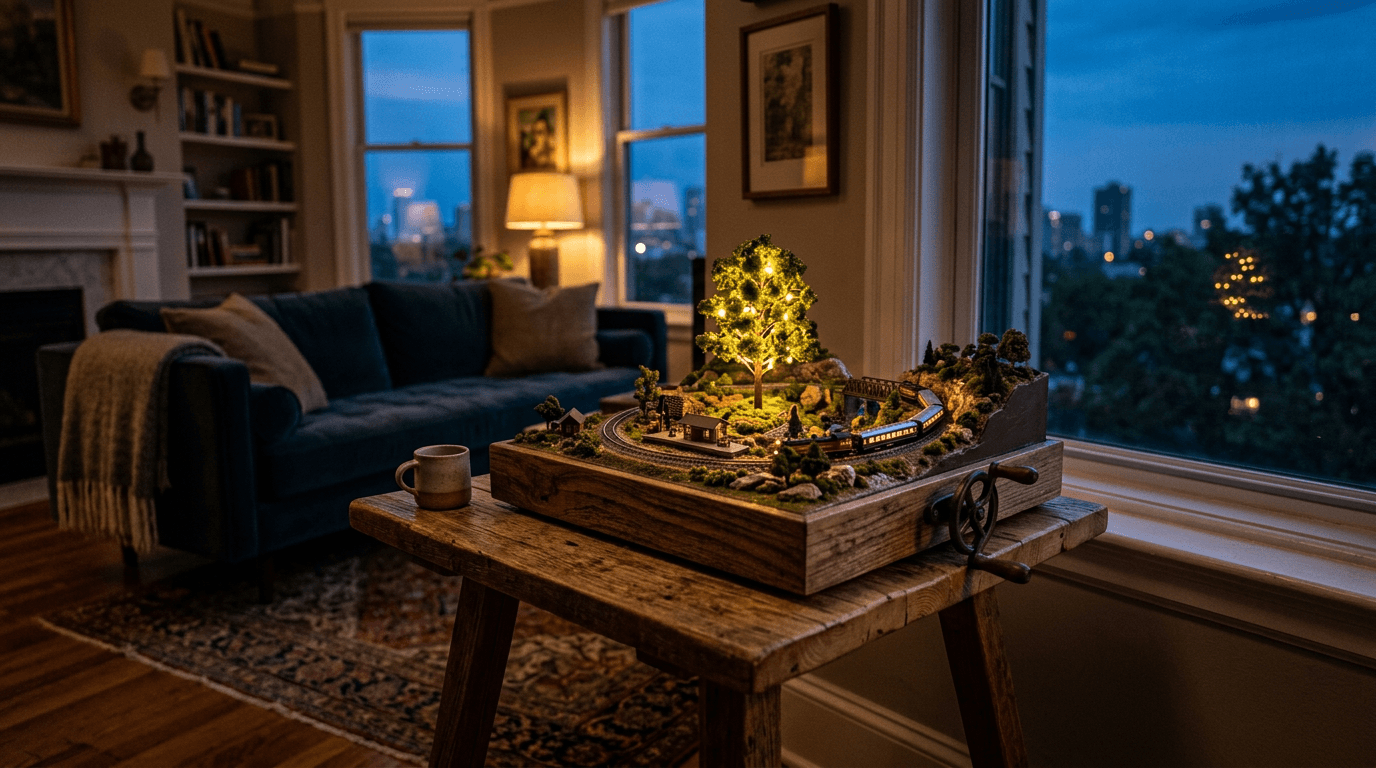
Railway end table designs are undergoing a radical transformation as artisans merge traditional woodworking with sustainable kinetic energy. In an era where home decor often feels mass-produced and static, a new wave of bespoke furniture is challenging the status quo by integrating functional machinery directly into living room staples. The latest breakthrough in this niche comes from Tiny World Studios, where the boundary between a functional piece of furniture and a high-tech kinetic sculpture has been effectively erased.
At first glance, the piece appears to be a high-quality, three-legged wooden table. However, the integration of a fully functional N-scale model railway layout on its surface elevates it to a masterclass in engineering. This isn’t merely a decorative display; it is a self-contained power system that operates entirely without being plugged into a wall outlet. For those following related Industries news, this represents a significant intersection of artisanal craftsmanship and micro-grid energy solutions.
The Engineering Behind Kinetic Furniture
The technical sophistication of this build lies beneath the hand-carved wooden exterior. To power the Kato Pocket Line trolley that traverses the miniature landscape, the designer implemented a sophisticated energy harvesting system. By utilizing a small gearmotor generator, the user can manually generate electricity through a hand crank. This mechanical energy is then processed through a bridge rectifier and a buck converter to ensure a stable current.
“Kinetic furniture represents a shift from static decor to interactive art that generates its own utility, proving that sustainable energy can be both functional and beautiful.”
The energy is stored in a high-capacity supercapacitor, a choice that offers several advantages over traditional chemical batteries, including faster charging cycles and a longer lifespan. This efficiency is remarkable: just 25 seconds of manual cranking provides enough stored energy to run the train for up to ten minutes. If the user chooses to activate the integrated LED lighting within the miniature tree, the runtime remains a respectable four minutes, demonstrating the high efficiency of modern micro-electronics.
Innovative Features of the Railway End Table
Beyond the electrical engineering, the aesthetic execution of this railway end table is designed to meet the highest standards of interior design. The layout features a meticulously crafted landscape, including realistic rock formations, synthetic grass, and a stunning epoxy resin river that flows beneath a miniature bridge. This level of detail ensures the table remains a focal point of conversation even when the train is stationary.
Practicality has not been sacrificed for the sake of novelty. The design includes a dedicated coaster spot for beverages, ensuring the table fulfills its primary role as a piece of functional furniture. The use of N-scale components allows for a complex, looping track within a compact footprint, making it an ideal solution for urban dwellings where space is at a premium but the desire for unique, high-end hobbyist items remains high.
The Growing Market for Interactive Decor
The emergence of such complex DIY projects highlights a growing trend in the luxury furniture market: the demand for “slow tech” and interactive experiences. Consumers are increasingly looking for items that require physical engagement, moving away from the “always-on” nature of smart home devices. This shift is creating new opportunities within the bespoke furniture industry, as buyers seek out pieces that tell a story and demonstrate tangible mechanical ingenuity.
As the trend continues to gain momentum, we expect to see more designers experimenting with integrated power generation and miniature robotics. The success of this project proves that there is a viable path for merging the worlds of model railroading, electrical engineering, and fine woodworking into a single, cohesive product that appeals to both tech enthusiasts and interior designers alike.
In conclusion, the railway end table serves as a blueprint for the future of interactive home furnishings. By combining manual power generation with high-fidelity modeling, it offers a sustainable and engaging alternative to traditional decor. As artisans continue to push the limits of what a simple piece of furniture can do, the line between utility and art will only continue to blur, offering homeowners more ways to personalize their living spaces with functional brilliance.