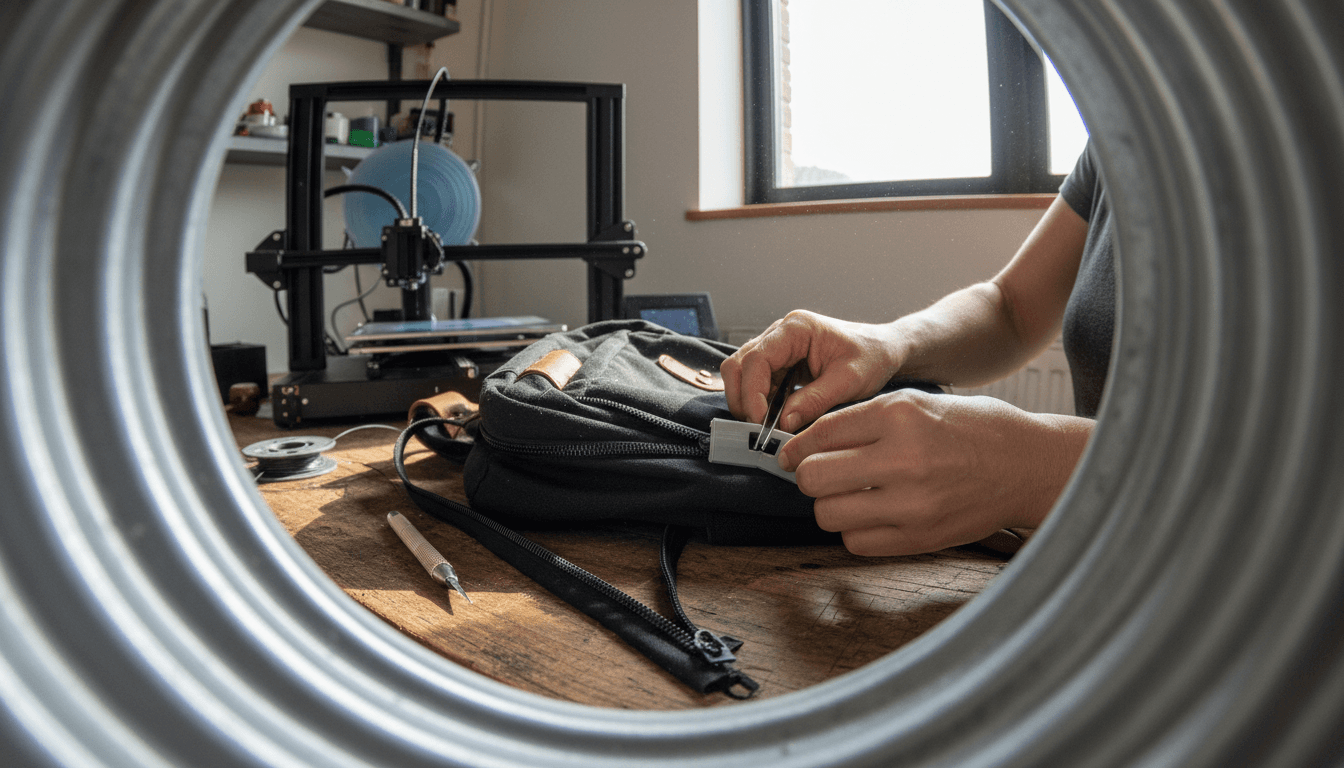
Printed zipper repair is no longer a futuristic concept but a practical reality, thanks to an ingenious 3D-printed solution highlighted recently on Hackaday. Published on March 14, 2026, the article spotlights a revolutionary two-part zipper slider replacement designed by an individual known as [MisterJ]. This innovation dramatically simplifies what was once a tedious task, allowing for the repair of broken zippers without the need for unsewing the zipper ends – a significant leap in accessibility for DIY enthusiasts and everyday consumers.
Traditional zipper repairs often involve the fiddly and time-consuming process of unpicking seams, replacing the slider, and then re-sewing. This deterrent has led many to discard otherwise perfectly good items of clothing or bags due to a simple broken zipper. [MisterJ]’s design directly addresses this pain point, offering a practical, readily available alternative that leverages the power of modern hobbyist 3D printers.
The Ingenuity Behind This Printed Zipper Repair
[MisterJ]’s creation is a two-part, 3D-printable replacement slider engineered for both standard and reverse bale zippers. The true brilliance lies in its assembly: unlike conventional sliders, this design allows the new slider to be directly assembled onto the existing zipper teeth, bypassing the need for any unsewing. The design has undergone several iterations, with version 3, updated on January 25, 2026, representing a significant improvement. This latest version tackles the primary weakness of previous designs by printing the crucial connecting pin in an upright (vertical) orientation, dramatically increasing its strength and durability. The design files are conveniently available in STEP format, ensuring easy adjustability and customization within various CAD programs, empowering users to adapt the solution to their specific needs.
This accessibility extends beyond just the repair process. The 3D models for the zipper slider are openly available on platforms like Printables.com, making it easy for anyone with a 3D printer to download and produce their own replacement parts. This democratizes zipper repair, moving it from specialized tailors or manufacturers directly into the hands of the consumer. While a metal slider might offer superior long-term durability, the ability to quickly and easily replace a broken plastic component with a 3D printer presents a compelling advantage for immediate and cost-effective fixes.
“This 3D-printed solution offers a practical alternative, leveraging the capabilities of modern hobbyist 3D printers to make repairs more accessible than ever before.”
Why This Innovation Matters for Consumers and Industry
The primary motivation behind this invention is to provide a more convenient and accessible method for repairing broken zippers. The sheer volume of items discarded globally due to minor faults like a broken zipper is staggering. This innovation not only extends the life of garments, bags, and other zippered products but also promotes a more sustainable approach to consumption by reducing waste. For consumers, it means saving money on repairs or replacements, and for the broader related Industries news, it signals a shift towards localized, on-demand manufacturing of spare parts.
The design is available in a variety of common sizes and configurations, accommodating a wide range of zipper types. This versatility, combined with the ease of production, makes [MisterJ]’s printed zipper repair a game-changer for anyone who has ever faced the frustration of a broken zipper. It highlights the growing impact of hobbyist innovation and additive manufacturing on everyday problems, proving that even small, seemingly insignificant components can be reimagined for greater efficiency and user convenience.
In conclusion, the emergence of this 3D-printed zipper slider replacement marks a significant advancement in DIY repair. By eliminating the need for unsewing and offering a robust, customizable solution, [MisterJ]’s design empowers individuals to fix their belongings quickly and sustainably. This innovative approach to printed zipper repair not only saves time and money but also underscores the transformative potential of additive manufacturing in addressing common household challenges.