
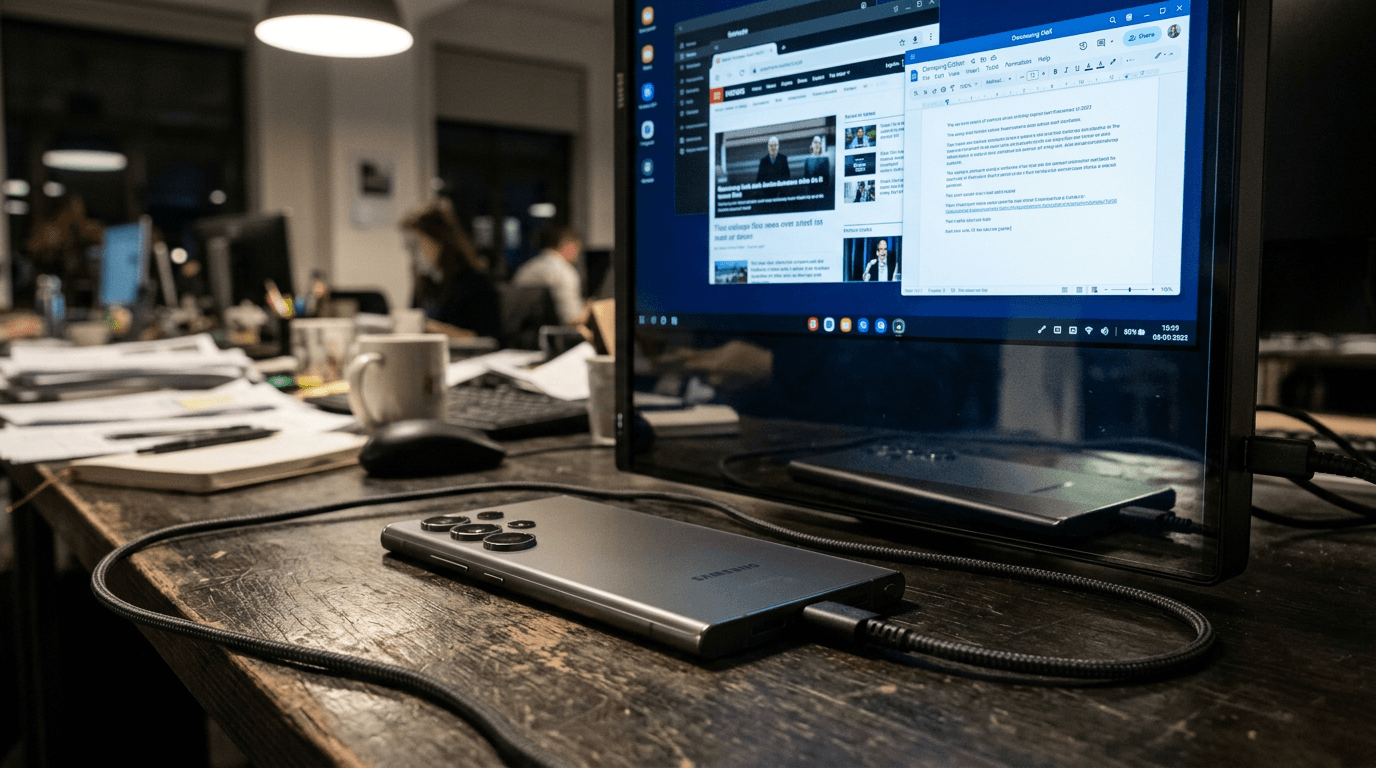
The ideal of a single device fulfilling all digital needs, often dubbed technological convergence, is gaining significant traction, particularly with the rise of the phone as computer replacement. A recent Hackaday article, drawing from insights by ETA Prime, suggests that this long-held ideal has finally been realized, with the Samsung S26 Ultra leading the charge.
This powerful device, equipped with an 8-core ARM processor in its Snapdragon Elite SOC, boasts two performance cores clocking in at an impressive 4.74 GHz and six additional cores at 3.62 GHz. Coupled with 12 GB of RAM, the S26 Ultra presents a formidable hardware package. Its integration with Samsung DeX software transforms the Android experience into a desktop-and-windows interface when connected via USB-C to a monitor, enabling a seamless transition for users looking for a versatile computing solution.
The Samsung S26 Ultra: A True Desktop Contender
The capabilities of the Samsung S26 Ultra extend beyond mere productivity. While the lack of a full Adobe suite on Android presents some limitations for professional photo and video editing, the phone’s raw processing power is undeniable. For gamers, the S26 Ultra handles Android titles with ease and can even run demanding PC games like *Cyberpunk 2077* at nearly 60 frames per second, albeit at “low” graphics and 720p resolution. This performance underscores the significant advancements in mobile chip architecture.
“The Samsung S26 Ultra represents a pivotal moment in mobile technology, demonstrating that a smartphone can now genuinely serve as a primary computing device for a vast majority of users.”
The concept of using smartphone hardware for more traditional computing tasks isn’t entirely new for ETA Prime. In February 2026, he showcased an innovative project converting a broken Samsung Galaxy S20 FE into a sub-$100 mini PC using Raspberry Pi parts and DeX. This earlier endeavor, while not a full desktop replacement, highlighted the untapped potential of older flagship smartphone SoCs like the Snapdragon 865 for light gaming and productivity, setting the stage for the S26 Ultra’s current capabilities.
Technological Convergence: From Ideal to Reality
Technological convergence has been a driving force in the tech industry for decades. Smartphones themselves are a testament to this, having integrated features like telephones, cameras, GPS, and media players into one portable device. The 1990s saw an acceleration of this trend, fueled by advancements in computing power and affordability, alongside the burgeoning internet, which further enabled the integration of various systems. The S26 Ultra, with its robust hardware and sophisticated software like DeX, embodies the pinnacle of this convergence, offering a compelling phone as computer replacement for many daily tasks.
This evolution means that for a growing segment of the population, a dedicated desktop or laptop might no longer be a necessity. The ability to carry a powerful computer in one’s pocket, capable of handling everything from web browsing and document editing to demanding games and multimedia consumption, signifies a profound shift. The Samsung S26 Ultra’s performance and versatility firmly establish it as a leading contender in the race to make the phone as computer replacement a mainstream reality.


