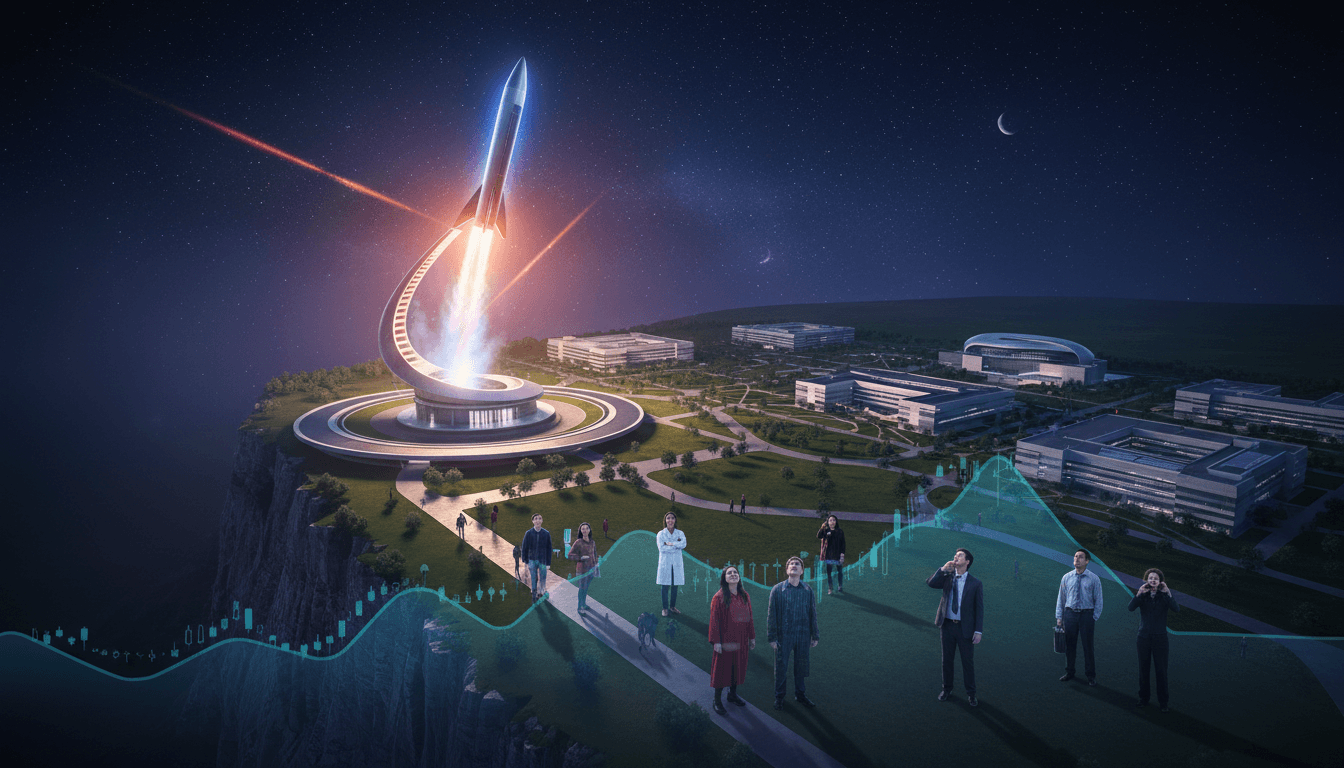
A monumental SpaceX IPO is reportedly on the horizon, with Elon Musk’s trailblazing aerospace company eyeing a staggering $75 billion raise. This news, emerging on Friday, March 27, 2026, signals a seismic shift in the private capital markets and the broader space industry, potentially marking one of the largest public offerings in history. The sheer scale of this potential public debut underscores SpaceX’s unparalleled growth and its transformative impact on both space exploration and commercial enterprise.
The Story Behind a Monumental SpaceX IPO
The report indicates that SpaceX could file for its Initial Public Offering as soon as this week, aiming to secure an astonishing $75 billion. This valuation and fundraising target position SpaceX not merely as a tech giant, but as a crucial infrastructure player for humanity’s future in space. While details remain sparse, the anticipation surrounding such a massive capital injection highlights the market’s profound confidence in Elon Musk’s vision and SpaceX’s proven capabilities. The company, known for its reusable rocket technology and ambitious Starlink satellite internet constellation, has consistently pushed the boundaries of what was previously thought possible in aerospace.
Elon Musk, the charismatic and often controversial figure behind SpaceX, has long championed a future where humanity is a multi-planetary species. His relentless pursuit of this goal has seen SpaceX achieve a series of unprecedented milestones, from landing orbital-class rockets vertically to launching thousands of satellites into low Earth orbit. The company’s journey from a nascent startup to a global aerospace leader is a testament to its audacious engineering, aggressive timelines, and a steadfast belief in innovation.
From Vision to Valuation: SpaceX’s Ascent
Founded in 2002 with the audacious goal of revolutionizing space technology and enabling the colonization of Mars, SpaceX has systematically dismantled the traditional barriers to space access. Early struggles and near-failures only fueled Musk’s determination. Key milestones include the Falcon 9 rocket’s first successful launch in 2010, the groundbreaking achievement of landing and reusing an orbital rocket booster in 2015, and the deployment of the first Starlink satellites in 2019. Each step has been a building block towards greater efficiency, lower costs, and increased frequency of launches, fundamentally altering the economics of space travel.
The development of the Starship program, designed for deep-space missions and eventual Martian colonization, further exemplifies SpaceX’s long-term strategic vision. These ambitious projects, coupled with the ongoing deployment of the Starlink constellation, have propelled SpaceX’s valuation into the stratosphere, attracting significant private investment and setting the stage for this potential public offering. For more insights into groundbreaking corporate strategies, explore more success stories on The Financial Standard.
Strategic Pillars: Innovation and Integration
SpaceX’s success is built upon several strategic pillars. Firstly, its relentless focus on reusability has drastically cut launch costs, making space more accessible. This competitive advantage has allowed it to secure lucrative contracts with NASA, the U.S. military, and commercial clients worldwide. Secondly, vertical integration, where SpaceX designs and manufactures nearly all its components in-house, provides unparalleled control over its supply chain and accelerates innovation cycles. Thirdly, the Starlink project represents a dual-pronged strategy: generating significant revenue to fund more ambitious space exploration, while simultaneously building a global broadband network that could transform connectivity for millions. This synergy between commercial ventures and long-term exploratory goals creates a powerful, self-sustaining ecosystem.
“SpaceX’s ability to consistently deliver on ambitious engineering challenges, coupled with its aggressive pursuit of market-disrupting technologies, has created an enterprise of immense value, justifying the monumental SpaceX IPO target.”
Market Ripples and Investor Outlook
A $75 billion SpaceX IPO would send significant ripples across global financial markets and the aerospace industry. For competitors, it validates the burgeoning commercial space sector but also highlights the formidable lead SpaceX has established. Traditional aerospace giants will face renewed pressure to innovate and adapt to SpaceX’s cost-effective and agile approach. For investors, a public SpaceX offers a rare opportunity to own a piece of a company at the forefront of multiple transformative technologies – space travel, satellite internet, and advanced rocketry. The sheer scale of the offering suggests robust demand, reflecting the market’s hunger for high-growth, disruptive companies with clear long-term visions.
The potential for a public listing could also unlock a new wave of investment in adjacent space technologies and services, from asteroid mining to in-orbit manufacturing, as the ecosystem around affordable space access continues to mature. This monumental SpaceX IPO event could redefine benchmarks for private companies seeking to go public.
The Next Frontier: Beyond the IPO
Should the IPO proceed as reported, the $75 billion infusion would provide SpaceX with unprecedented capital to accelerate its most ambitious projects, particularly the development and deployment of Starship and the expansion of the Starlink constellation. Analysts predict that this capital will enable faster iteration and greater risk-taking, potentially shaving years off development timelines for Martian missions and other deep-space endeavors. The company’s future outlook remains firmly fixed on expanding humanity’s reach beyond Earth, making a multi-planetary future a tangible reality rather than a distant dream. The public market’s embrace would not only validate SpaceX’s past achievements but also fuel its relentless pursuit of the next great leap for mankind.