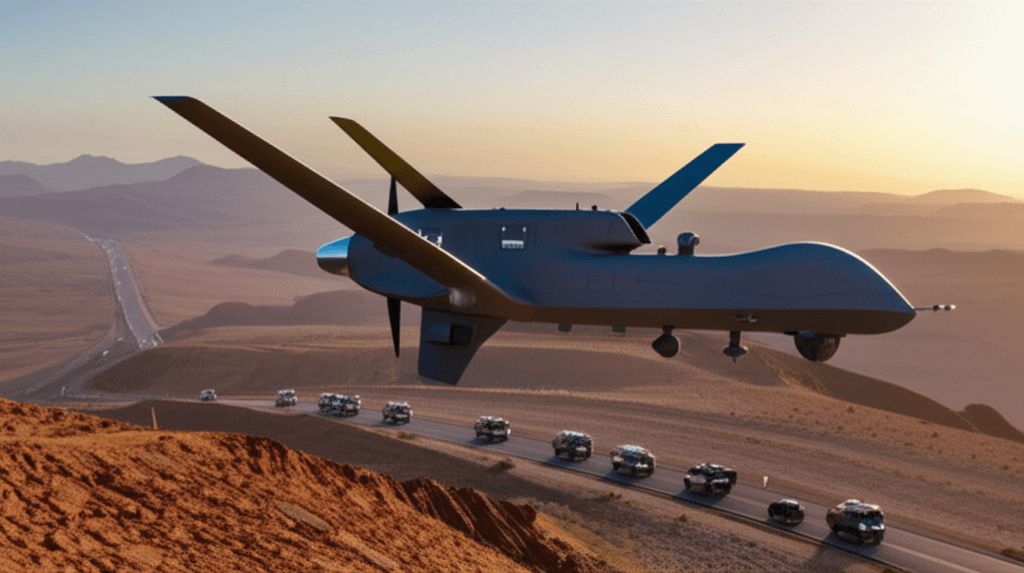
Military drones are increasingly sophisticated, and their advanced technology holds essential lessons for the development of self-driving cars. The autonomous capabilities honed in military applications, particularly in challenging and unpredictable environments, offer valuable insights into improving the safety and reliability of autonomous vehicles on our roads.
The Transferable Tech: Drone Advances
One of the most significant areas where military drones can inform self-driving car technology is in sensor fusion. Drones rely on a combination of sensors—cameras, lidar, radar, and inertial measurement units (IMUs)—to build a comprehensive understanding of their surroundings. This redundancy and integration of data is critical for robust perception, especially in adverse weather conditions or when sensors are partially obscured. Similarly, self-driving cars need to integrate data from multiple sensors to ensure accurate and reliable navigation.
Another key area is in path planning and decision-making. Military drones are often tasked with navigating complex terrains and dynamic environments, requiring sophisticated algorithms to plan optimal routes and react to unexpected obstacles. These algorithms, refined through years of real-world testing and deployment, can be adapted to improve the decision-making capabilities of self-driving cars, enabling them to navigate crowded streets and unpredictable traffic patterns more effectively. related Industries news.
Essential Lessons: Enhanced Redundancy
Military drones are designed with a high degree of redundancy to ensure mission success, even in the face of component failures or external interference. This redundancy extends to critical systems such as navigation, communication, and power. Self-driving cars can benefit from adopting a similar approach, incorporating backup systems and fail-safe mechanisms to mitigate the risk of accidents caused by system malfunctions.
“Redundancy is not just about having backups; it’s about ensuring seamless transitions between systems in the event of a failure.”
Cybersecurity Implications
Military drones operate in contested environments where they are vulnerable to cyberattacks and electronic warfare. As a result, they are equipped with robust cybersecurity measures to protect against unauthorized access and manipulation. Self-driving cars, which are increasingly connected to the internet, are also vulnerable to cyberattacks. Learning from the cybersecurity strategies employed in military drones can help automakers develop more secure and resilient autonomous vehicles.
The Future of Autonomous Systems
The collaboration between military drone technology and self-driving car development is poised to accelerate the advancement of autonomous systems. By leveraging the lessons learned from military applications, self-driving car manufacturers can improve the safety, reliability, and security of their vehicles, paving the way for a future where autonomous transportation is commonplace. The transfer of knowledge and technology between these two domains represents a significant opportunity to drive innovation and create a safer, more efficient transportation ecosystem.
Ultimately, the essential lessons from military drones highlight the importance of robust sensor fusion, advanced path planning, enhanced redundancy, and stringent cybersecurity measures in the design and development of self-driving cars. Embracing these principles will be crucial for realizing the full potential of autonomous vehicles and ensuring their safe and widespread adoption.