
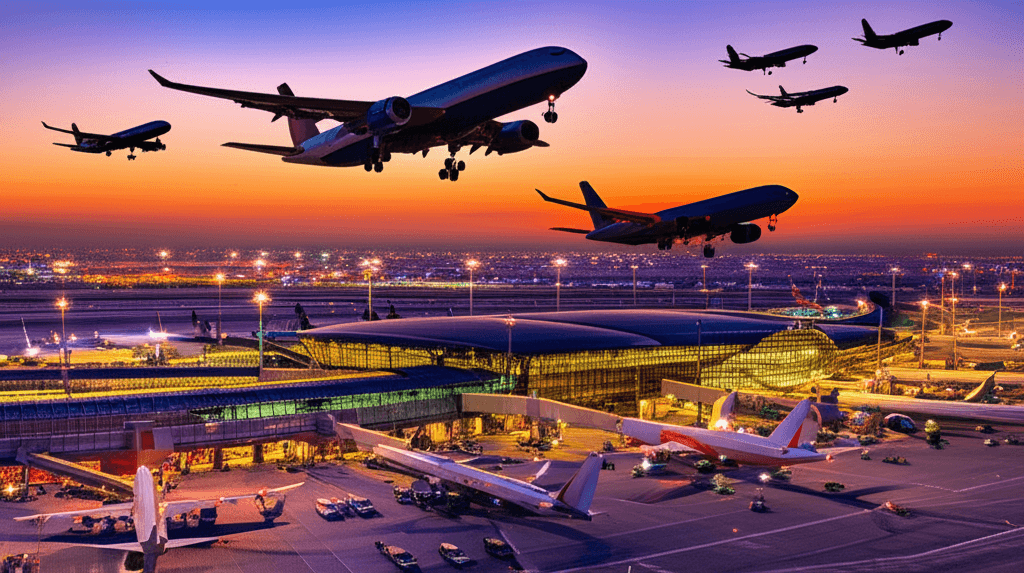
Middle East airports are facing unprecedented disruption following recent geopolitical events, and the impact on global air travel is becoming increasingly clear. The closure of major hubs like Dubai and Doha after the U.S. and Israel’s attacks on Iran has triggered widespread cancellations and delays, leaving international travelers stranded and airlines scrambling to reroute flights.
According to travel industry analyst Henry Harteveldt, these airports serve as critical crossroads for flights spanning all continents. The ripple effect of their closure is impacting not only passenger travel but also cargo operations, potentially disrupting supply chains worldwide. The situation is further complicated by Tehran’s retaliatory strikes, escalating tensions and prompting airlines to prioritize safety above all else.
Airlines Grapple with Route Disruptions
Several major airlines, including United Airlines and Delta Air Lines, have already canceled flights to Middle Eastern destinations, particularly Tel Aviv, extending through the weekend. Stephen Trent, an independent airline analyst, points out that U.S. airlines have been navigating disruptions in the region for the past few years, leading to route restrictions that may mitigate some of the immediate impact. However, the sheer scale of the airport closures presents a significant challenge.
The rise of Dubai and Doha as major air travel hubs began in the 2000s, fueled by their countries’ emergence as global economic powerhouses. Emirates, for example, operates Airbus A380 jets, capable of carrying over 500 passengers, underscoring the region’s pivotal role in international aviation. The current crisis highlights the vulnerability of this interconnected system to geopolitical instability.
The Historical Context of Air Travel Hubs
Historically, Tehran’s Mehrabad airport was poised to become a major global hub connecting East and West in the 1970s, but the Iranian Revolution curtailed that trajectory, according to Harteveldt. Dubai, Doha, and Abu Dhabi subsequently filled that void, transforming the region into a crucial transit point for millions of travelers. The current conflict underscores the fragility of these hubs and the potential for long-term shifts in global air travel patterns.
The Impact on Middle East Airports
The closure of Middle East airports is more than just a short-term inconvenience; it’s a major blow to the global aviation industry. Aviation analytics firm Cirium estimates that Emirates, Qatar Airways, and Etihad connect roughly 90,000 transiting passengers daily, excluding those destined for the Middle East. This figure underscores the sheer volume of travelers affected by the current disruptions. related Finance news
“It’s going to be highly highly disruptive to international air travelers.”
Even if the conflict de-escalates quickly, restoring normal flight schedules will take time, as airlines grapple with rerouted planes and scattered crews. The financial implications for airlines, airports, and related industries are substantial, adding to the already complex challenges facing the global economy.
The repercussions of this crisis extend beyond immediate flight cancellations and delays. The long-term impact on passenger confidence, airline profitability, and the future of Middle Eastern airports as global hubs remains uncertain. Careful monitoring of the situation and proactive risk management strategies will be crucial for navigating this turbulent period.


