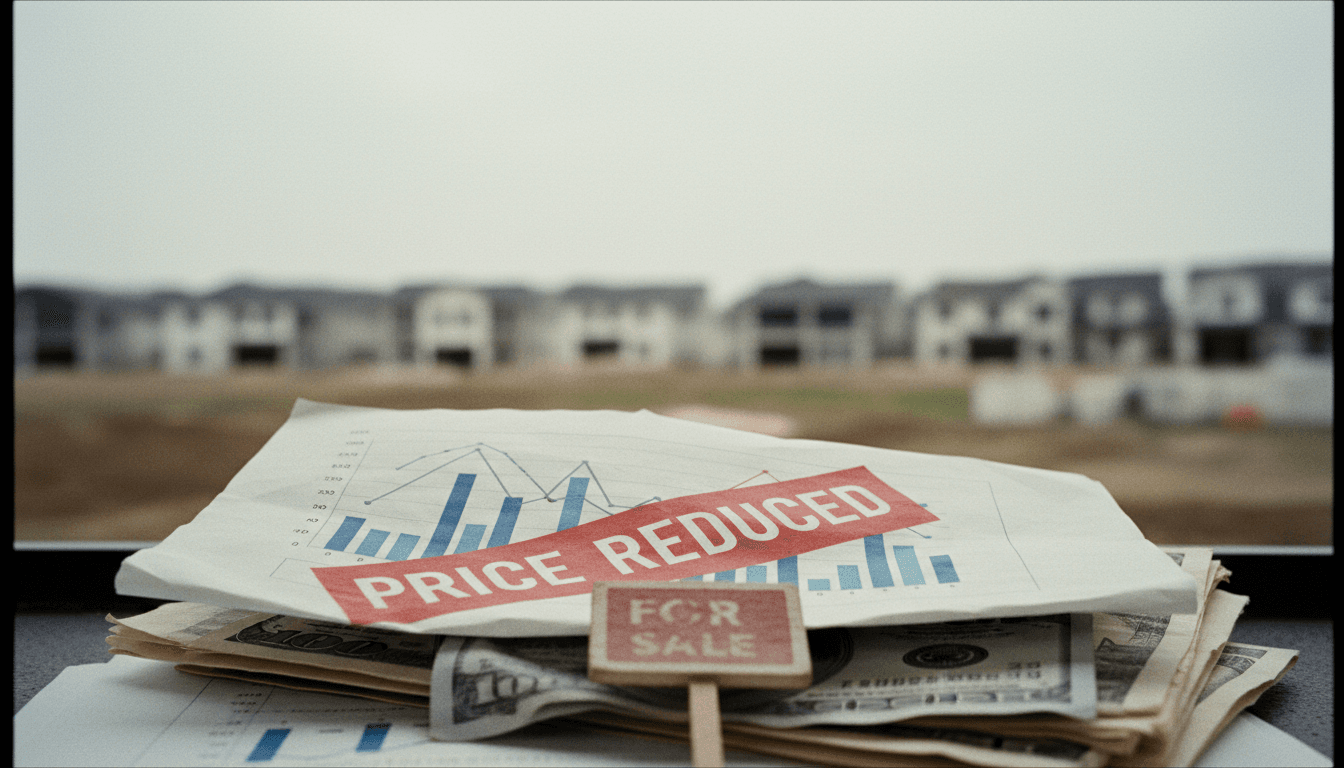
Lennar cuts home selling price to 2017 levels, a strategic maneuver by one of the U.S.’s largest homebuilders in response to a challenging housing market. This proactive approach tackles high mortgage rates, persistent affordability constraints, and cautious consumer sentiment head-on, even at the cost of narrower margins.
The company’s Q1 2026 earnings report, released on March 12, 2026, revealed a significant shift in strategy. Lennar’s average sales price for homes delivered in Q1 2026 dropped to $374,000. This figure marks an 8.3% year-over-year decrease and a substantial 24% ($118,500) decline from the peak observed in Q3 2022. Notably, this average price point is almost identical to the $375,000 reported in Q3 2017 and the $376,000 for the full year 2017, underscoring the severity of the market adjustment.
Lennar Cuts Home Selling Price Amidst Market Headwinds
The decision by Lennar to aggressively reduce prices is a direct consequence of current market dynamics. Executive Chairman and CEO Stuart Miller articulated the company’s philosophy, stating,
“adapting to market conditions as they are and not waiting for the market to bounce back.”
This pragmatic stance emphasizes agility and a willingness to prioritize sales volume over peak profitability in the short term. To facilitate sales, Lennar has ramped up incentives, including mortgage-rate buydowns, which constituted a significant 14% of the average sales price in Q1 2026.
Financial Performance Reflects Strategic Shift
Lennar’s Q1 2026 financial performance clearly illustrates the impact of this strategy. Revenue for the quarter came in at $6.6 billion, falling short of the forecasted $6.84 billion and representing a 13% year-over-year decrease. Earnings Per Share (EPS), excluding mark-to-market gains, was $0.88, missing the $0.95 forecast. GAAP EPS stood at $0.93. Gross margin on home sales compressed significantly to 15.2%, down from 18.7% in Q1 2025 and a steep decline from 26.9% in Q1 2022. While deliveries saw a 5% year-over-year decrease to 16,863 homes, new orders showed a glimmer of resilience, increasing 1% year-over-year to 18,515 homes, indicating some buyer response to the lower price points. The backlog stands at 15,588 homes with a dollar value of $6.0 billion.
Broader Market Implications and Future Outlook
Lennar’s moves are not isolated; they reflect a broader trend impacting the related Finance news and the entire U.S. housing market. Homebuilders are increasingly focusing on affordability and sales volume to navigate a landscape where potential buyers are grappling with elevated borrowing costs and economic uncertainties. Despite the immediate pressure on margins, Lennar maintains a robust financial position with $2.1 billion in cash and improved inventory turnover. The company projects an optimistic outlook, anticipating Q1 2026 gross margin to be the low point for the year, with forecasted EPS growth to $1.45 for Q2 2026 and $1.99 for Q3 2026. This strategy to actively manage the market, rather than passively await a recovery, positions Lennar to continue targeting the mass market, aiming to make homeownership accessible for average families even in challenging times.
In essence, Lennar’s aggressive pricing adjustments, including significant incentives, underscore a pragmatic response to current market realities. By prioritizing sales and adapting to consumer affordability challenges, the company aims to maintain market presence and drive future growth, even if it means sacrificing short-term profit peaks.