Israel’s nuclear weapons program, long shrouded in a policy of deliberate ambiguity known as “Amimut,” continues to be a critical subject of international scrutiny and strategic debate. While never officially confirmed, the widely held belief that Israel possesses nuclear capabilities shapes regional dynamics and global non-proliferation efforts. This strategic silence allows Israel to maintain a powerful deterrent without incurring the full international repercussions of openly declaring its arsenal.
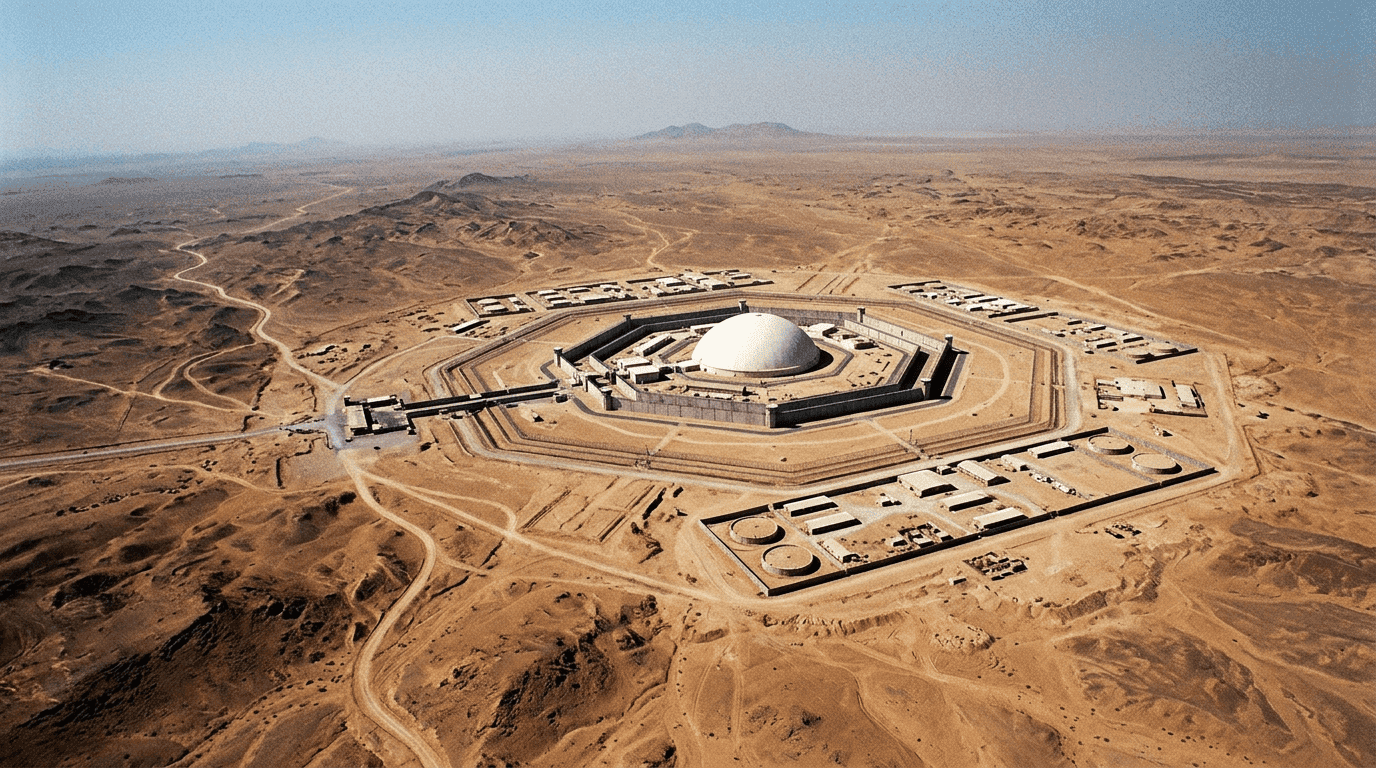
The foundation of Israel’s alleged nuclear capabilities lies deep within the Negev Desert, at the Shimon Peres Negev Nuclear Research Center, more commonly known as the Dimona reactor. This heavily guarded facility, approximately 13 kilometers (8 miles) from Dimona city, became operational around 1963, following crucial support from France in the late 1950s. Its initial construction, beginning in early 1958, was cloaked in secrecy, with Israeli officials initially claiming it was a textile plant or a meteorological station, before its true purpose was gradually understood by U.S. intelligence by late 1960. The reactor is estimated to produce about 9 kilograms (20 pounds) of plutonium annually, sufficient for one 20-kiloton nuclear bomb.
The Dimona Reactor: Cornerstone of Deterrence
The Dimona reactor remains central to the narrative surrounding Israel’s nuclear weapons program. In a landmark moment in October 1986, Israeli nuclear technician Mordechai Vanunu provided photographic evidence and detailed accounts of the facility, offering the world its most credible glimpse into Israel’s undeclared nuclear ambitions. These revelations significantly reinforced international suspicions about the scale and sophistication of the program.
Estimates of Israel’s nuclear arsenal vary, but organizations like the Stockholm International Peace Research Institute (SIPRI) suggested in June 2025 that Israel possesses more than 80 nuclear warheads, with other figures ranging up to 400. This arsenal is believed to be supported by a robust nuclear triad, providing delivery capabilities across air, land, and sea. This includes air-deliverable gravity bombs compatible with F-15 and F-16 aircraft, long-range Jericho-2 ballistic missiles (with Jericho III models gradually integrated), and nuclear-armed cruise missiles carried by German-built Dolphin-class submarines.
“Israel’s policy of ‘Amimut’ allows it to reap the benefits of nuclear deterrence while navigating the complex landscape of international non-proliferation treaties.”
International Stance and Safety Concerns
Israel’s non-participation in core non-proliferation frameworks, including its refusal to sign the Treaty on the Prohibition of Nuclear Weapons and its unratified Comprehensive Nuclear-Test-Ban Treaty (signed in 1996), underscores its unique position on the global stage. This stance is often linked to the unconfirmed “Samson Option,” a doctrine suggesting a last-resort use of its nuclear arsenal if the nation faces an existential threat.
Recent satellite imagery and reports from 2021 and September 2025 have indicated significant construction and excavation work at the Dimona site, fueling speculation among experts about a new reactor or an expanded facility for assembling nuclear weapons. Such developments naturally raise concerns about regional stability and safety. The Dimona facility itself has been highlighted as a potential safety risk, particularly amidst escalating regional tensions. Reports of Iranian officials threatening to target the complex in the event of a “regime change” scenario underscore the severe radiological risks a strike on Dimona could pose to surrounding populations and the broader region.
Future Implications of the Program
The ongoing secrecy and perceived expansion of Israel’s nuclear weapons program present complex challenges for international diplomacy and security. As geopolitical tensions in the Middle East persist, the undeclared nature of this arsenal continues to be a significant factor in regional power dynamics and global non-proliferation efforts. Understanding the historical context, current capabilities, and potential future trajectory of this program is essential for assessing its broader implications for peace and stability.
For more insights into financial and geopolitical impacts, explore our related Finance news.