
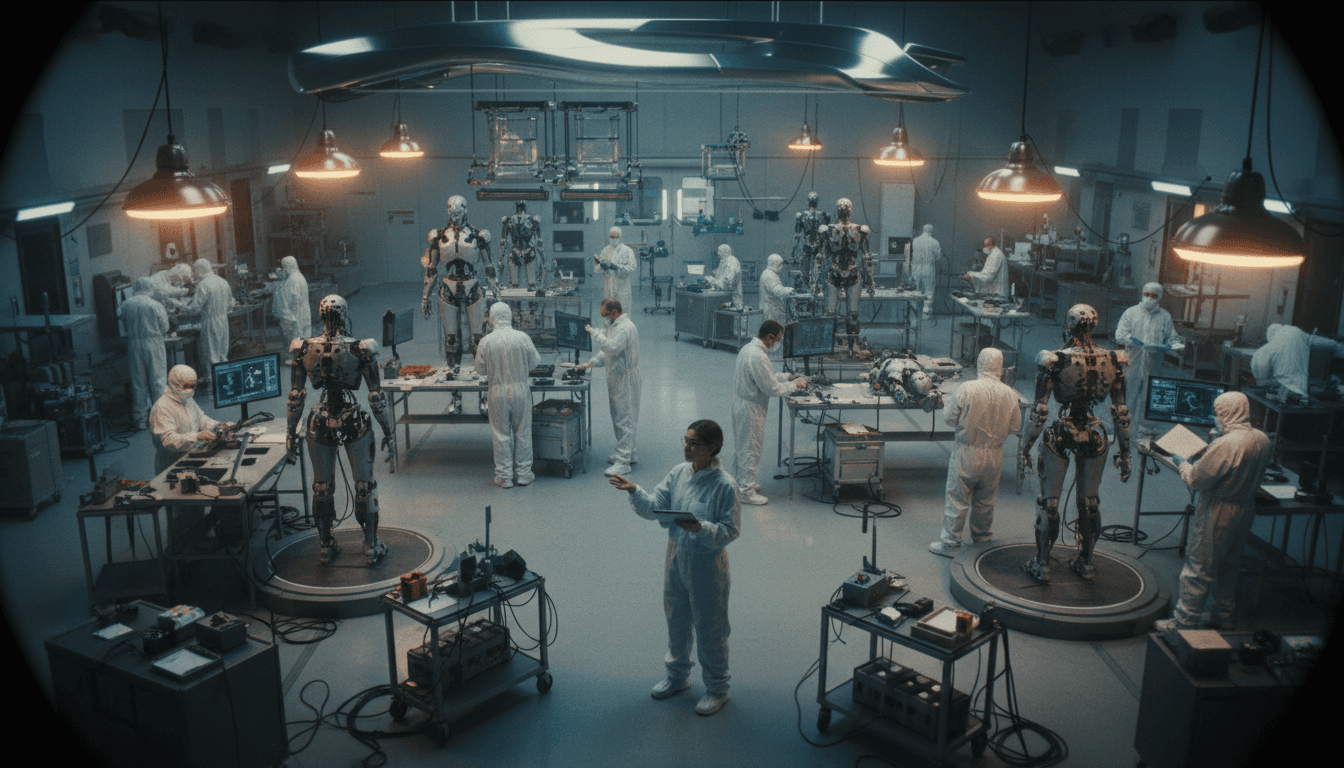
Humanoid robotics development faces significant engineering barriers in its journey towards real-world deployment. A recent technical examination highlighted the persistent challenges in sensing, motion control, power management, and thermal regulation that engineers must overcome to unlock the full potential of these advanced machines.
The path to truly autonomous and robust humanoids is paved with complex technical hurdles. From maintaining stable bipedal locomotion across unpredictable terrains to ensuring the safety and perception capabilities required for human interaction, each component demands innovative design strategies.
Motion Control: The Unsolved Frontier
Motion control remains arguably the hardest unsolved problem in humanoid robotics development. The intricate dance of maintaining balance and executing fluid movements across dynamic environments demands sophisticated modelling, real-time feedback loops, and advanced sensor fusion techniques. Engineers grapple with the inherent instability of bipedal systems, where every step is a controlled fall requiring instantaneous adjustments based on continuous data streams from various sensors. This complexity is exponentially increased when considering tasks like navigating stairs, carrying objects, or interacting with unpredictable human environments.
“Achieving stable bipedal locomotion in dynamic environments is a multi-layered engineering puzzle, demanding unparalleled precision in sensor integration and real-time algorithmic response.”
The challenge extends beyond simple balance to achieving human-like dexterity and responsiveness. This involves developing advanced actuators, sophisticated gait generation algorithms, and robust disturbance rejection capabilities. The goal is not just to move, but to move gracefully, efficiently, and safely, mirroring human capabilities as closely as possible.
Sensing Architectures for Perception and Safety
Effective sensing architectures are paramount for enabling both perception and safety in humanoid robots. These systems act as the robot’s eyes and ears, allowing it to understand its surroundings, detect obstacles, and interpret human cues. High-resolution cameras, LiDAR, ultrasonic sensors, and tactile sensors are integrated to create a comprehensive understanding of the environment. The data from these diverse sensors must be fused and processed in real-time to build an accurate internal model of the world, crucial for navigation, object manipulation, and collision avoidance.
Beyond basic environmental awareness, sensing is critical for human-robot interaction. Understanding gestures, facial expressions, and vocal commands requires advanced AI and machine learning applied to sensor data. This is particularly vital in collaborative settings where humanoids might work alongside people, requiring them to anticipate actions and react appropriately to ensure mutual safety. For more insights into the broader industrial landscape, explore our related Industries news.
Power and Thermal Management Strategies
The power and thermal challenges in humanoid robotics development are often underestimated but are foundational to sustained operation. Humanoid robots, with their numerous motors and sophisticated onboard computing, consume significant power. This necessitates high-density, efficient battery systems and intelligent power distribution networks. The trade-off between battery life and robot weight/size is a constant design consideration.
Equally critical is thermal management. The continuous operation of motors, processors, and sensors generates substantial heat. Without effective cooling strategies, performance degrades, and components can be damaged. Engineers are exploring innovative cooling solutions, from passive heat sinks and advanced materials to active liquid cooling systems, all while striving to maintain the robot’s compact form factor and energy efficiency. Overcoming these hurdles is essential for extending operational durations and ensuring reliable performance in real-world scenarios.
The journey of humanoid robotics development is one of continuous innovation, demanding a multidisciplinary approach to solve complex engineering problems. From the nuanced intricacies of motion control to the fundamental requirements of power and thermal regulation, each barrier overcome brings us closer to a future where humanoids seamlessly integrate into our lives and industries.


