Hidden car costs are giving buyers a nasty surprise long after they drive off the lot. While the sticker price of a new vehicle grabs headlines, many consumers are blindsided by the escalating expenses of insurance and maintenance, significantly impacting their overall financial well-being. Buyers often fail to factor in these hidden car costs when budgeting, a mistake that’s becoming increasingly expensive.
The surge in insurance and maintenance expenses means that prospective car owners must look beyond the initial purchase price. Since 2020, car insurance has jumped by approximately 55%, while maintenance and repair costs have risen by about 47%, according to consumer-price index data. These increases outpace the price hikes for both new and used cars.
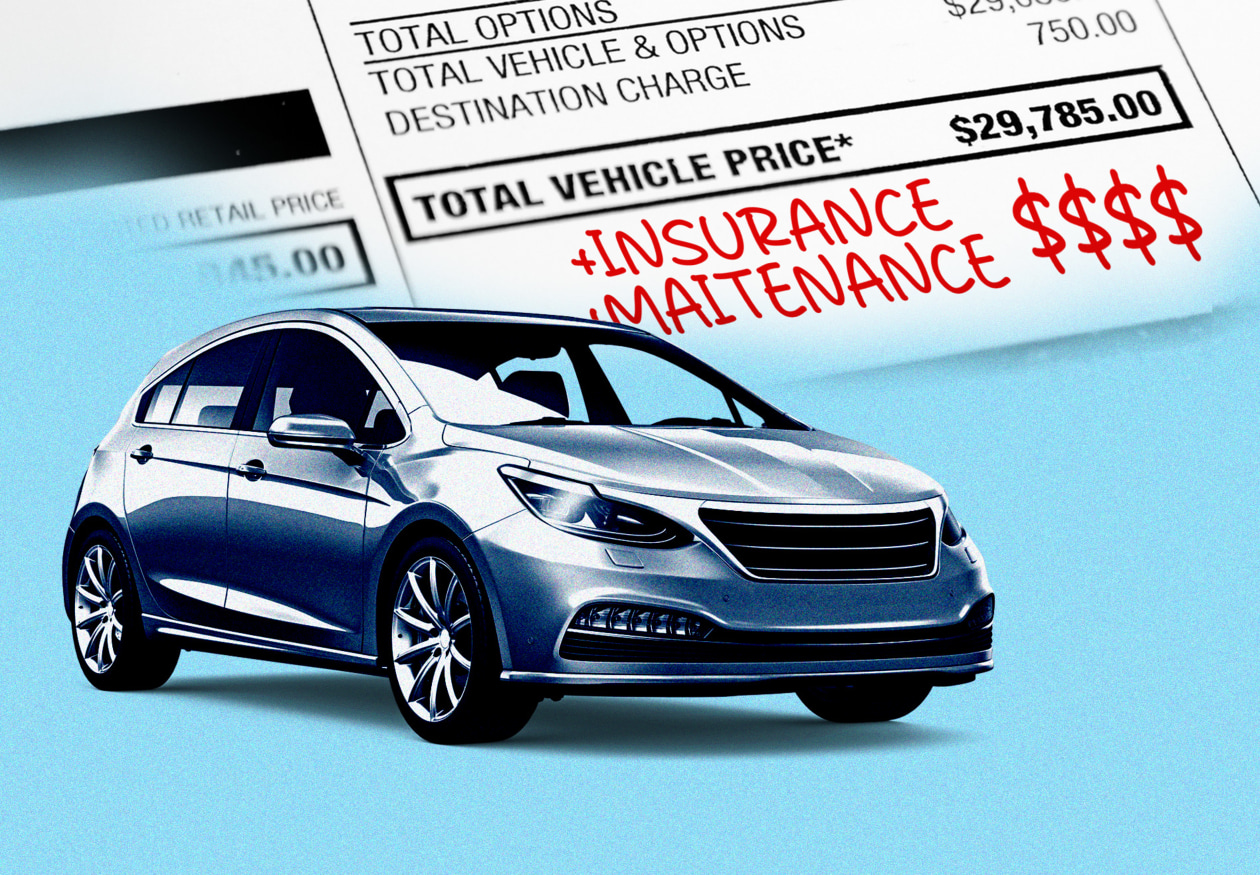
Illustration of a car with a bill showing added costs for insurance and maintenance.
Understanding the True Cost of Ownership
According to Bankrate, the average annual car insurance premium in the U.S. is $2,697, or $225 per month. AAA data reveals that repairs and maintenance for a vehicle driven 15,000 miles annually average $1,650 per year, or $138 per month. Combined, these hidden car costs total $363 monthly, roughly half the average monthly car payment, excluding gas and taxes.
“Buying a car today means looking well beyond the sticker price. Insurance, taxes, registration, fuel and maintenance can add a lot – especially with newer, tech-heavy cars that are expensive to fix.”
Despite these rising expenses, a TransUnion survey indicates that nearly 40% of consumers plan to buy a vehicle within the next 12 months. However, cost concerns (53%) and economic uncertainty (44%) are keeping others on the sidelines. The average new car price exceeded $50,000 last year, making affordability a significant hurdle.
Factoring in Hidden Car Costs Before You Buy
Financial experts recommend allocating 15% to 20% of your gross income to transportation costs, including car payments, insurance, gas, maintenance, and repairs. Those with tighter cash flow should aim for the lower end of this range. For example, someone earning $100,000 annually should budget $1,250 to $1,670 per month for transportation.
Automotive expert Lauren Fix suggests shopping around for the best insurance rates before purchasing a vehicle. Online comparison tools like the Zebra or Jerry can help compare premiums from different companies based on your driving history and the car you’re considering. Doing your homework can help you determine if you can truly afford both the car and its insurance.
Strategies for Lowering Monthly Expenses
Consumers can take steps to reduce the financial strain of car ownership. Fix recommends considering unsold 2025 models for potential deals. Additionally, inquire about “conquest deals” if switching brands or “loyalty deals” if sticking with the same brand. Kyle Playford, a certified financial planner, advises clients to budget $1,000 to $2,000 annually for repairs and maintenance, adjusting for inflation each year. Also, check out related Finance news for guidance on managing your money.
AAA’s driving-costs calculator can help estimate the long-term cost of owning a specific car, factoring in location, financing, fuel, insurance, taxes, fees, and maintenance. By carefully considering these factors, buyers can avoid sticker shock and make more informed financial decisions.
Ultimately, being proactive and informed can help consumers mitigate the impact of hidden car costs and achieve their car-buying goals without breaking the bank.
Source: MarketWatch