
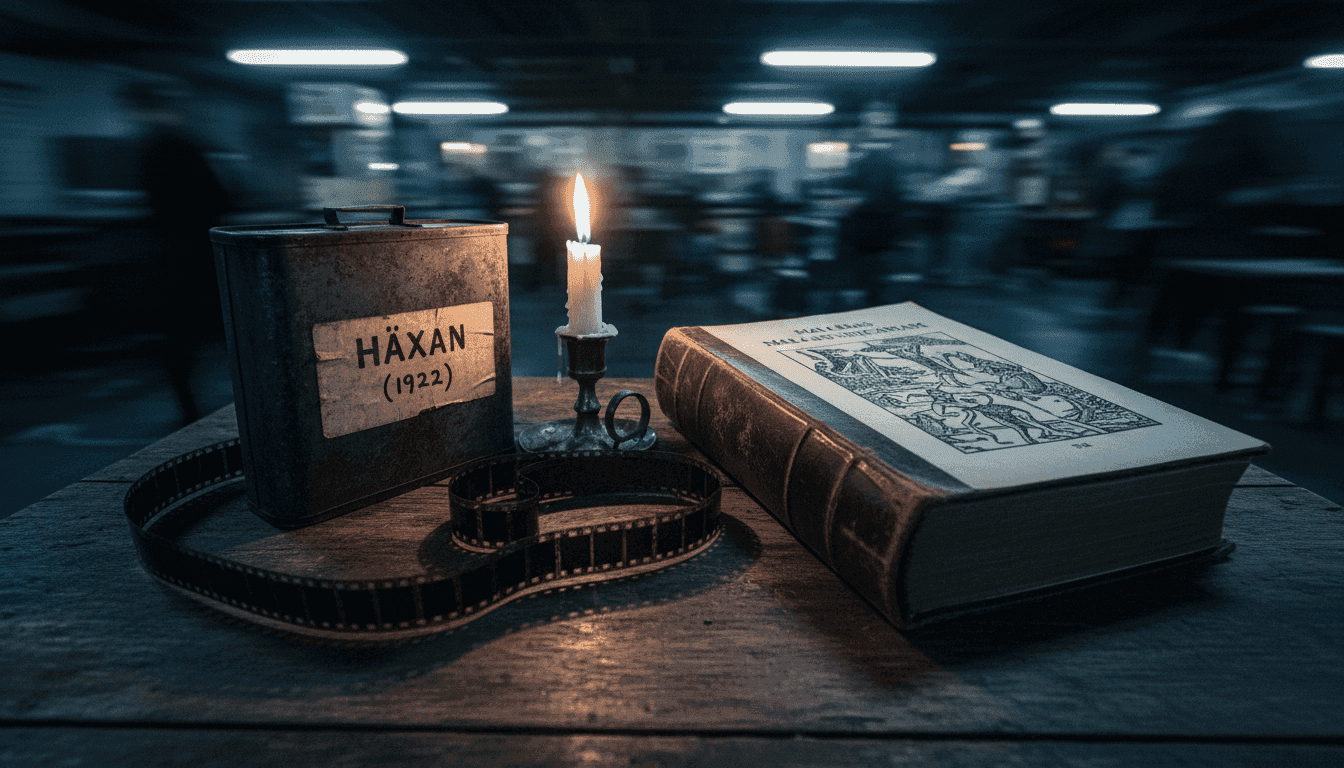
Häxan silent film, the groundbreaking 1922 Swedish-Danish horror essay, captivated audiences on April 12, 2026, as part of Naked Capitalism’s “The Sunday Morning Movie” series. This cinematic masterpiece, also known as *The Witch* or *Witchcraft Through the Ages*, offers a unique exploration of historical witchcraft, blending documentary elements with dramatized narratives over its 1 hour and 45-minute runtime. Written and directed by Benjamin Christensen, the film’s enduring relevance lies in its pioneering approach to a complex and often misunderstood subject.
Christensen’s meticulous research, partly based on the 15th-century inquisitor’s guide *Malleus Maleficarum*, forms the intellectual backbone of *Häxan*. The film provocatively suggests that the rampant witch-hunts of the past may have originated from societal misunderstandings of mental or neurological disorders, escalating into widespread hysteria. This insightful perspective challenges conventional historical interpretations and encourages viewers to reconsider the origins of mass paranoia and persecution.
The Enduring Impact of Häxan Silent Film
Produced by AB Svensk Filmindustri and filmed in Denmark between 1920 and 1921, *Häxan* was an ambitious undertaking. With a budget approaching two million Swedish kronor, it held the distinction of being the most expensive Scandinavian silent film of its era. Christensen’s dedication to authenticity is evident in his painstaking recreation of medieval scenes, often filmed under controlled, dark conditions to enhance the film’s unsettling aesthetic. The significant investment and artistic commitment underscore the film’s importance as a landmark in early cinema.
“Häxan’s innovative blend of documentary and dramatized narrative offers a chilling yet rational commentary on superstition and the abuse of power.”
Upon its initial release, *Häxan* garnered positive attention in Denmark and Sweden. However, its graphic content—including depictions of torture, nudity, sexual perversion, and strong anti-clerical themes—led to significant censorship in countries such as Germany, France, and the United States. This historical controversy only amplified the film’s mystique and cemented its reputation as a challenging and provocative work. A re-edited version, *Witchcraft Through the Ages*, featuring narration by William S. Burroughs, was released in the US in 1968, further solidifying its cult status and introducing it to a new generation of viewers.
Pioneering Cinematic Techniques
Beyond its thematic depth, *Häxan* is celebrated for its groundbreaking cinematic techniques. Christensen employed archival imagery, a didactic narrative voice conveyed through intertitles, and a range of visual tricks including reversed film footage, stop motion, and early animation. These innovations contributed to the film’s “nightmarish quality” and “disturbing pagan energy,” as noted by critics, while maintaining a rational, Jules Michelet-inspired narrative. The film’s influence on subsequent horror and documentary filmmaking is undeniable, showcasing how early cinema pushed boundaries both in storytelling and visual execution. For more insights into how historical events shape our economy, explore our related Finance news.
Ultimately, *Häxan* transcends its historical context to serve as a timeless commentary on human fallibility. It dissects the mechanisms of superstition, paranoia, and the dangerous abuse of power, offering a mirror to our own society’s vulnerabilities. The film’s enduring power lies in its ability to provoke thought and spark discussion about the dark corners of human belief and behavior, making the return of the Häxan silent film a significant cultural event.


