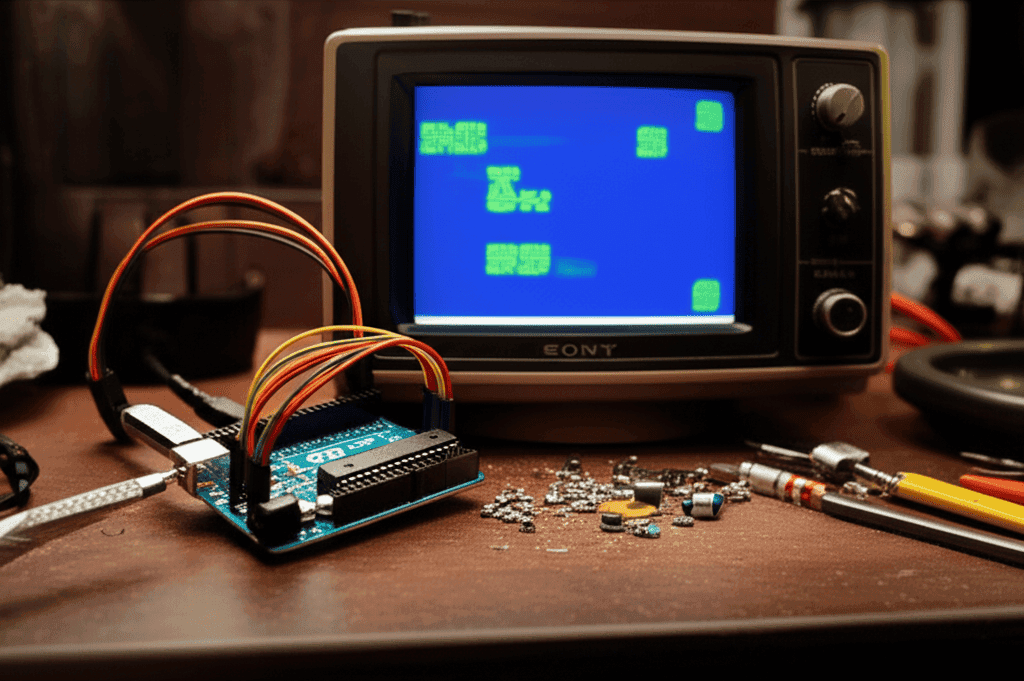
Gaming on Arduino Linux is now a reality, thanks to innovative developers pushing the boundaries of what’s possible with limited resources. Following Qualcomm’s acquisition of Arduino, the market has been abuzz with speculation about the target audience for the new Uno Q board. Taking inspiration from the ongoing RAM-pocalypse, Bringus Studios has achieved the seemingly impossible: running games on an Arduino Uno Q in a Linux environment.
This feat, highlighted by Hackaday, demonstrates the ingenuity of the open-source community and the enduring appeal of retro computing. The Arduino Uno Q, despite its limitations, is proving to be a versatile platform for experimentation and innovation. It raises critical questions about the future of embedded systems and their potential applications beyond traditional industrial uses.
Unlocking Potential of the Uno Q
The key to Bringus Studios’ success lies in their efficient use of memory and optimized code. They were able to squeeze a lightweight Linux distribution onto the Arduino Uno Q, which is a significant achievement in itself. This opens up a world of possibilities for developers looking to create low-power, cost-effective gaming solutions.
The implications for the broader tech industry are substantial. If developers can successfully run games on such a resource-constrained platform, it suggests that similar techniques could be applied to other areas, such as IoT devices and embedded systems. This could lead to a new wave of innovation in these sectors, driving down costs and increasing accessibility.
“The ability to run Linux and games on an Arduino Uno Q highlights the power of open-source development and the potential for resource-constrained computing.”
Gaming on Arduino Linux: A New Frontier
The success of Bringus Studios also sheds light on the evolving landscape of the gaming industry. While AAA titles continue to dominate the headlines, there is a growing demand for smaller, more accessible games that can be played on a wider range of devices. related Industries news show that this experiment proves that the Arduino Uno Q can become a viable platform for indie developers looking to create unique and engaging experiences.
However, there are challenges ahead. The Arduino Uno Q’s limited processing power and memory will undoubtedly constrain the types of games that can be developed. Optimizing code and finding creative ways to overcome these limitations will be crucial for the long-term success of gaming on this platform. More developers will need to explore **gaming on Arduino Linux** to create a more robust and accessible gaming platform.
The Future of Embedded Gaming
It remains to be seen whether **gaming on Arduino Linux** will become a mainstream phenomenon. However, the early results are encouraging. The ingenuity of Bringus Studios and the enthusiasm of the open-source community suggest that there is a real appetite for this type of innovation.
The development team will need to keep **gaming on Arduino Linux** in mind as they move forward. As technology advances and new development tools become available, the possibilities for **gaming on Arduino Linux** will only continue to expand. The potential for this platform is immense, and the financial implications could be significant.
Challenges and Opportunities
While the initial success is promising, it’s important to acknowledge the challenges. The limited resources of the Arduino Uno Q require developers to be incredibly efficient with their code and memory usage. This can be a significant hurdle for those accustomed to working with more powerful hardware. Developers will need to optimize code to keep **gaming on Arduino Linux** viable.
Despite these challenges, the opportunities are vast. The low cost and accessibility of the Arduino Uno Q make it an attractive platform for hobbyists, educators, and indie developers. This could lead to a surge in innovation and creativity, resulting in a diverse range of unique and engaging gaming experiences.
Source: Hackaday