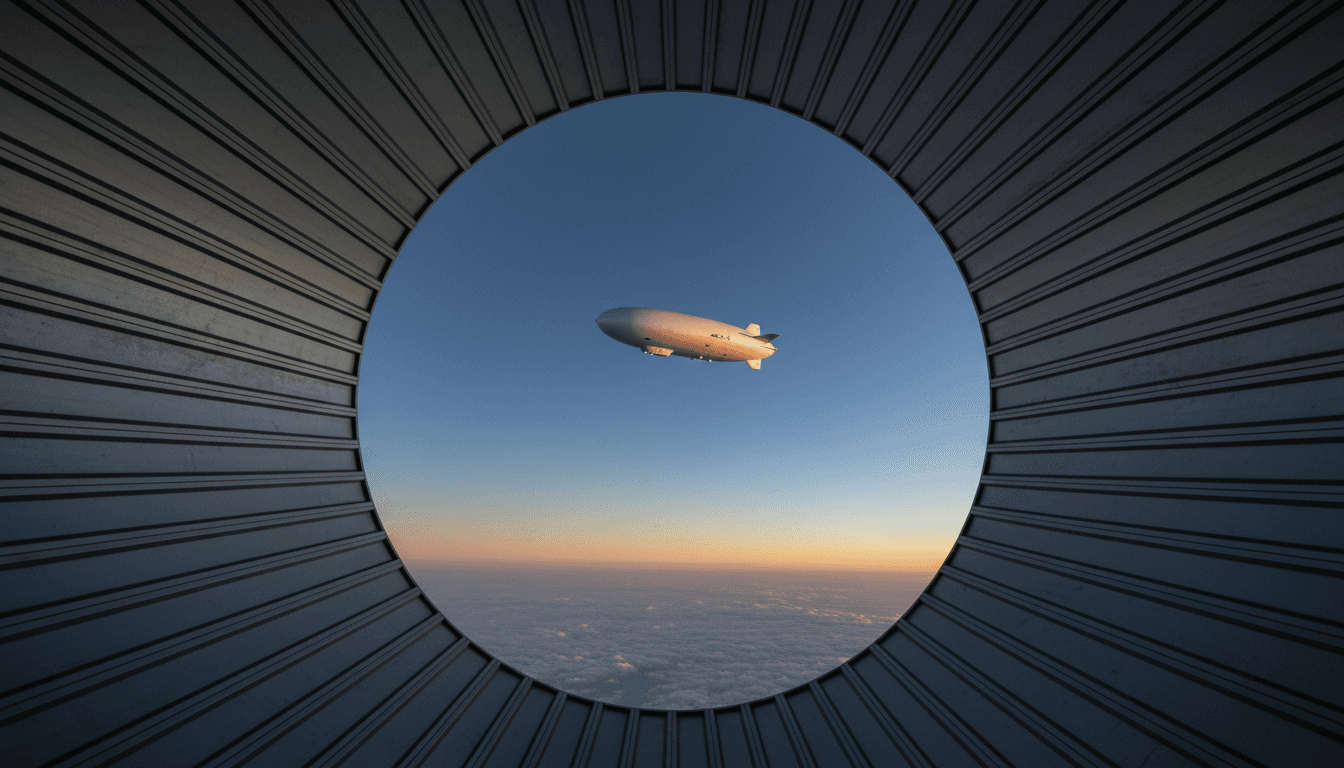
Flying cell towers for lower-latency connectivity are rapidly emerging as a compelling alternative to traditional satellite networks, especially in the face of escalating orbital debris concerns. As the specter of a Kessler Syndrome cascade looms over Low Earth Orbit (LEO) constellations like Starlink, companies such as Sceye are strategically positioning their High Altitude Platform Systems (HAPS) in the stratosphere, offering a robust and sustainable solution for global internet access.
The strategic advantages of these high-altitude dirigibles are immediately apparent. Unlike the disposable nature of many LEO satellites, HAPS platforms are designed for longevity and reusability, representing a more environmentally conscious and economically viable approach. Crucially for financial markets and data-intensive industries, the time-of-flight for a signal to reach a dirigible at 20 km is significantly less than for a satellite orbiting at 480 km. This translates directly into dramatically reduced latency, a critical factor for real-time financial transactions, high-frequency trading, and responsive cloud services.
The Stratospheric Advantage: Cost-Efficiency and Accessibility
Beyond reduced latency, the HAPS concept offers unparalleled accessibility. These stratospheric platforms are engineered to integrate seamlessly with existing terrestrial infrastructure, requiring no specialized transmitters. This means that ordinary 4G and 5G cellular modems can connect directly to these flying cell towers, eliminating a significant barrier to widespread adoption and accelerating rollout in underserved areas. This compatibility drastically reduces the capital expenditure typically associated with deploying new network technologies, making it an attractive proposition for telecommunication providers and investors alike.
“The ability to leverage existing cellular technology with stratospheric platforms dramatically lowers entry barriers and accelerates connectivity rollout, marking a significant leap for global digital inclusion.”
While the concept of beaming internet from the stratosphere might evoke memories of Google’s now-defunct Project Loon, the new generation of dirigible-based HAPS addresses key shortcomings. Loon’s reliance on the unpredictable shifting winds of the upper atmosphere proved to be a major hurdle. Modern dirigible stations, however, are designed with advanced propulsion and navigation systems to maintain stable positions, ensuring reliable and consistent service delivery.
Overcoming Orbital Challenges with Resilient Connectivity
The increasing density of objects in LEO presents a growing threat of orbital collisions, a phenomenon known as Kessler Syndrome. Should such a cascade occur, the disruption to satellite-based communication would be catastrophic. In this scenario, related Industries news suggests that HAPS stations could provide a vital bridge, maintaining essential connectivity between ground-based networks and any remaining space-based assets, or even serving as a primary backbone until orbital conditions stabilize. This resilience makes flying cell towers for lower-latency a strategic asset for national infrastructure and economic stability.
The Future of High-Altitude Connectivity
The resurgence of high-altitude dirigibles as flying cell towers for lower-latency represents a significant shift in the connectivity landscape. With their inherent advantages in latency, cost-efficiency, and resilience against orbital threats, these stratospheric platforms are poised to play a pivotal role in the future of global telecommunications. As companies like Sceye advance their technologies, the promise of ubiquitous, low-latency internet access from the edge of space moves closer to becoming a widespread reality, offering compelling investment opportunities and transforming digital access worldwide.