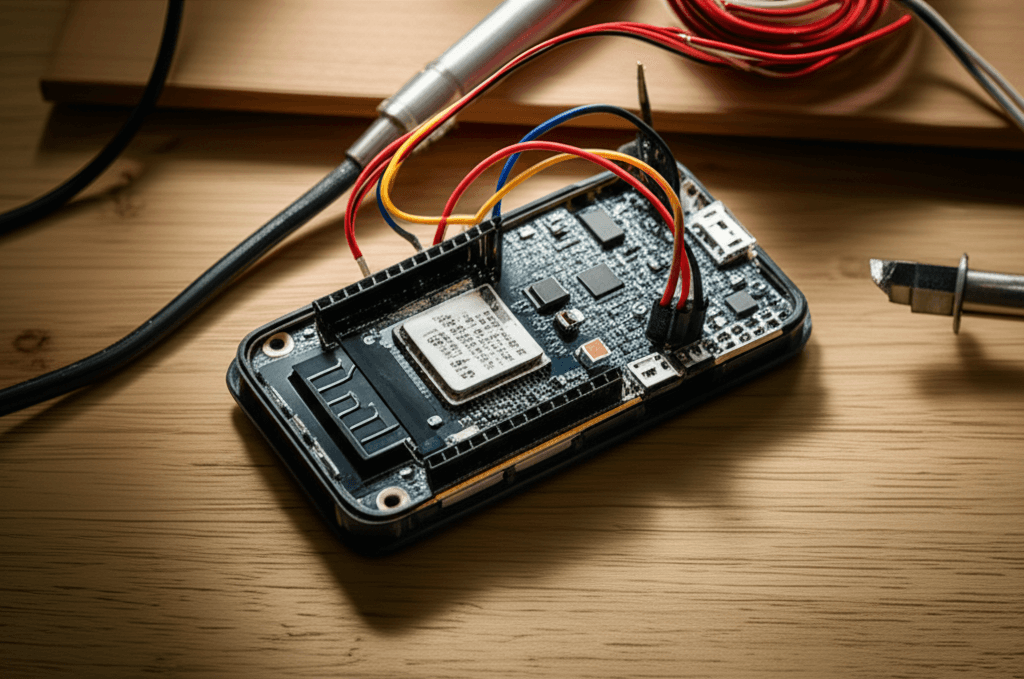
DIY smartphone technology is taking a radical turn as one maker successfully built a functional phone using an ESP32-S3, bypassing the Android and iOS duopoly. LuckyBor, known as Breezy, has created a 4G smartphone from scratch, showcasing a new level of ownership and control over personal technology. This project has significant implications for the future of mobile devices and open-source hardware.
The DIY smartphone boasts features including calling, texting, web browsing, and even photography with its OV2640 Arducam module. Notably, it includes a 3.5mm audio jack, a feature increasingly absent in flagship models. The phone’s compact 3.5″ touchscreen allows for pocket portability, a welcome change for users tired of oversized devices.
The Allure of Open-Source Mobile
While still in its alpha stage, this DIY smartphone represents a significant step towards open-source mobile technology. The current prototype is a layered module, but LuckyBor plans to refine the design into a slimmer form factor using a four-layer PCB. This future iteration will also include an SD-card adapter, and the entire design, both hardware and software, will be open-sourced.
The promise of open-source accessibility is generating excitement within the tech community. As one commenter noted,
“We need such an open platform where we can actually write simple open source programs and be actually sure they do not call home whenever they can.”
This sentiment highlights the growing desire for greater control and transparency in personal technology.
Beyond Android and iOS: A New Paradigm?
The emergence of this DIY smartphone challenges the dominance of Android and iOS. While projects like Postmarket OS and Redox OS offer Linux-based alternatives on existing hardware, this project takes it a step further by building the hardware itself. This approach mitigates concerns about potential backdoors and proprietary control.
DIY Smartphone: A Game Changer?
The main advantage of this DIY smartphone is the complete ownership and control it offers to the user. This is in stark contrast to the tightly controlled ecosystems of mainstream smartphones. While the performance may not match flagship devices, the principles of transparency and customizability are invaluable.
The open-source nature of the project enables users to modify and adapt the phone to their specific needs. This level of customization is simply not possible with commercial smartphones, which are often locked down and restricted by manufacturers. This is also related Industries news.
The project could also spur innovation in areas such as security and privacy. By having full control over the hardware and software, users can implement their own security measures and ensure that their data is not being collected or shared without their consent.
As LuckyBor finalizes the design and releases the open-source files, the impact of this project could be substantial. It has the potential to inspire a new generation of makers and developers to create their own mobile devices and challenge the status quo. This could lead to a more diverse and decentralized mobile ecosystem, where users have more control over their technology.