
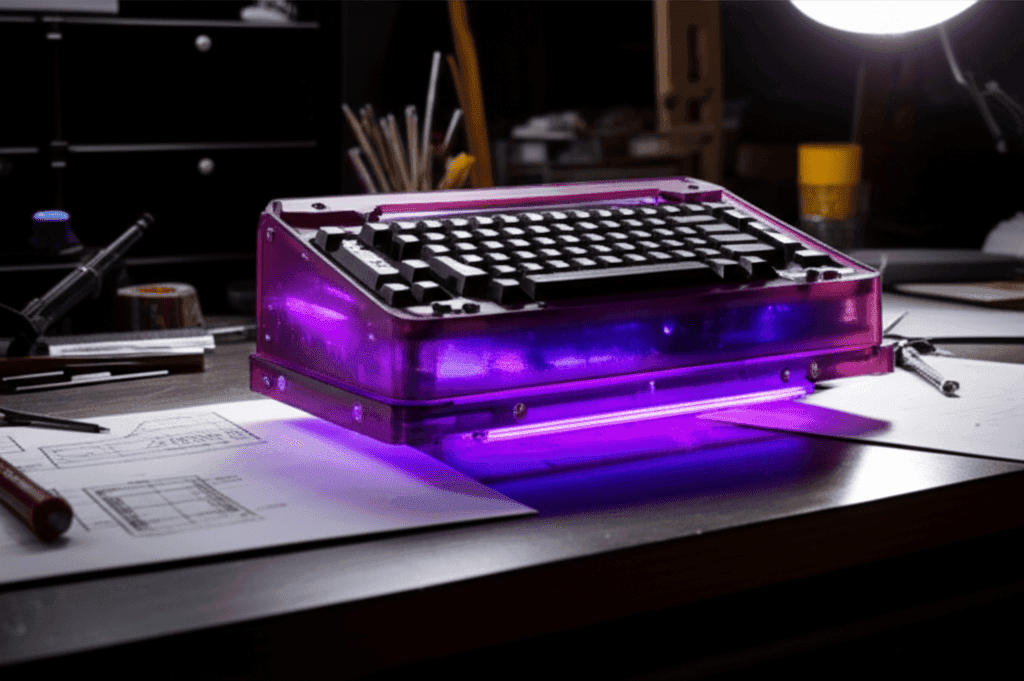
Custom cyberdeck design is pushing the boundaries of personal computing, as evidenced by Salim Benbouziyane’s impressive scratch-built CM Deck. This clamshell-style cyberdeck features a custom split keyboard, trackpad, optional external WiFi antenna, and stunning underlighting, thanks to its translucent bottom shell. Adding to its versatility is a hidden feature: a special USB-C port that allows the cyberdeck to function as an external keyboard and trackpad for another connected computer.
This innovative project showcases the growing maker movement and the increasing accessibility of sophisticated hardware and software tools. The CM Deck is built around the Raspberry Pi Compute Module 5, offering significant design flexibility, although it requires a custom PCB.
The Raspberry Pi Compute Module 5 Advantage
The Raspberry Pi Compute Module 5, while compact, presents unique opportunities for custom builds. Its small size allows for greater control over connector placement and hardware integration. Salim embraced this freedom, designing a custom PCB to optimize space and integrate a custom-built keyboard utilizing the RP2040 and QMK firmware.
The enclosure itself is custom-made, with 3D printing used for design validation. PCBway manufactured both the PCBs and the finished plastic shells. Salim acknowledges this as an indulgence but clearly appreciates the quality, especially the translucent purple undercarriage that provides the striking underlighting.
Deep Dive into Custom Cyberdeck Design and Build
Salim’s video provides an in-depth look at the entire design and build process, offering valuable insights for anyone interested in similar projects. He shares common challenges, such as discrepancies between screen drawings and physical unit dimensions, which resonate with experienced makers.
The GitHub repository contains all design files, providing a valuable resource for those looking to replicate or adapt the CM Deck. Salim’s previous projects, such as his CRT-style Raspberry Pi terminal, demonstrate his commitment to clean and detailed builds. Stay updated with related Industries news for more innovations.
Financial Implications of Custom Hardware
While projects like the CM Deck are driven by passion and innovation, they also highlight the evolving landscape of hardware development and manufacturing. The increasing affordability of custom PCBs and 3D printing services allows individuals and small teams to create sophisticated devices. This trend could potentially disrupt traditional hardware manufacturing models, fostering greater innovation and customization. However, it also presents challenges in terms of scalability, quality control, and intellectual property protection.
“The rise of custom hardware projects underscores the democratization of technology, empowering individuals to create solutions tailored to their specific needs and preferences.”
The ability to create a custom cyberdeck design, like the CM Deck, opens avenues for specialized applications in various sectors, from security and research to niche gaming and creative pursuits. The project itself may not have immediate financial implications, but the underlying technologies and design principles could inspire commercially viable products and services.
The future of personal computing may well be shaped by the convergence of open-source hardware, accessible manufacturing tools, and the ingenuity of makers like Salim Benbouziyane. The custom cyberdeck design represents a fascinating glimpse into this potential future.
Source: Hackaday


