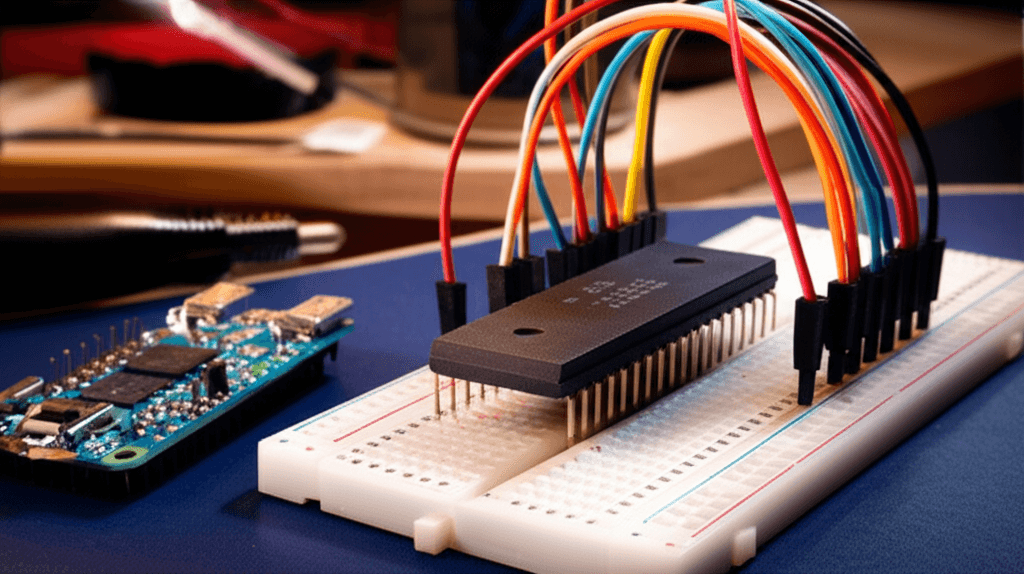
CPU Revival Project is seeing incredible traction in the DIY tech community. Nagy Krisztián, a tech enthusiast, successfully engineered a simulated system using a Raspberry Pi Pico to revive an Intel 286 CPU, which otherwise lacked a motherboard. This innovative approach essentially fools the CPU into believing it’s operating within a functional computer environment.
The project’s foundation is remarkably simple. By connecting the 286 to a Raspberry Pi Pico, Krisztián emulated the various components a CPU would typically interact with. The relatively low pin count of the 286, with only 68 pins, made this feasible compared to modern processors with over 1000 pins. The setup involved a PLCC-68 socket, an adapter PCB, a breadboard, and MCP23s17 logic expanders to provide sufficient I/O for the microcontroller.
With careful execution, Krisztián managed to get the Pi Pico to run the 286, enabling it to execute a basic program that retrieves and writes numbers from simulated memory. While the setup doesn’t allow the 286 to run at its full 12 MHz clock speed, and it’s far from performing complex tasks or booting an operating system, it demonstrates the potential for reviving older hardware.
“The 286 is not in a real computer; it’s just hooked up to a microcontroller stimulating its various pins in a way that is indistinguishable from its own perspective.”
This endeavor draws parallels to _The Matrix_, where the CPU exists in a simulated reality. It can also be seen as a modern-day “brain in a jar” experiment. This project also recalls similar retro initiatives, such as the FPGA rig that resurrected a NEC V20 processor. For readers interested in related Industries news, this project offers a fascinating glimpse into the world of hardware revival.
The Significance of the CPU Revival Project
The success of this CPU Revival Project highlights the enduring appeal of retro technology and the ingenuity of the maker community. It demonstrates that even seemingly obsolete hardware can be brought back to life with creative engineering. While this particular setup may not have immediate practical applications, it opens doors for further exploration of vintage computing systems.
Challenges and Future Possibilities
One of the primary challenges in this CPU Revival Project is achieving full clock speed and enabling the CPU to interact with peripherals. Overcoming these limitations could pave the way for running legacy software and operating systems on revived hardware. This could be invaluable for preserving digital history and providing access to software that would otherwise be lost to time.
Reviving the Past with Modern Tech
Projects like this CPU Revival Project are a testament to the power of combining modern technology with vintage hardware. By leveraging the capabilities of microcontrollers and other modern components, it’s possible to breathe new life into old systems and unlock their hidden potential. This approach not only preserves technological history but also offers unique learning opportunities for engineers and hobbyists alike.
In conclusion, the CPU Revival Project, spearheaded by Krisztián, showcases a remarkable feat of engineering, successfully simulating a functional environment for an Intel 286 CPU. While limited in its current capabilities, the project represents a significant step forward in reviving vintage hardware and opens exciting possibilities for preserving technological history and exploring the potential of older computing systems.