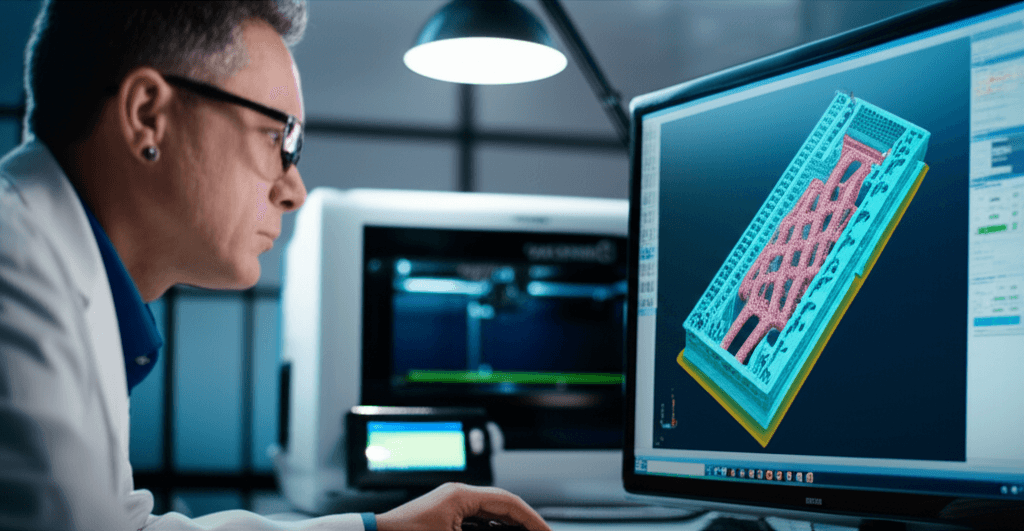
CAD optimization is absolutely essential for achieving micron-level 3D printing, pushing the boundaries of precision manufacturing. Achieving micron-level 3D printing requires careful consideration of design parameters and the utilization of advanced Computer-Aided Design (CAD) techniques to ensure successful fabrication at such small scales. This article explores the critical aspects of CAD optimization for sub-10µm 3D printing, highlighting techniques and considerations necessary for success.
The Importance of CAD Software in Precision 3D Printing
The choice of CAD software plays a pivotal role in the success of micro-scale 3D printing. Software packages designed for high precision and complex geometries are essential. These platforms allow designers to create intricate models with the necessary level of detail and accuracy. Furthermore, the software must be compatible with the specific 3D printing technology being used, ensuring seamless data transfer and minimizing potential errors. related Industries news are increasingly focusing on these advancements.
Achieving Micron-Level 3D Printing: Critical CAD Optimization
One of the most critical aspects of CAD optimization for sub-10µm 3D printing is ensuring the design adheres to the printer’s limitations. This involves understanding the minimum feature size, layer resolution, and material properties. Overly complex designs or features smaller than the printer’s capabilities will likely result in printing failures. Therefore, designers must simplify geometries, optimize support structures, and carefully consider the orientation of the part during printing to maximize success rates. The precision required for micron-level 3D printing demands meticulous attention to detail in the CAD design phase.
Design Considerations for Micro-Scale Fabrication
Surface finish and dimensional accuracy are paramount in micro-scale 3D printing. CAD models must be optimized to minimize stair-stepping effects and ensure smooth surfaces. This can be achieved through techniques such as adaptive slicing, which adjusts layer thickness based on the geometry of the part. Additionally, post-processing techniques like chemical etching or polishing may be necessary to further improve surface quality. Achieving the desired dimensional accuracy often requires iterative design and printing cycles, with feedback from metrology tools used to refine the CAD model.
Material Selection and its Impact on CAD Design
The choice of material significantly influences the CAD design process. Different materials exhibit varying shrinkage rates, thermal expansion coefficients, and mechanical properties. These factors must be accounted for in the CAD model to compensate for potential distortions during printing and subsequent processing. For example, materials with high shrinkage rates may require the CAD model to be scaled up to achieve the desired final dimensions. Understanding the material’s behavior is crucial for accurate and reliable micron-level 3D printing.
“Effective CAD optimization is the cornerstone of successful sub-10µm 3D printing, enabling the creation of intricate and functional micro-scale devices.”
In conclusion, achieving micron-level 3D printing hinges on effective CAD optimization. By carefully considering design parameters, understanding printer limitations, optimizing surface finish, and accounting for material properties, designers can unlock the full potential of micro-scale additive manufacturing. The future of industries from medicine to microelectronics depends on these advancements in precision and accuracy. Careful planning and execution within CAD software is the key to consistent success.