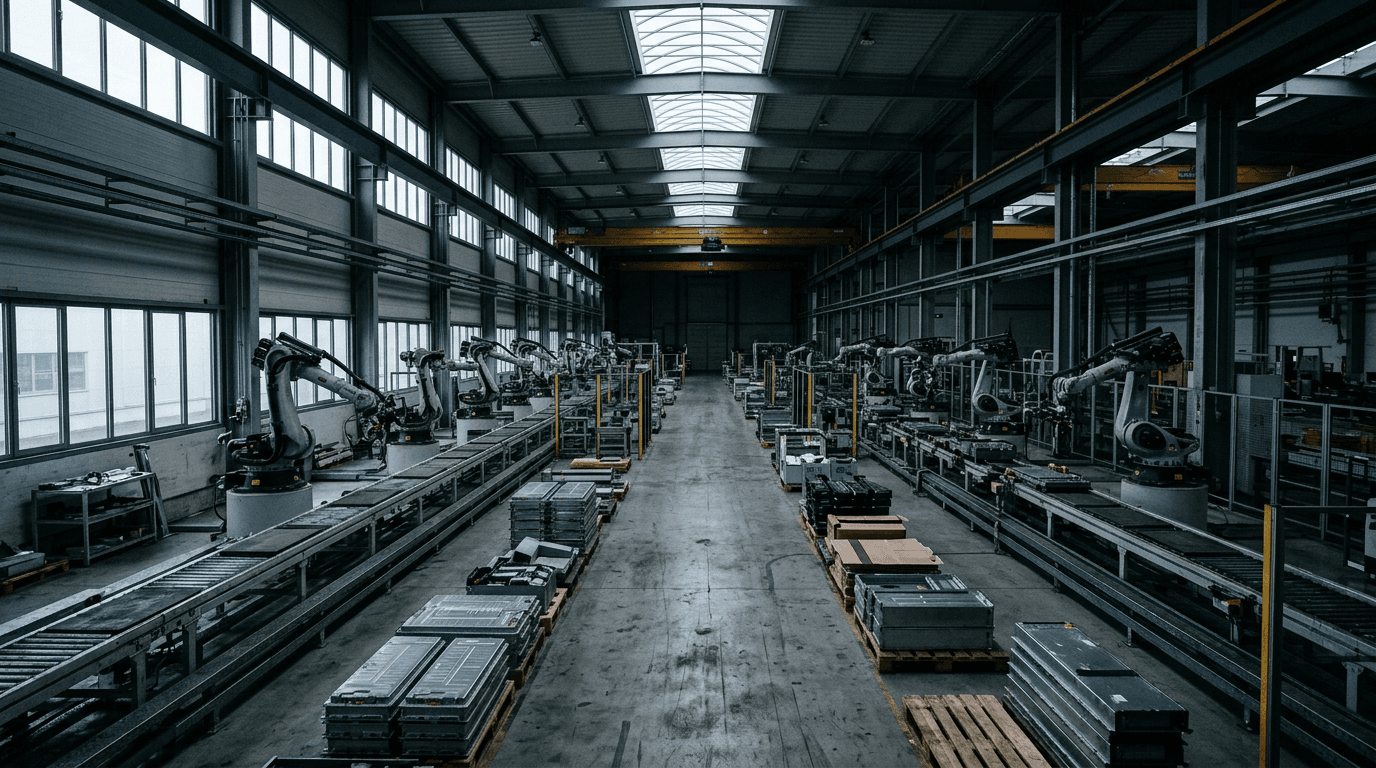
Brutal times for US battery industry have arrived, marking a stark reversal from the booming optimism of just a few years ago. Then, the battery sector was a vibrant landscape, teeming with innovative startups, novel chemistries, and audacious fundraising rounds. My biggest challenge as a journalist was navigating the sheer volume of exciting developments to pinpoint the most significant news. Now, in 2026, that tide has decidedly turned, and what seems to be emerging is a much more challenging environment for American battery manufacturers.
The Shifting Sands of Battery Innovation
The initial fervor around new battery chemistries, such as solid-state and advanced lithium-sulfur, has given way to a more sober reality. While promising, many of these technologies have encountered significant hurdles in scaling production and achieving cost-effectiveness comparable to established lithium-ion alternatives. This has led to a cooling of investor interest and a more cautious approach from venture capitalists who once poured money into any company promising a ‘next-generation’ battery.
“The market is demanding proven scalability and cost efficiency, not just theoretical breakthroughs.”
This shift isn’t just about technological maturity; it’s also about market dynamics. The sheer number of companies that entered the fray created an intensely competitive landscape. While competition can drive innovation, in this case, it appears to have fragmented resources and made it difficult for many smaller players to gain traction. We’re seeing consolidation on the horizon, with stronger, more established companies either acquiring struggling startups or simply outcompeting them.
Navigating Economic Headwinds
Beyond internal industry challenges, the broader economic climate is also contributing to the brutal times for US battery industry. Rising interest rates have made capital more expensive, directly impacting companies reliant on significant investment for research, development, and manufacturing scale-up. Supply chain disruptions, though less acute than a few years ago, still pose challenges, particularly in securing critical raw materials at stable prices. This combination of factors is squeezing profit margins and forcing many companies to re-evaluate their expansion plans.
Furthermore, global competition, particularly from East Asian manufacturers who have perfected mass production and cost optimization over decades, presents a formidable challenge. While the US government has implemented policies aimed at bolstering domestic production, the path to achieving competitive scale and efficiency is proving to be arduous. For more insights into the broader industrial landscape, see our related Industries news.
Investment Scrutiny and the Path Forward
Investors are now exercising far greater scrutiny than they did during the peak of the battery hype cycle. The focus has shifted from speculative potential to tangible progress, clear pathways to profitability, and robust manufacturing capabilities. Companies that can demonstrate a clear plan for scaling production, managing costs, and securing supply chains are the ones most likely to attract continued funding. The current environment is certainly proving to be brutal times for US battery industry, but it is also a period of necessary recalibration.
Ultimately, while the initial gold rush mentality has faded, the fundamental need for advanced battery technology remains. The companies that navigate these challenging times successfully will likely be those with strong fundamentals, adaptable strategies, and a relentless focus on delivering market-ready solutions. The industry is maturing, and while the pace of new company formation may have slowed, the long-term prospects for those who can endure and innovate effectively are still significant.