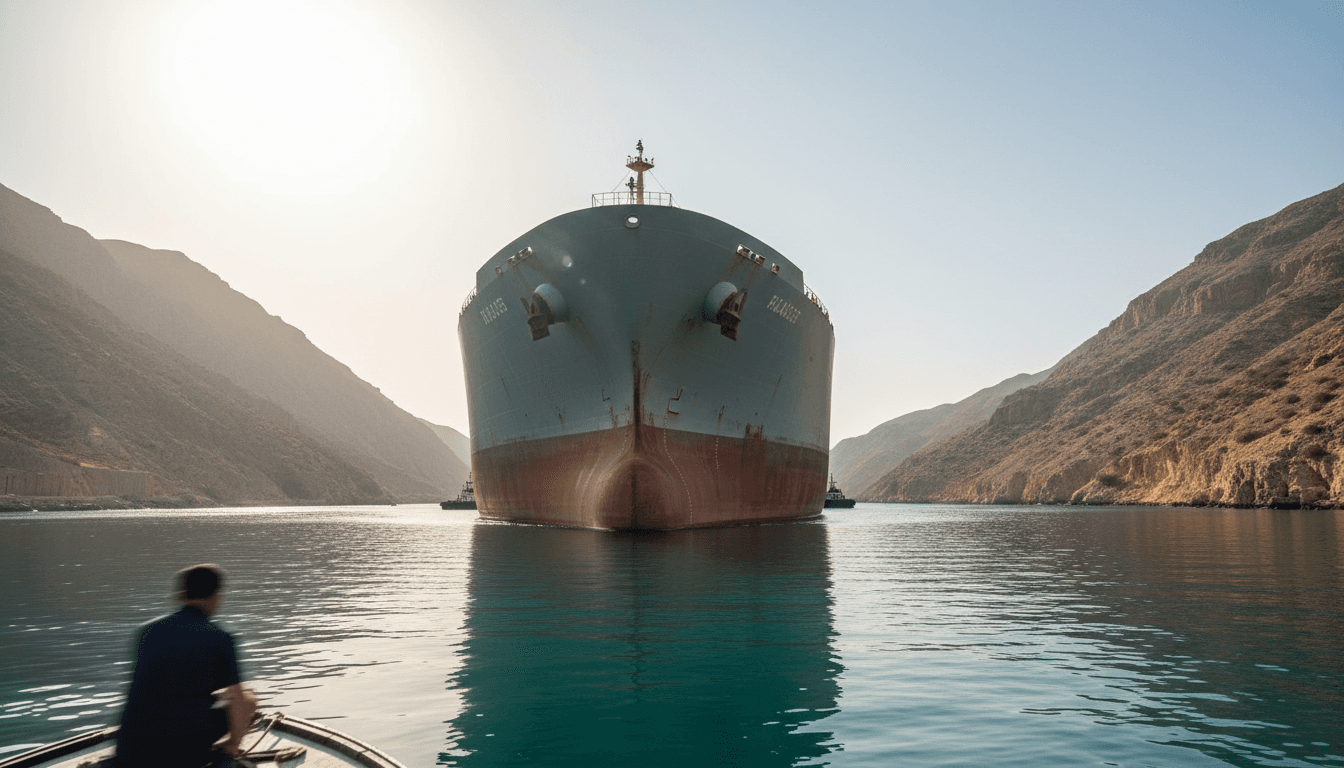
Brent oil futures climb above $100, reaching levels not consistently seen since 2022, as global markets grapple with the continued disruption to traffic in the critical Strait of Hormuz. This significant surge follows a stark declaration on Thursday, March 12, 2026, from Iran’s new Supreme Leader, Mojtaba Khamenei, who vowed to maintain the closure of the vital waterway.
The Strait of Hormuz, a narrow passage connecting the Persian Gulf and the Gulf of Oman, is a primary chokepoint for approximately one-fifth of global oil production. Its effective closure, advocated by Mojtaba Khamenei in his first public statement since succeeding his father, Ayatollah Ali Khamenei, is explicitly framed as a retaliatory measure against ongoing military actions by the United States and Israel. This geopolitical tension has sent shockwaves through energy markets, pushing crude prices skyward.
Geopolitical Tensions Fuel Price Surge
The immediate catalyst for the price spike was the statement by Iran’s new Supreme Leader. Mojtaba Khamenei asserted that “The leverage of blocking the Strait of Hormuz must continue to be used” as an “effective and regret-inducing defence.” He also issued a direct call to Gulf states to “shut down” U.S. bases in the region, escalating regional tensions further. U.S. President Donald Trump has already issued warnings to Iran regarding the Strait’s closure, indicating a potentially volatile standoff.
The physical manifestations of this disruption are already evident. In the two days leading up to March 12, 2026, at least six tankers were reportedly hit in the Gulf and Strait of Hormuz. The UK Maritime Trade Operations (UKMTO) documented three separate strikes overnight, with two vessels near Basra, Iraq, struck by “unknown projectiles.” A Hapag-Lloyd charter ship, the Source Blessing, also sustained shrapnel damage, underscoring the immediate threats to commercial shipping.
Global Response to the Disruption
The ramifications of the Strait’s closure extend far beyond immediate oil prices. Major Middle Eastern producers, including Saudi Arabia, the United Arab Emirates, Kuwait, and Iraq, have reportedly begun curbing oil production. This drastic measure comes as storage facilities rapidly fill up due to restricted tanker traffic, creating a bottleneck in the global supply chain. The Group of Seven (G7) leading economies are reportedly considering the release of emergency oil reserves to stabilize markets, a testament to the severity of the situation.
“Analysts from Wood Mackenzie (WoodMac) anticipate oil prices exceeding $100 if Iran successfully blocks the transit, potentially disrupting 15% of global oil supply.”
The economic fallout of sustained high oil prices could be significant, impacting inflation, consumer spending, and industrial production worldwide. Businesses reliant on stable energy costs face increased uncertainty, potentially leading to revised forecasts and investment decisions. The ongoing crisis highlights the fragility of global supply chains and the profound impact of geopolitical events on financial markets. For more insights on global financial trends, explore our related Finance news.
Brent Oil Futures Climb Above $100: Market Implications
The surge in Brent oil futures climb above $100 marks a critical juncture for the global economy. While prices briefly touched nearly $120 before retreating, the consistent trading above the $100 threshold signals a new reality for energy markets. The explicit motivation behind Iran’s actions—retaliation for U.S. and Israeli military attacks and a vow to avenge those killed in the Iran war—suggests that this disruption may not be short-lived. The world watches closely as diplomatic efforts and military posturing unfold, with the price of crude oil serving as a real-time barometer of escalating tensions.
In conclusion, the sustained closure of the Strait of Hormuz, driven by Iran’s new Supreme Leader, has catapulted Brent crude oil futures above $100 a barrel, sending ripples across global financial markets. The ongoing attacks on commercial vessels and the reported curbing of production by major oil-producing nations underscore the critical threat to global energy supply and economic stability.