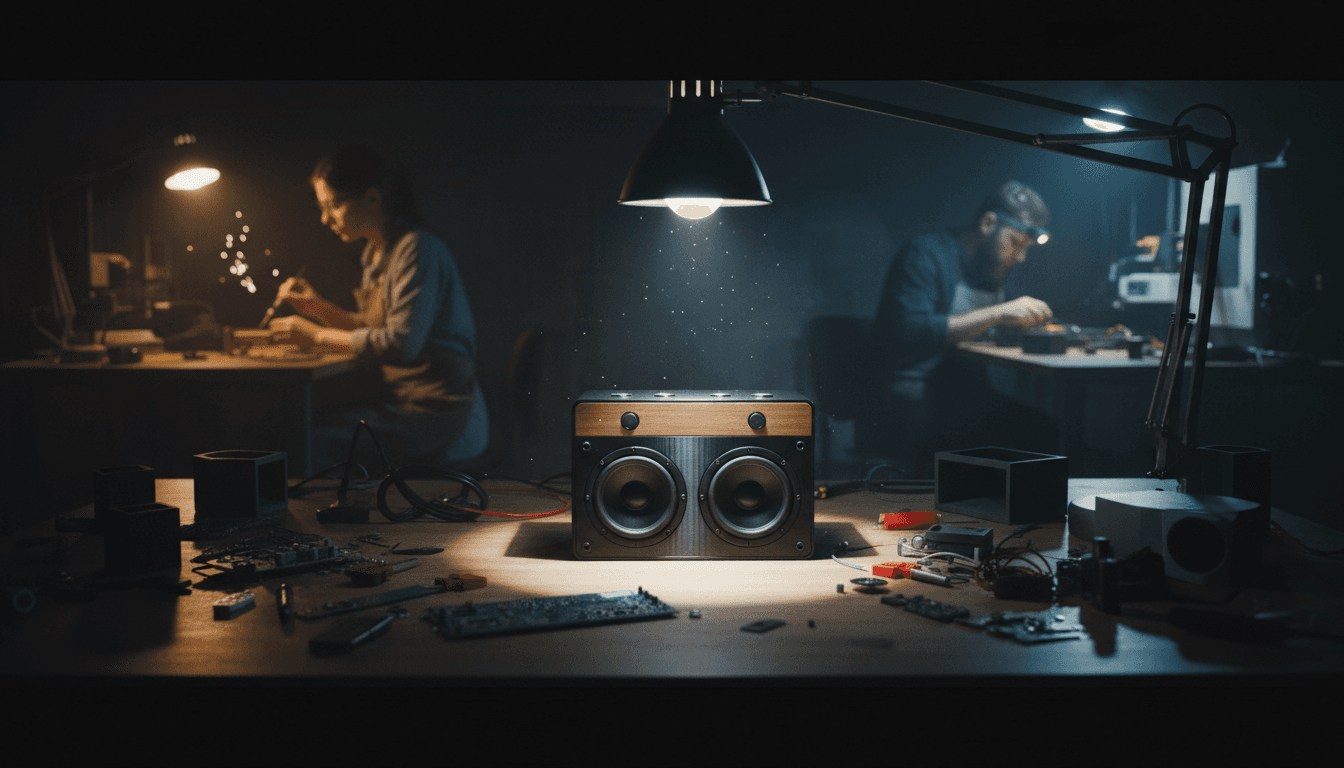
Bluetooth speaker build, initially a mere digital render, has been stunningly brought to life by a maker named Nick, as highlighted in a recent Hackaday article published on March 15, 2026. This ambitious project bridges the gap between the virtual and the physical, demonstrating remarkable ingenuity in the DIY electronics community.
Nick’s motivation stemmed from encountering an incredibly appealing Bluetooth speaker design online that, upon closer inspection, turned out to be nothing more than a concept render. Rather than lamenting its non-existence, Nick decided to undertake the challenge of constructing the speaker himself. The Hackaday feature, dated March 15, 2026, details how this digital dream became a tangible reality.
The Inspiration Behind the Ingenious Bluetooth Speaker Build
The core of Nick’s project was the desire to transform an inspiring, yet non-existent, digital design into a functional, physical product. This drive is a common thread among many DIY enthusiasts who are constantly pushing the boundaries of what’s possible with readily available components and creative problem-solving. It’s a testament to the maker movement’s ability to turn conceptual art into practical innovation.
While the specific technical details of Nick’s 2026 build are not extensively elaborated in the initial report, insights from other Hackaday articles and related projects offer a valuable context on common practices and components used in such DIY endeavors. These examples reveal a vibrant landscape of innovation where enthusiasts repurpose, design, and assemble custom audio solutions.
“The maker community consistently demonstrates how digital inspiration can lead to tangible, innovative creations, pushing the boundaries of what’s possible with DIY electronics.”
Common Components and Techniques in DIY Audio
The world of related Industries news frequently showcases projects that exemplify the spirit of Nick’s endeavor. For instance, a December 23, 2025, Hackaday article described how “Distracted by Design” repurposed an old FM radio into a stylish Bluetooth speaker. This involved stripping out old electronics, retaining the original speaker, and integrating a modern Bluetooth module, 3D-printed brackets, a lithium-ion battery, and USB-C charging. Aesthetic detailing, such as replacing a plastic handle with CNC-machined wood and aluminum plates, also played a crucial role in that project’s success, highlighting the importance of both form and function.
Another notable example from December 8, 2025, on Instructables, detailed a DIY Bluetooth speaker upgrade focusing on improving bass performance through scientific methods. This project utilized REW measurements and WinISD simulations, incorporating a 2-way system with a passive radiator, two 3-inch woofers, a TPA3110 amplifier, and a large battery pack. These examples illustrate the diverse approaches and technical depths involved in creating high-quality custom audio solutions.
The Future of Custom Electronics
These projects underscore the typical components and techniques involved in modern DIY audio, often including harvested Bluetooth modules, amplifier boards (like the Adafruit PAM8302A or TPA3110), 3D-printed enclosures or creatively repurposed cases, lithium-ion batteries, and USB-C charging. The emphasis is consistently on combining readily available or upcycled components with custom fabrication, such as 3D printing or CNC machining, to achieve a desired aesthetic and specific functionality. Nick’s successful Bluetooth speaker build is a prime example of this innovative spirit, turning a digital concept into a tangible, functional device that resonates with the growing trend of personalized technology.
Ultimately, Nick’s successful Bluetooth speaker build, transforming a non-existent render into a physical product, serves as an inspiring example of innovation within the DIY electronics community. It showcases how creativity, technical skill, and a proactive approach can bring imaginative concepts to life, demonstrating the immense potential of individual makers to shape the future of consumer electronics.