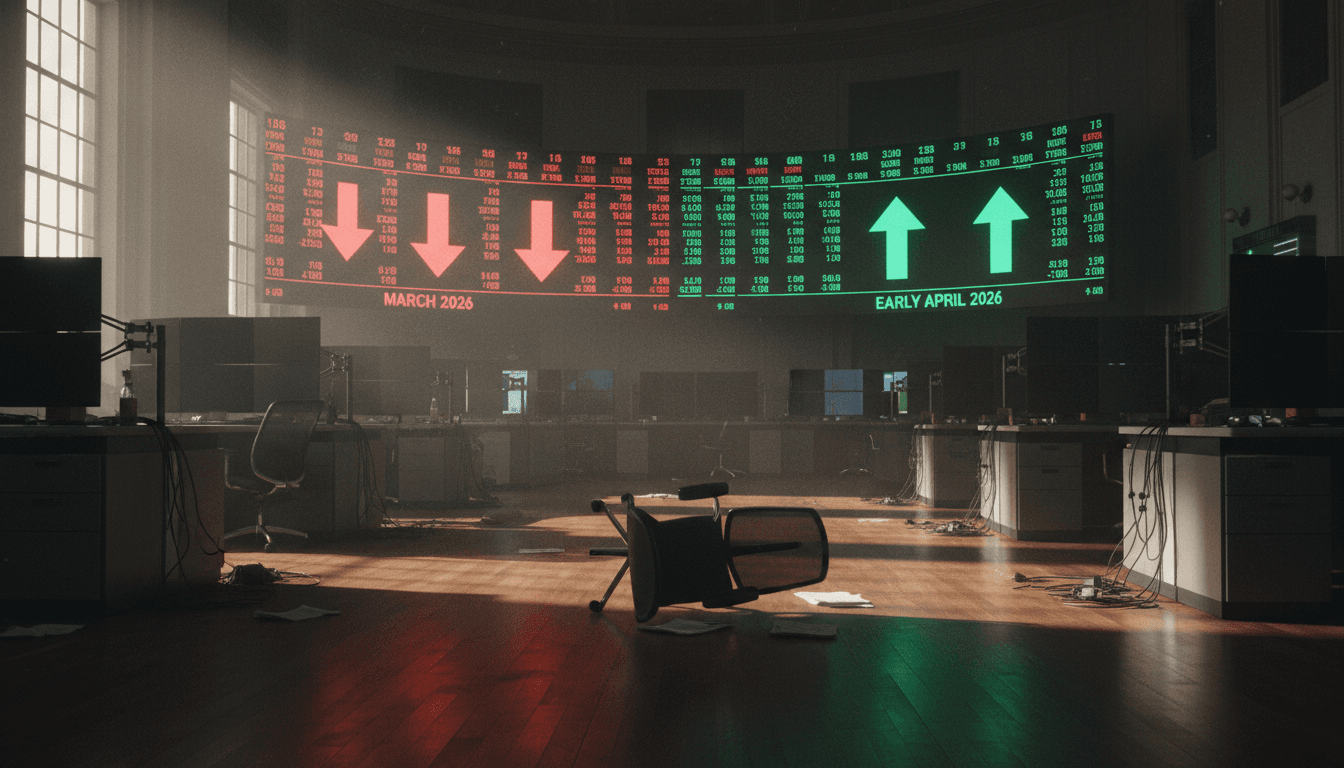
Billionaire wealth swings have once again demonstrated the extraordinary volatility of global markets, with the world’s richest individuals experiencing a stunning $100 billion wipeout in March 2026, only to see a rapid and significant rebound in the first week of April. This dramatic oscillation, primarily attributed to heightened Iran tensions, underscores the precarious nature of extreme wealth, even for those at the very pinnacle of the global economy.
The scale of the upheaval was staggering. According to data from Forbes, the combined net worth of the top ten billionaires plummeted to approximately $2.5 trillion at the start of April, representing a loss exceeding $100 billion within March alone. This contraction mirrored a nearly 5% decline in major US indices, illustrating the tight correlation between market sentiment and the fortunes of the ultra-rich. Yet, as quickly as the wealth evaporated, it rematerialized, with the combined net worth of the top ten surging to roughly $2.59 trillion by April 7, effectively restoring the substantial losses incurred just days prior.
The March Meltdown and Rapid Recovery
March witnessed widespread declines across the board. Nine of the world’s ten wealthiest individuals saw their fortunes shrink. Elon Musk, despite retaining his position as the world’s richest person, lost a staggering $22 billion, bringing his net worth to $817 billion. Larry Page experienced a $20 billion drop, settling at $237 billion, while Sergey Brin saw his wealth decrease by $18 billion. The steepest decline belonged to Bernard Arnault, whose net worth plunged by $28 billion to $142.5 billion, pushing him from seventh to tenth place. Amancio Ortega fell out of the top ten entirely, losing $20 billion. Only Michael Dell defied the trend, with a $2 billion gain that propelled him to eighth place, a testament to the resilience of specific sectors amidst broader market turmoil.
The narrative shifted dramatically in early April. Market sentiment reversed sharply, leading to a rapid recovery. Musk’s fortune surged to $839 billion by April 7, recouping over $80 billion in a single week. Page’s net worth climbed to $257 billion, gaining roughly $73.4 billion. Brin reclaimed third place with $237 billion, while Bezos moved to fourth at $224 billion. Perhaps the most notable rebound was staged by Bernard Arnault, who gained nearly Dh105 billion (approximately $28.6 billion) in under a week to reach $171 billion, climbing back to seventh place. Jensen Huang, buoyed by sustained demand in the semiconductor sector, secured eighth place with $154 billion, while Warren Buffett and Amancio Ortega re-entered the top ten, showcasing the swift reordering that can occur in liquid markets.
“The data highlights how tightly concentrated wealth at the top remains linked to equity markets. Shifts in sentiment driven by geopolitical risk can erase — and restore — tens of billions in a matter of days, with rankings reshuffled just as quickly.”
Even after this significant rebound, real-time tracking revealed continued, albeit less dramatic, volatility. Musk’s net worth adjusted to $803.4 billion in subsequent updates, while Page and Brin continued to jostle for second and third positions. This persistent fluctuation underscores that for the world’s wealthiest, daily changes of billions are not anomalies but rather a regular feature of their financial existence, driven by factors ranging from company performance to geopolitical developments.
Market Impact and Future Outlook
These extraordinary billionaire wealth swings offer a stark illustration of how deeply intertwined the fortunes of the world’s richest are with the broader equity markets. Geopolitical risks, such as the tensions involving Iran cited in this instance, can trigger seismic shifts in investor confidence, leading to rapid revaluations of assets. For investors, this episode serves as a powerful reminder of the inherent volatility in global markets, even as it demonstrates the remarkable capacity for recovery when sentiment shifts. Companies heavily reliant on global supply chains or operating in sectors sensitive to geopolitical instability often bear the brunt of such events, making strategic diversification and agile risk management more critical than ever.
Looking ahead, the landscape for the world’s richest individuals will likely remain dynamic. The rapid reversals seen in March and April 2026 suggest that while significant wealth can be eroded quickly, the underlying strength of their core assets and the resilience of global capital markets can facilitate equally swift recoveries. As technological innovation continues to drive valuations in sectors like AI and semiconductors, and as geopolitical tensions remain a constant, we can anticipate further periods of more success stories and dramatic shifts in the wealth rankings. The ability to navigate these turbulent waters, adapt to changing market conditions, and maintain a long-term strategic vision will continue to define who stays at the top of the global wealth ladder.