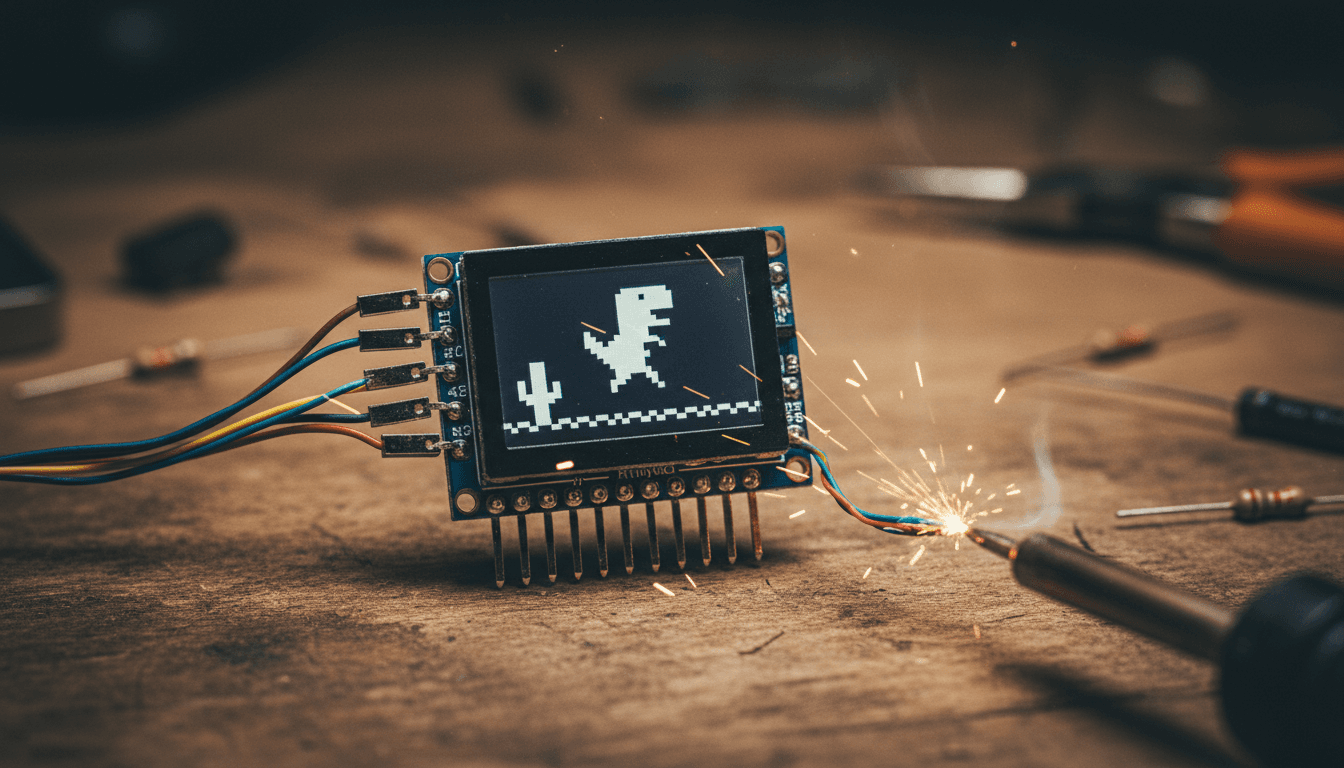
ATtiny85 Chrome Dinosaur Game integration is a fascinating development for tech enthusiasts and casual users alike, bringing a beloved digital pastime into the realm of microcontrollers. If you’ve ever had your internet connection drop out while running Chrome, you’ve probably seen a little dinosaur pop up to tell you what’s going on. You might have then ‘read more’ into the game, tapping your spacebar to jump over cacti and duck under pterodactyls, turning a moment of frustration into a brief, pixelated escape. This seemingly simple game, embedded within the Chrome browser, has become an iconic symbol of offline entertainment.
The ingenuity behind making a tiny, low-power microcontroller like the ATtiny85 replicate this experience is a testament to the creativity within the open-source hardware community. It demonstrates how even the most basic components can be leveraged for complex, engaging projects, pushing the boundaries of what’s possible with minimal resources.
The Microcontroller Revolution and Gaming
Microcontrollers, often the unsung heroes of modern electronics, power everything from smart home devices to industrial machinery. Their small size, low cost, and energy efficiency make them ideal for a vast array of applications. The ATtiny85, specifically, is known for its compact form factor and surprising capability, making it a popular choice for hobbyists and educators. Bringing a game like the Chrome Dinosaur to such a humble chip highlights a trend: the democratization of gaming and interactive experiences through accessible hardware.
This project isn’t just about playing a game; it’s about understanding the underlying principles of digital interaction, display rendering, and input processing on a fundamental level. It bridges the gap between software-based entertainment and tangible hardware.
“This project exemplifies the spirit of innovation, transforming a simple offline browser game into a hands-on learning experience with microcontrollers.”
Decoding the ATtiny85 Chrome Dinosaur Game Mechanism
For those unfamiliar, the ATtiny85 is an 8-bit microcontroller with a tiny footprint but enough processing power for many simple tasks. To get it to run the Chrome Dinosaur Game, developers typically need to optimize the game’s code heavily, translating its logic into a format the microcontroller can understand and execute. This often involves simplified graphics, direct pixel manipulation, and efficient input handling. The challenge lies in managing memory constraints and clock speed limitations while maintaining a playable experience.
The process often involves custom code, a small display (like an OLED screen), and physical buttons for control. This hands-on approach offers a unique perspective on how digital games function at their core, far removed from the high-fidelity graphics and complex engines of modern gaming consoles. It’s a return to basics, emphasizing efficient coding and hardware interaction. This type of project can inspire future innovations in related Industries news, particularly in embedded systems and educational technology.
Impact on Embedded Systems and Education
The implications of projects like the ATtiny85 Chrome Dinosaur Game extend beyond mere entertainment. They serve as invaluable educational tools, demystifying embedded systems and programming for students and hobbyists. By tackling a familiar concept like a video game, learners can grasp complex ideas about hardware-software interaction, memory management, and real-time processing in an engaging way. This fosters a deeper understanding of the technology that underpins much of our digital world.
Furthermore, it encourages experimentation and problem-solving, skills that are critical in the rapidly evolving tech landscape. As microcontrollers become even more ubiquitous, understanding their capabilities and limitations through such practical applications will be increasingly important for developers and engineers.
In conclusion, the successful implementation of the ATtiny85 Chrome Dinosaur Game is more than just a clever hack; it’s a powerful demonstration of how accessible technology can be used to create engaging, educational, and genuinely innovative projects. It underscores the potential of small, efficient hardware to bring digital experiences to life in new and unexpected ways, inspiring a new generation of makers and engineers.