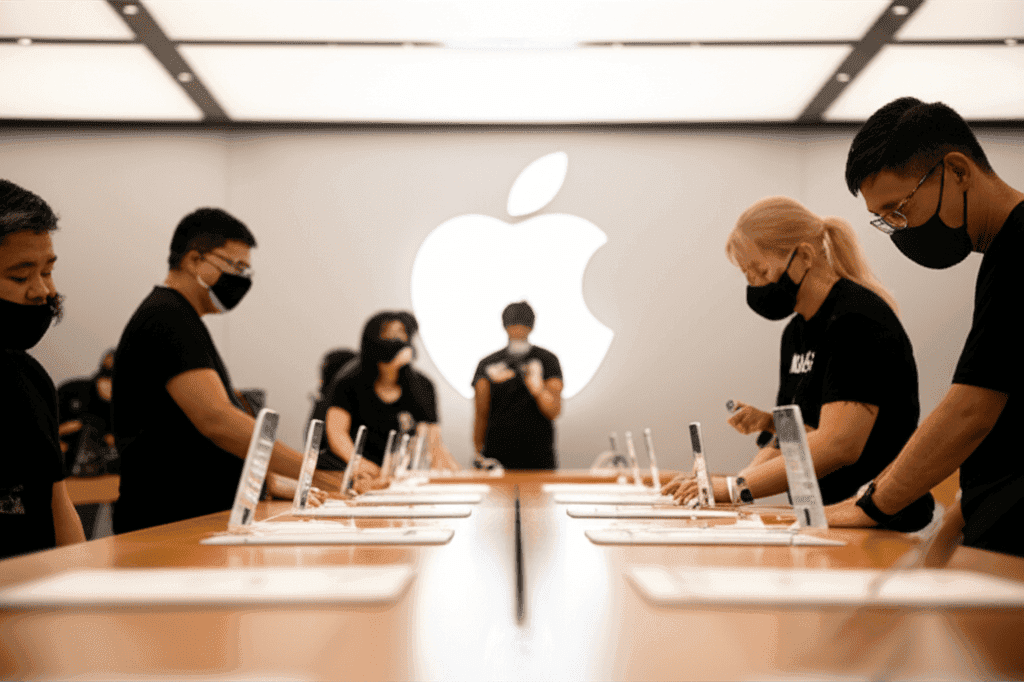
Apple AI push is now underway, as the tech giant unveils new iPhone and iPad models geared towards enhanced artificial intelligence capabilities. These releases mark the start of a crucial week for Apple, with expectations high for the announcement of updated MacBook Pro and MacBook Air models featuring the latest M5 chips. The iPhone 17e boasts the A19 chip and a doubled 256GB storage starting at $599, while the iPad Air, powered by the M4 chip, comes in 11-inch and 13-inch sizes, priced at $599 and $799 respectively.
The A19 chip features a 16-core Neural Engine and dedicated Neural Accelerators, enabling faster on-device AI model processing. The iPad Air’s M4 chip doubles the RAM to 12GB, enhancing the AI processing abilities of iPadOS 26. This RAM upgrade is particularly significant for Apple’s upcoming Siri revamp, expected to launch later this spring. The initial launch of Apple Intelligence in 2024 already set a minimum requirement of 8GB RAM, and this new iPad Air could indicate a shift towards even higher baseline RAM requirements as AI models become more advanced.
Apple AI Push: Hardware Upgrades
Analysts believe that Apple’s strategic product refresh is in preparation for broader AI and Siri upgrades planned for later this year. The current product launches focus on incremental hardware updates, particularly in memory and storage, rather than major redesigns. Apple’s tighter integration of its custom silicon is expected to help offset rising memory costs. related Finance news
“We think Apple is strategically refreshing its product portfolio ahead of broader AI and Siri upgrades that are expected later this year, as today’s product launches feature incremental hardware updates rather than a major redesign cycle, with the focus around enhancing memory and storage,”
The Significance of Siri’s AI Integration
Wall Street has been closely watching Apple’s AI strategy, especially compared to its peers who are investing heavily in capital expenditures. The upcoming Siri release, powered by Google Gemini, could be a pivotal moment for Apple’s stock. The partnership with Alphabet aims to leverage Apple’s Private Cloud Compute, prioritizing on-device processing with the A19’s Neural Accelerators while utilizing Gemini models within Apple’s secure servers for more complex reasoning tasks. This hybrid approach is crucial for maintaining user privacy while delivering powerful AI capabilities.
Navigating Logistical Bottlenecks
The Apple Intelligence upgrade arrives amidst significant logistical challenges. High demand from AI data centers is causing manufacturers to prioritize enterprise customers, leading to a squeeze in the consumer sector. Experts predict a substantial drop in global smartphone shipments due to these constraints and skyrocketing memory prices. Despite these challenges, Apple’s brand loyalty and customer base give it an edge.
Impact of Rising Memory Costs
The rising costs of memory components could significantly impact the smartphone market. Although Apple didn’t directly address potential price increases during its recent earnings call, analysts predict that such a move may be unavoidable. Despite the anticipated rise in average selling prices of smartphones, Apple is expected to maintain its market share due to its less price-sensitive customer base. This resilience positions Apple favorably in the face of industry-wide cost pressures.
In conclusion, Apple’s latest product launches and AI initiatives signal a strategic shift towards enhanced artificial intelligence capabilities. Despite facing logistical bottlenecks and rising memory costs, Apple is poised to capitalize on its brand strength and technological advancements, potentially driving growth in the face of industry challenges. The success of the Apple AI push and the integration of Siri with Google Gemini will be critical factors to watch in the coming months.