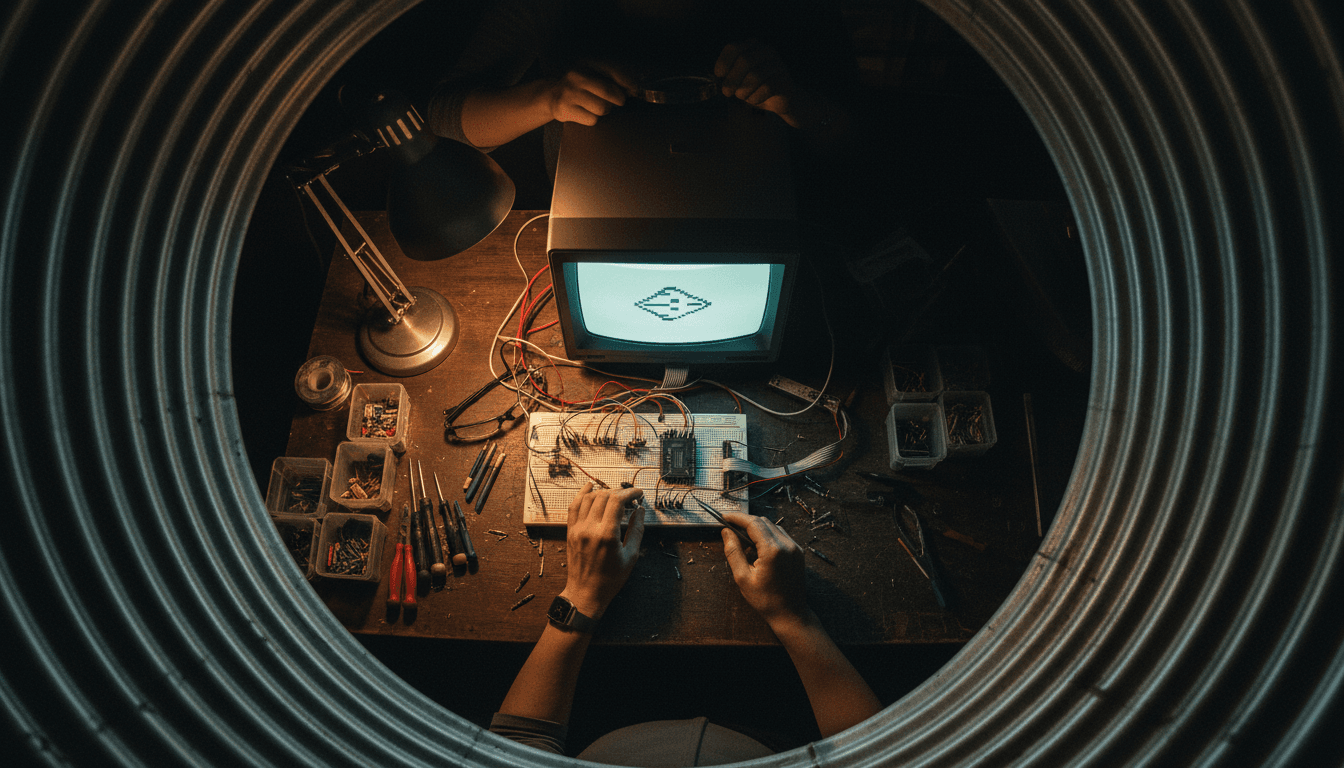
Analog video from 8-bit microcontrollers might seem like a relic from a bygone era, yet its enduring fascination for engineers and hobbyists highlights a crucial aspect of display technology history. While the cathode ray tube (CRT) has largely vanished from our daily lives, there was a decades-long timeframe when this was effectively the only display available. It’s an analog display for an analog world, a stark contrast to today’s ubiquitous digital screens.
The journey from simple 8-bit processing to generating complex video signals on a CRT is a testament to ingenious engineering. Early developers faced the challenge of translating digital instructions into the continuous voltage variations required to paint an image on a phosphor screen. This involved meticulous timing and signal generation, often pushing the limits of what these modest microcontrollers were initially designed for. The simplicity of the underlying hardware belied the complexity of the task.
The Enduring Appeal of Retro Display Technology
Despite the dominance of high-definition LCDs, OLEDs, and other digital displays, there’s a strong resurgence of interest in retro computing and display technologies. This isn’t just nostalgia; it’s about understanding the foundational principles of electronics and appreciating the clever solutions devised with limited resources. For many, working with CRTs and related Industries news offers a tangible connection to the early days of personal computing and video gaming.
The process of generating analog video from 8-bit microcontrollers involves understanding concepts like horizontal and vertical synchronization, pixel clocking, and color encoding (even if only monochrome). These fundamental building blocks remain relevant in many modern video systems, albeit at far greater speeds and resolutions. It’s a hands-on way to grasp how images are formed electronically.
“Mastering analog video generation on basic hardware offers invaluable insights into the core principles of display technology and embedded systems.”
Achieving stable and clear video output from an 8-bit chip demands precise control over timing. Every microsecond counts, and even minor deviations can result in flickering, tearing, or distorted images. This precision engineering is what makes projects involving analog video from 8-bit microcontrollers so rewarding, demonstrating a deep understanding of hardware-software interaction.
Engineering Challenges and Creative Solutions
Developing video output on an 8-bit microcontroller often meant pushing the CPU to its limits, frequently dedicating the majority of its processing power to signal generation. This led to creative solutions, such as using direct memory access (DMA) controllers or custom hardware peripherals to offload some of the timing-critical tasks. These innovations paved the way for more sophisticated graphics capabilities in later generations of microcontrollers and processors.
The limitations of 8-bit systems, such as restricted memory and clock speeds, forced engineers to be incredibly resourceful. Techniques like character-based graphics, where predefined sprites or characters are rapidly drawn, were common. This approach minimized the amount of data that needed to be processed in real-time for each frame, making analog video from 8-bit microcontrollers a viable reality.
In conclusion, the ability to generate analog video from 8-bit microcontrollers is more than just a historical footnote; it’s a vibrant area of exploration for embedded systems enthusiasts. It underscores the ingenuity of early engineers and provides a practical, educational pathway into understanding fundamental display and signal processing concepts that continue to shape our digital world.