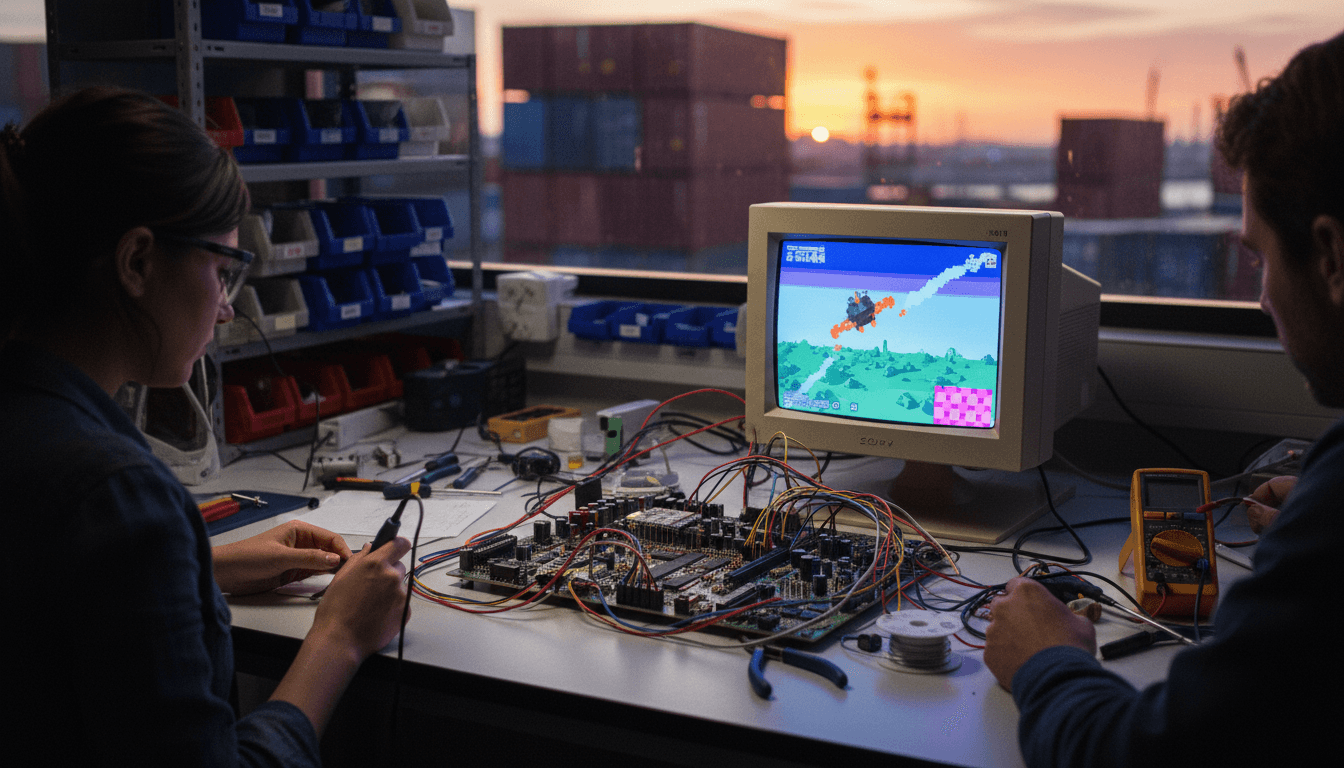
The 3DFX Voodoo lives again, not on rare vintage hardware, but within the flexible architecture of Field-Programmable Gate Arrays (FPGAs). A recent project by Francisco Ayala Le Brun has successfully implemented the iconic 3DFX Voodoo 1 graphics chipset in SpinalHDL for FPGAs, breathing new life into a classic 3D accelerator that once revolutionized PC gaming. This groundbreaking news was first reported by Hackaday on March 22, 2026, exciting retrocomputing enthusiasts and hardware aficionados alike.
Recreating a Gaming Legend
Francisco Ayala Le Brun’s meticulous work involved digitally recreating the 3DFX Voodoo 1, a pioneering 3D graphics chipset. The original Voodoo Graphics chip, launched to consumers in October 1996, was a dedicated 3D accelerator designed to complement a PC’s existing video card for 2D support. It boasted features like point-sampled texture mapping, Z- and double buffering, Gouraud shading, and subpixel correction, all operating at a brisk 50 MHz with 4MB of EDO RAM. The Voodoo’s impact was largely due to its proprietary Glide API, which allowed titles such as Doom and Quake to achieve unprecedented 3D visual fidelity and performance for its era.
“The Voodoo 1’s fixed-function architecture, with its hardwired rendering behaviors like bilinear filtering and depth testing, presented a unique challenge for modern FPGA implementation.”
Le Brun’s FPGA implementation meticulously replicates this fixed-function architecture, a stark contrast to the programmable shaders found in contemporary GPUs. The complexity lay in translating the Voodoo’s numerous hardwired rendering behaviors—gradients for Gouraud shading, texture sampling, mipmapping, bilinear and trilinear filtering, alpha clipping, depth testing, and fog—into an FPGA environment. The project demanded overcoming significant bugs and timing issues inherent in this intricate architectural translation.
The Enduring Legacy of 3DFX Voodoo Lives Again
The 3DFX Voodoo holds a revered position in the annals of PC gaming history, often credited with kickstarting the mass-market 3D gaming revolution. Founded in 1994, 3dfx Interactive, Inc. was a beacon of innovation until its acquisition by Nvidia in 2000. Despite its corporate demise, the 3dfx brand continues to inspire a passionate community of enthusiasts. This FPGA project offers a unique opportunity to experience the Voodoo 1’s capabilities without the need to acquire increasingly rare and valuable original hardware. It also serves as a profound exercise in retrocomputing and offers invaluable insights into the foundational architecture of early 3D graphics. This digital revival ensures that the spirit of the 3DFX Voodoo lives again for a new generation.
Why This Matters for Retrocomputing and Beyond
The successful implementation of the Voodoo 1 on an FPGA is more than just a nostalgic trip; it’s a testament to the power of reverse engineering and the enduring appeal of classic technology. For those interested in related Industries news, such projects highlight the continued innovation within the hardware and retrocomputing sectors. Understanding how these early accelerators functioned provides critical context for the evolution of modern GPUs and the sophisticated graphics we take for granted today. The ability to run classic software on modern, reprogrammable hardware ensures that the history of computing remains accessible and tangible.
In essence, Francisco Ayala Le Brun’s project ensures that the groundbreaking technology of the 3DFX Voodoo lives again, not just in memory, but in functional, accessible hardware. This achievement underscores the enduring passion for classic gaming hardware and the continuous drive to preserve and understand the digital foundations of our technological past.