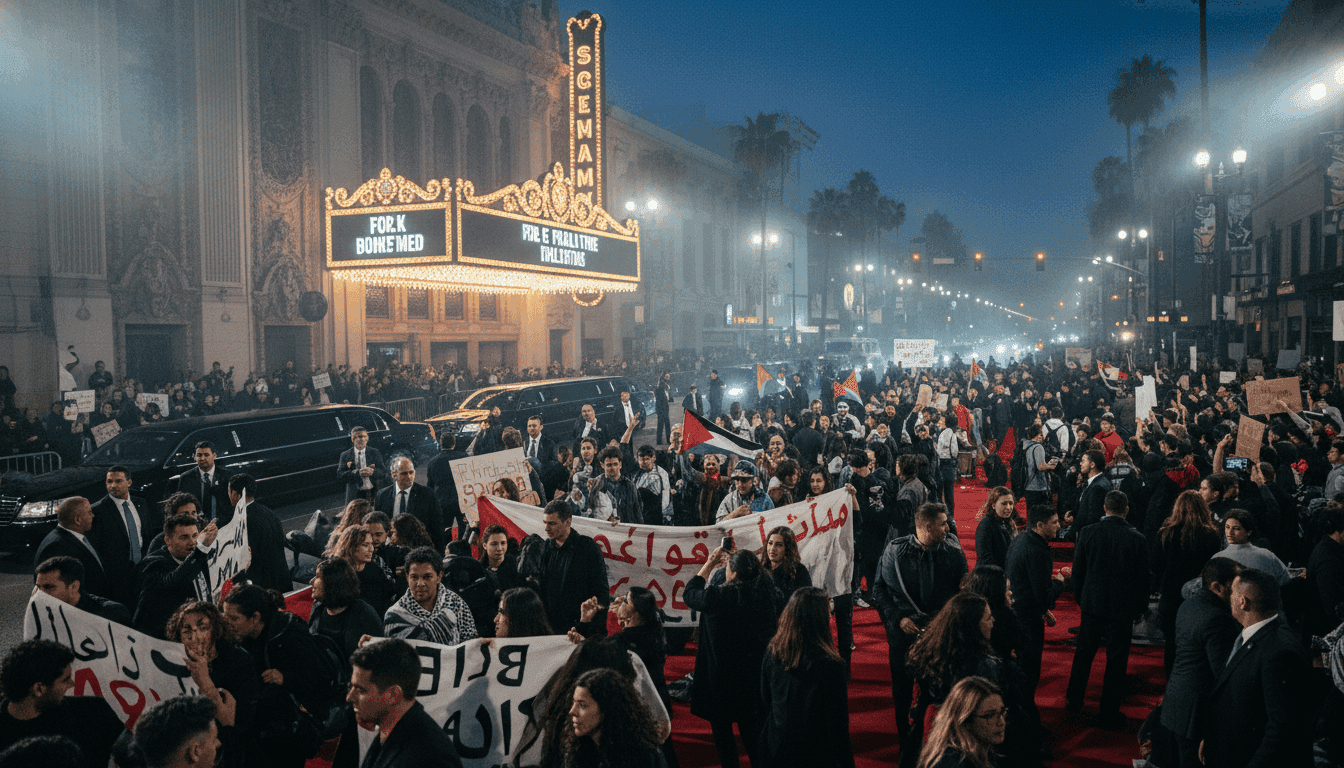
A dramatic ‘Scream 7’ protest disrupted the highly anticipated premiere on Monday, April 13, 2026, casting a shadow over what was intended to be a celebratory event for the latest installment in the iconic horror franchise. Pro-Palestine activists staged a significant demonstration, drawing attention away from the red carpet glamour and towards pressing geopolitical issues. The disruption, which saw protesters directly confronting attendees and the media, prompted an immediate response from the film’s director, whose comments have since become a focal point of industry discussion.
The incident unfolded as stars and filmmakers arrived for the ‘Scream 7’ premiere, a tentpole event for Paramount Pictures. Details emerging from the scene indicate that the protesters were organized, vocal, and effectively managed to commandeer the media’s attention. Their presence highlighted the increasing intersection of entertainment events with global sociopolitical movements, a trend that Hollywood has been grappling with for several years. The director’s subsequent remarks, while not fully detailed in the immediate aftermath, have been noted as a direct engagement with the protest’s message, rather than a dismissal, signaling a potentially evolving approach within the industry to such disruptions.
Impact Analysis: Show Business and Activism Intersect
The ‘Scream 7’ protest represents a significant moment in the ongoing dialogue between the entertainment industry and global activism. While red carpet disruptions are not entirely new, the scale and directness of this particular demonstration, coupled with the director’s public response, suggest a shift. Historically, studios and filmmakers have often tried to insulate their events from political intrusions, focusing solely on the artistic merits of their work. However, the current climate demands a more nuanced approach. The incident at the ‘Scream 7’ premiere forces a re-evaluation of security protocols, public relations strategies, and the very role of cinematic events in a politically charged world.
This disruption could set a precedent for future high-profile events. With social media amplifying every incident, the optics of how a studio and its talent respond to such protests are critical. A misstep can lead to significant reputational damage and alienate key demographics. Conversely, a thoughtful and empathetic response, as the director’s appears to be, could potentially garner unexpected support. The financial implications are also considerable; while a premiere disruption might not directly impact box office numbers, negative publicity or perceived insensitivity could deter audiences. For more on how public perception shapes studio decisions, see our related show business articles.
“The lines between entertainment and global affairs are increasingly blurred. How Hollywood navigates these intersections will define its public image for the next decade.”
Context & Background: A Growing Trend of Engagement
The ‘Scream 7’ protest is not an isolated incident but rather indicative of a broader trend where entertainment platforms become arenas for social and political statements. From award show speeches to celebrity endorsements, Hollywood has long been intertwined with various causes. However, direct, physical disruptions at premieres mark an escalation. This particular protest aligns with a growing global movement advocating for Palestine, which has seen increased visibility across various sectors, including arts and culture. The director’s decision to respond, rather than ignore, mirrors a growing sentiment within the industry that silence can be interpreted as complicity.
Previous instances have seen artists use their platforms to speak on issues ranging from climate change to social justice. What makes the ‘Scream 7’ protest distinct is its direct challenge to the event itself, forcing an immediate, on-the-spot reaction. This places immense pressure on individuals and organizations to articulate their stances, or at least acknowledge the presence of these critical global conversations. The incident highlights the difficulty in maintaining a perceived neutrality when world events are so deeply felt by large segments of the population, including those within the film industry and its audience.
What’s Next: Navigating Future Premieres and Public Discourse
Looking ahead, the fallout from the ‘Scream 7’ protest will likely influence how studios plan and execute future high-profile events. Expect enhanced security measures, but also a more proactive approach to public relations surrounding potential disruptions. There will undoubtedly be internal discussions within Paramount Pictures and other major studios about how to best address political demonstrations without overshadowing the film itself or alienating either activist groups or general audiences. The director’s response will be scrutinized for its long-term implications, potentially serving as a blueprint or a cautionary tale.
Furthermore, the incident could spark a broader conversation within the industry about the responsibility of filmmakers and artists to engage with current events. While some argue for the separation of art and politics, events like the ‘Scream 7’ protest demonstrate that such a separation is increasingly difficult to maintain. The industry may need to develop new frameworks for communication and engagement, balancing artistic promotion with an acknowledgment of the world outside the cinema. This could include pre-emptive statements, designated spaces for protest, or even incorporating relevant themes into future productions, as explored in recent entertainment industry analyses.
Key Takeaway: The Unavoidable Collision of Culture and Current Events
The dramatic ‘Scream 7’ protest at its premiere underscores an undeniable reality for the entertainment industry: it can no longer exist in a vacuum, detached from pressing global issues. The incident on April 13, 2026, serves as a stark reminder that cultural events, particularly those with high public visibility, are increasingly becoming stages for political expression and social commentary. How Hollywood studios, directors, and stars choose to respond to these challenges will not only shape their public image but also influence the very nature of show business in an interconnected world. Ignoring these intersections is no longer an option; thoughtful engagement, however difficult, is becoming a prerequisite for navigating the complex landscape of modern entertainment.