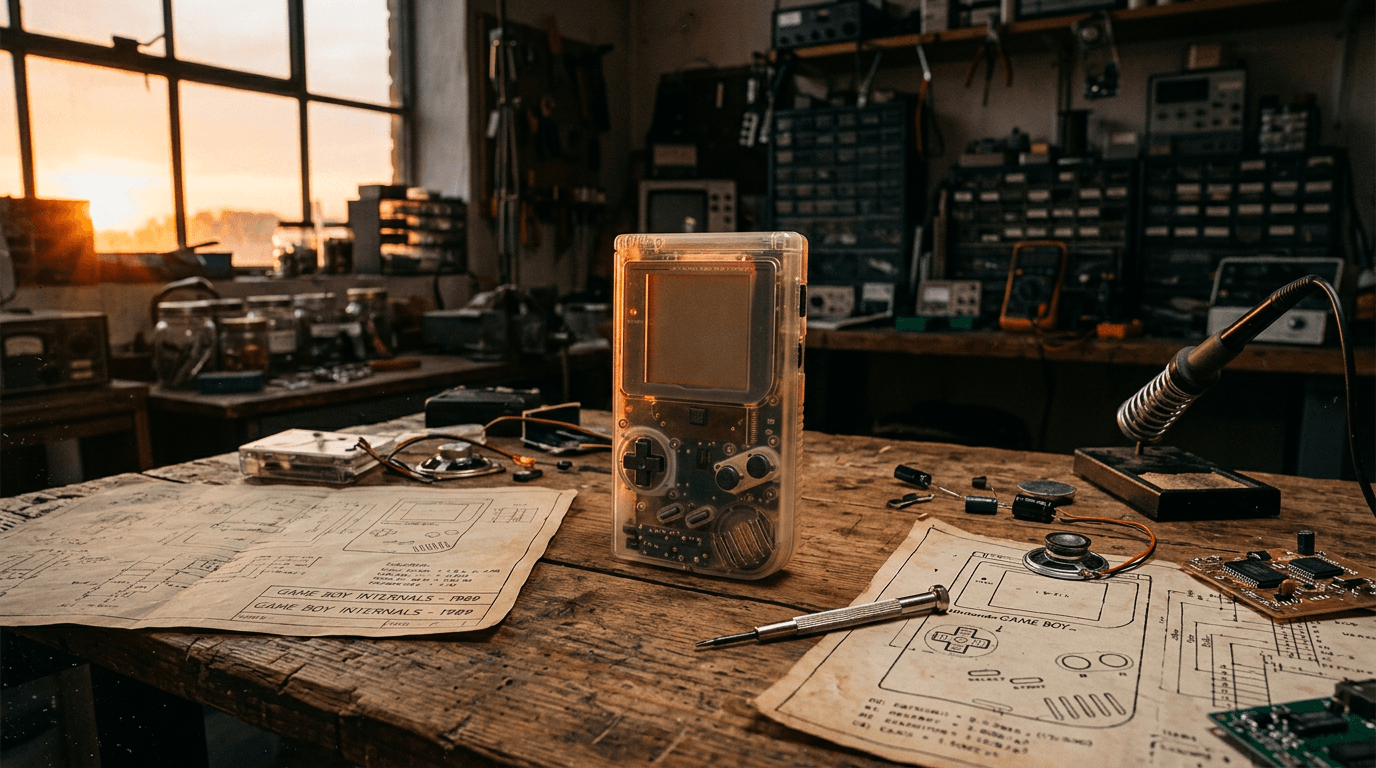
Retro console ecosystem development is entering a new era of high-stakes finance as Palmer Luckey reportedly seeks a staggering $10 billion in funding to revitalize the handheld gaming landscape of the 1990s. This move, reported on March 9, 2026, marks one of the most significant capital raises in the history of gaming hardware, particularly for a sector often relegated to the niche world of enthusiasts and collectors. Luckey, the founder of Oculus VR and the defense technology firm Anduril, appears to be pivoting his immense technical and financial resources back toward the medium that first sparked his career: the Game Boy and its contemporaries.
The Business Impact of Luckey’s $10 Billion Vision
The scale of this funding round is almost unprecedented for a project centered on legacy hardware. While the gaming industry frequently sees multi-billion dollar acquisitions, a $10 billion investment specifically targeted at the retro console ecosystem suggests a broader strategic play than simple nostalgia. Luckey’s history of disrupting established markets—first with virtual reality and later with autonomous defense systems—provides a blueprint for how he might approach this venture. Analysts suggest that the capital will likely be used to secure intellectual property, build out global manufacturing chains for high-end FPGA (Field Programmable Gate Array) hardware, and perhaps even establish a proprietary digital storefront for classic titles.
For investors, the entry of a figure like Luckey into the retro space signals a professionalization of the secondary market. By treating the 90s gaming era as a platform rather than a relic, Luckey is effectively attempting to create a vertical monopoly on the hardware and software experience of that decade. This involves not just the consoles themselves, but the entire infrastructure of screen technology, battery management, and physical media preservation that has become increasingly fragmented over the last thirty years.
“The move from defense weapons back to the Game Boy is less of a pivot and more of a homecoming for a technologist who understands that the value of the retro console ecosystem lies in its untapped cultural and mechanical purity.”
In the current market, companies like Analogue have proven there is a high-margin demand for premium retro hardware. However, Luckey’s $10 billion target dwarfs the valuation of any current player in the space. This level of funding suggests a desire to scale beyond boutique manufacturing into a mass-market revival that could challenge current handheld leaders by offering a “definitive” way to play historical libraries. You can find more about how hardware shifts affect market valuations in our related gaming articles.
The Retro Console Ecosystem in a Modern Market
The timing of this announcement is particularly notable given the current trends in the gaming industry. As modern AAA development costs balloon and live-service fatigue sets in, there has been a documented flight to quality and simplicity among older demographics. The retro console ecosystem offers a finite, polished experience that modern gaming often lacks. Luckey’s venture is likely betting on the fact that the generation that grew up with the Game Boy now possesses the significant disposable income required to support a premium, modernized revival of that experience.
From a technical standpoint, Luckey’s expertise in optics and display technology from his Oculus days could be the “X-factor” for this new ecosystem. One of the primary hurdles in retro gaming is the degradation of original LCD screens and the difficulty of replicating that look on modern OLED or LED panels without losing the original aesthetic. With $10 billion, Luckey could theoretically commission custom display panels that perfectly mimic the reflective properties of 90s handhelds while providing modern clarity and efficiency.
Future Implications for Industry Stakeholders
Should Luckey successfully raise this capital, the ripple effects will be felt across the entire industry. Nintendo, which currently monetizes its legacy library through the Switch Online subscription service, may find its grip on retro nostalgia challenged by a superior hardware alternative. If Luckey’s ecosystem provides a more authentic or “everlasting” way to play physical cartridges, it could drive up the value of original software, further impacting the related gaming articles we have published regarding the rising costs of physical media collectibles.
Furthermore, the crossover between defense-grade manufacturing and consumer electronics could lead to a more resilient retro console ecosystem. Luckey’s work with Anduril has focused on ruggedization and supply chain independence—skills that are directly transferable to creating high-end consumer hardware that avoids the planned obsolescence typical of today’s tech giants. If he can deliver a device that feels as indestructible as the original 1989 Game Boy but features 2026-level internal technology, he may redefine what consumers expect from “premium” gaming gear.
The financial community remains cautious but intrigued. A $10 billion valuation for a retro project is a “moonshot,” yet Luckey’s track record of turning fringe technology into multi-billion dollar industries makes it difficult to dismiss. As the funding round progresses, the industry will be watching to see if this is a vanity project or the birth of a new, permanent pillar in the global gaming market. The retro console ecosystem is no longer just a hobbyist’s playground; it is now a multi-billion dollar battlefield where the past and the future of gaming are set to collide.