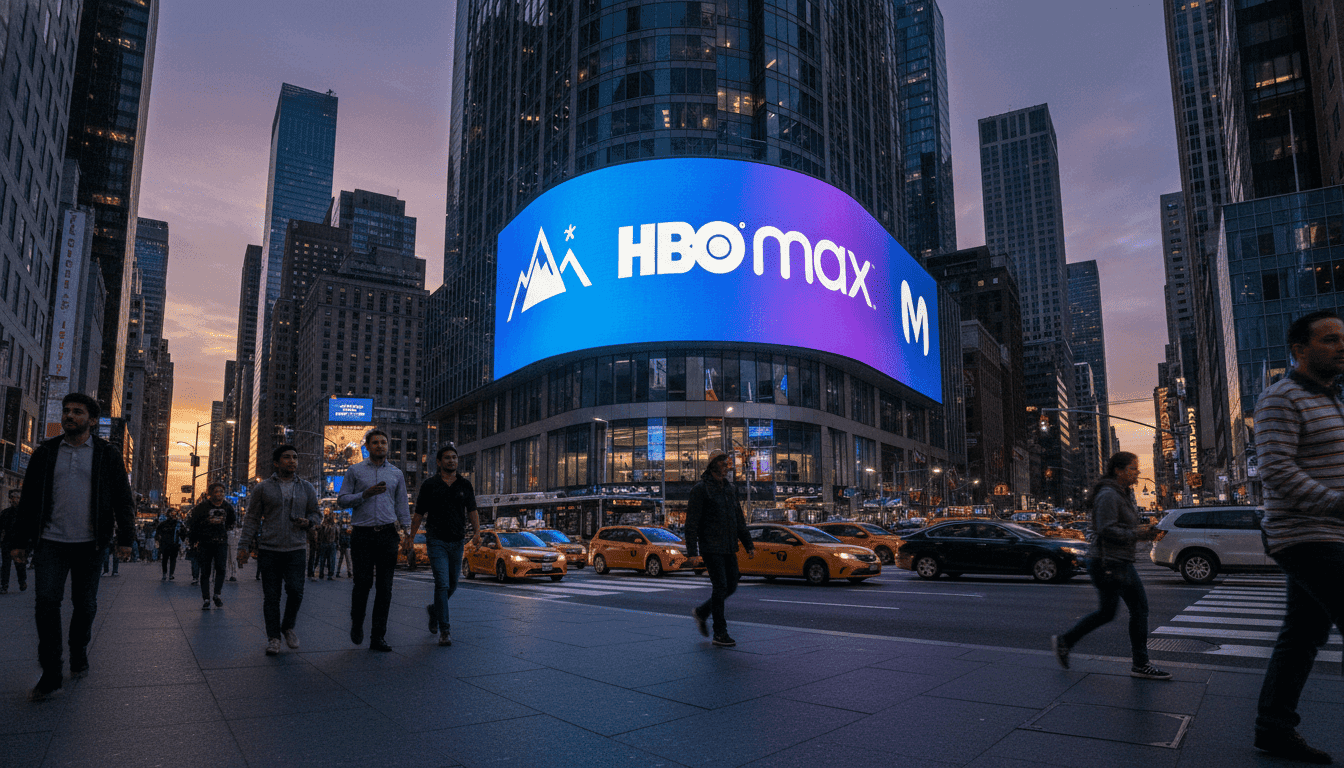
Paramount Skydance defends WBD merger, arguing that without the proposed $111 billion takeover of Warner Bros. Discovery, neither Paramount+ nor HBO Max could ever ‘catch up’ to the dominant streaming platforms like Netflix, Disney+, and Amazon’s Prime Video. This stark assessment comes directly from Paramount’s chief legal officer, Makan Delrahim, in a letter dated May 7, 2026, to California Attorney General Rob Bonta, who has voiced significant antitrust concerns regarding the deal.
Delrahim’s letter, first reported by Semafor and subsequently elaborated upon by Variety, is a direct response to the escalating scrutiny from Bonta and other state attorneys general. Bonta, on May 11, reiterated that the proposed deal presents “red flags everywhere,” citing potential risks of higher prices, lower wages, fewer jobs, and reduced competition. The California AG’s office, alongside other states, has a track record of challenging large media consolidations, notably filing a lawsuit to block the Nexstar-Tegna deal.
The Urgency of Scale: Paramount Skydance Defends WBD Merger
The core of Paramount’s argument centers on the critical need for scale in the intensely competitive streaming landscape. Delrahim explicitly stated that both Paramount+ and HBO Max “lack the scale to compete effectively against the leading SVODs.” Citing Nielsen estimates from December 2025, Paramount+ held only 5.8% of U.S. subscription VOD viewership, while Warner Bros. Discovery commanded 5.0%. In stark contrast, Netflix dominated with 32.5%, Disney 16.7%, and Amazon 15.3%, collectively capturing 65% of all U.S. SVOD viewers. The proposed merger aims to combine Paramount+ and HBO Max, creating a more formidable contender.
Beyond streaming, Delrahim also addressed concerns about market concentration in film distribution. He contended that a combined Paramount-WBD would represent only about 25% of the domestic box office, based on OpusData’s five-year analysis of 4,000 films. He argued that this market share leaves ample room for competition from at least half a dozen other major distributors, including Disney, Universal, Sony, Amazon MGM Studios, and Lionsgate. This competitive environment, he claims, necessitates aggressive competition from the merged entity to secure theatrical outlets for its films.
A key commitment highlighted by Delrahim is David Ellison’s pledge for the merged company to release at least 30 films per year, with both Paramount and WBD studios each distributing a minimum of 15 films annually. This, he argued, would “drive meaningful improvements for movie theaters and their audiences” and inject “new competitive energy to the entertainment ecosystem.” This commitment directly counters Bonta’s concerns about reduced choice and competition.
Distinguishing from Disney-Fox
Paramount’s legal team also drew a sharp distinction between its proposed merger with WBD and Disney’s 2019 acquisition of 21st Century Fox assets. Delrahim underscored that Disney, even before the Fox deal, had begun reducing its theatrical releases, putting out only 7 and 10 films in 2017 and 2018 respectively. Conversely, Paramount has committed to significantly increasing its theatrical output post-merger, aiming for over 30 feature films annually, with both studios maintaining full staff to support production and distribution. This commitment to theatrical releases was notably absent in the Disney-Fox transaction.
“Absent something transformative, neither party is positioned to grow to a scale where they would catch up to the leading streamers.”
Delrahim further asserted that Disney’s primary motivation for the Fox acquisition was to gain majority control of Hulu. In contrast, Paramount’s objective in acquiring WBD is “maximizing output across the entertainment ecosystem (including theatrical release) to compete more effectively with much larger competitors in Netflix, Disney, and Amazon.” The strategy, he emphasized, is to increase production and distribution volume as a crucial lever to achieve internal revenue targets for the combined entity. However, Paramount’s Q1 2026 earnings report indicated expectations of “significantly lower theatrical revenue year-over-year due to lower average box office revenue per film across more releases” in 2026, suggesting that increased volume doesn’t automatically equate to higher revenue, especially following a strong 2025 with titles like “Mission: Impossible – The Final Reckoning.”
The Road Ahead for the Merger
While Warner Bros. Discovery shareholders have overwhelmingly approved the Paramount deal, the path to finalization remains complex. The merger still requires approval from European regulators, and crucially, faces ongoing scrutiny from U.S. antitrust authorities. The Justice Department, despite the expiration of the Hart-Scott-Rodino antitrust act’s statutory waiting period, retains the authority to challenge the merger. In March, Omeed Assefi, acting head of the DOJ’s antitrust division, explicitly stated that the Paramount-WBD deal would “absolutely not” be fast-tracked for approval, dispelling any notions of political favoritism due to the Ellison family’s ties to former President Trump.
This ongoing regulatory battle highlights a broader trend in the entertainment industry, where consolidation is viewed as a necessary evil by some to achieve competitive scale, while regulators remain wary of its potential to stifle competition and harm consumers. The outcome of the Paramount-WBD merger will undoubtedly set a precedent for future consolidations in an industry grappling with evolving consumption habits and intense competition. For more insights into the shifting landscape of Hollywood and its financial implications, visit our related show business articles.
The argument that individual streaming services like Paramount+ and HBO Max cannot thrive independently against giants like Netflix and Disney underscores a fundamental shift in the entertainment business model. The emphasis on scale, content volume, and theatrical commitments reflects a strategic pivot by legacy media companies to adapt to a landscape increasingly dominated by a few well-resourced players. Whether regulators ultimately agree with Paramount’s assessment of increased competition and consumer benefit, or side with concerns over market concentration, will determine the future shape of a significant portion of the global entertainment ecosystem.