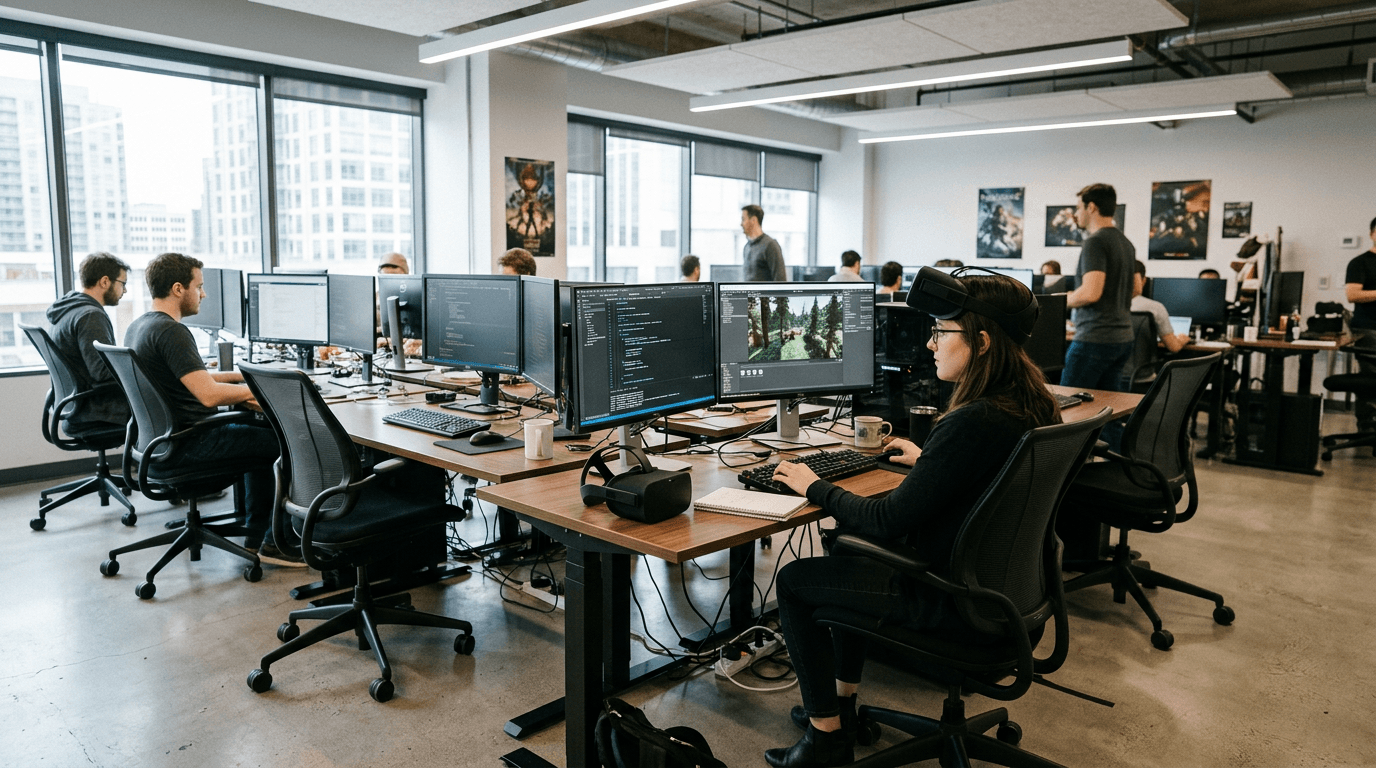
nDreams studio closures have sent a shockwave through the immersive technology sector as the UK-based pioneer announced a significant restructuring on Friday, March 6, 2026. This move, which includes the shuttering of specific internal teams and a series of layoffs, marks a sobering moment for an industry that once viewed nDreams as the gold standard for independent virtual reality development. The company, known for high-profile titles like Synapse and Phantom: Covert Ops, cited a “challenging” games market as the primary driver behind the decision to scale back its operations.
The financial dimensions of this announcement reflect a broader trend of consolidation and risk aversion within the gaming landscape. While nDreams has historically been a resilient player—navigating the early days of VR through to the launch of high-end hardware like the PlayStation VR2 and Meta Quest 3—the current economic climate has proven too volatile for its previous expansion strategy. Analysts at The Financial Standard note that the overhead of maintaining multiple specialized studios has become increasingly difficult to justify as software sales in the VR space struggle to keep pace with rising triple-A production costs.
For investors, the news is a stark reminder that even veteran studios are not immune to the post-pandemic market correction. The “challenging” environment mentioned by nDreams leadership refers to a combination of stagnating hardware adoption rates and a crowded digital storefront where visibility is harder than ever to achieve. By tracking related gaming articles, it becomes clear that the capital once flowing freely into VR startups has slowed to a trickle, forcing established firms to prioritize lean operations over aggressive growth.
nDreams Studio Closures and Sector Contraction
The specific impact of the nDreams studio closures involves a reduction in headcount that hit several departments, though the company has yet to release the exact number of affected employees. This restructuring is particularly notable given nDreams’ previous trajectory; the company had been on an acquisition spree and talent hiring blitz following its own acquisition by the Swedish gaming group Aonic in late 2023. The reversal of this growth suggests that the projected “hockey stick” growth of the VR market has flattened significantly in the mid-2020s.
“The VR market is currently navigating a period of intense correction, where even established pioneers must restructure to survive in a high-cost development environment.”
The business logic behind the move appears to be a consolidation of resources into a single, more efficient core team. By closing peripheral studios, nDreams aims to protect its most profitable intellectual properties and maintain its relationship with major platform holders like Meta and Sony. However, the loss of specialized talent could hinder the company’s ability to innovate at the same pace that made them a household name in the VR community. This sentiment is echoed in several related gaming articles, which highlight how the loss of mid-sized studios often leads to a creative vacuum in the industry.
From a market dynamics perspective, the announcement of the nDreams studio closures comes at a time when the industry is looking toward Apple’s continued influence in the spatial computing space. While the entry of new hardware usually signals a boom for developers, the high entry price of premium headsets has not yet translated into the mass-market software sales that nDreams and its peers required to sustain multiple large-scale development teams.
Looking at the historical context, nDreams has been a fixture of the VR scene since 2013. They were among the first to pivot entirely to immersive media, long before it was a mainstream trend. Their survival through various “VR winters” gave many in the industry hope that a sustainable business model for high-end VR content was possible. The current retreat, therefore, signals a more profound shift in the market—one where the focus has moved from “growth at all costs” to “survival through efficiency.”
Competitors are likely watching these developments with caution. If a studio with the pedigree and backing of nDreams is forced to make such drastic cuts, it suggests that the middle-market for VR games—those with budgets between $10 million and $30 million—is becoming a financial “no man’s land.” Smaller indie developers can survive on low overhead, and massive first-party studios are subsidized by hardware sales, but independent giants like nDreams are finding themselves squeezed from both sides.
What’s next for the company will likely involve a more conservative approach to project greenlighting. Analysts predict that nDreams will shift its focus toward publishing and co-development, leveraging its brand name to help smaller teams bring products to market without the financial burden of maintaining a massive internal staff. This “publisher-first” model has been a lifeline for other gaming entities during periods of market turbulence.
The key takeaway for the gaming industry and its investors is that the path to VR profitability remains fraught with institutional risk. The nDreams studio closures are a landmark event that may force a re-evaluation of how immersive content is funded and produced. As the industry moves into the latter half of the decade, the focus will undoubtedly remain on fiscal discipline and the search for a truly sustainable ecosystem that can support high-fidelity development without the constant threat of insolvency.
Ultimately, the impact of the nDreams studio closures will be felt across the UK gaming hub and the global VR community. It serves as a definitive end to the era of unbridled optimism in the VR space, replaced by a more mature, albeit harsher, financial reality. For nDreams to emerge stronger, it will need to prove that its consolidated core can still deliver the category-defining experiences that built its reputation in the first place.