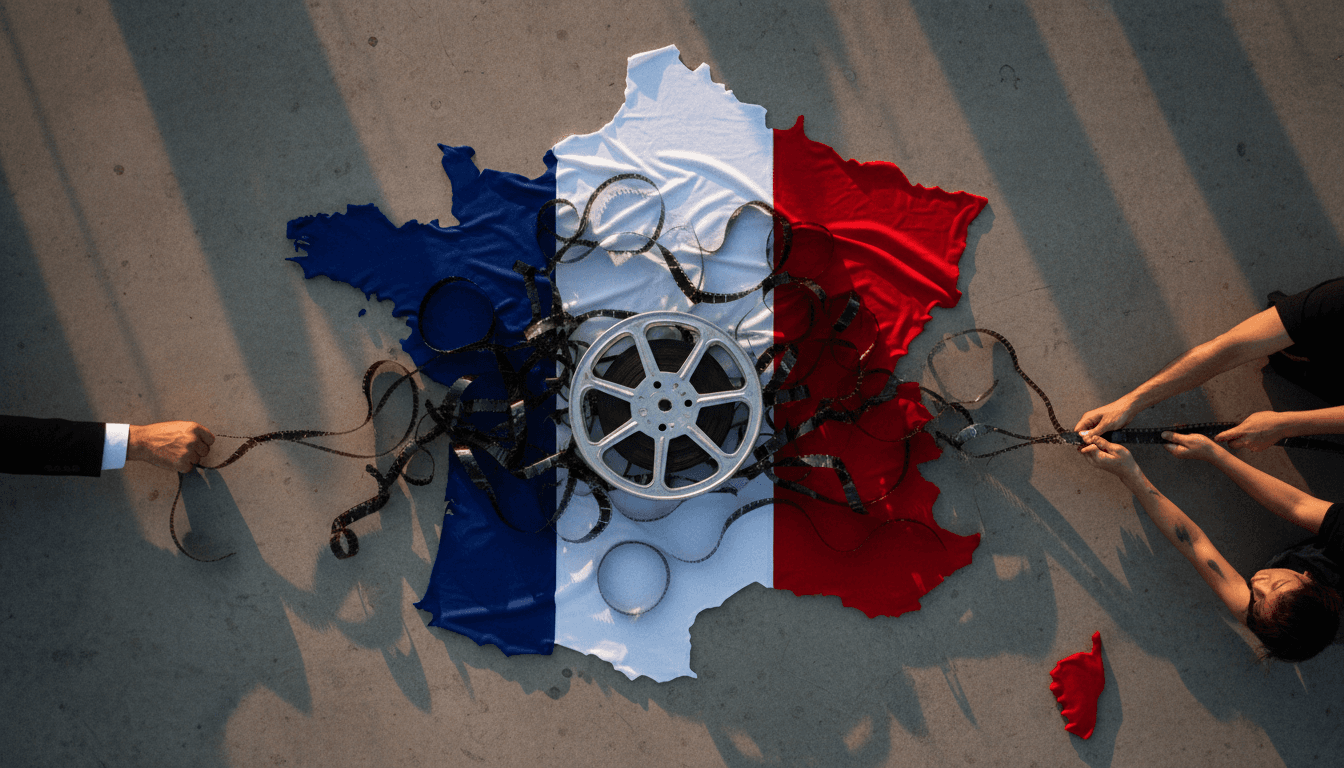
The French film industry risks far-right takeover of its collective imagination, according to an open letter signed by more than 600 leading cinema figures, including actor-director Juliette Binoche, director Raymond Depardon, and filmmaker Sepideh Farsi. Published in Libération to coincide with the opening of the Cannes Film Festival, the letter warns against the growing influence of billionaire Vincent Bolloré on French cinema production and distribution, citing his extensive media empire and close ties to far-right figures.
The signatories expressed profound concern that Bolloré’s dominant position could lead to a “fascist takeover of the collective imagination,” standardizing films and promoting a reactionary societal project. This alarm follows an unprecedented revolt last month, where over 100 writers quit the publishing house Grasset in protest of Bolloré’s control over its parent company, Hachette Livre, refusing to be “hostages in an ideological war.”
Bolloré’s Expanding Empire and Industry Fears
Vincent Bolloré, a conservative industrialist, wields significant power across French media and culture. His holdings include the controversial news channel CNews, radio station Europe 1, and the newspaper Le Journal du Dimanche. CNews, in particular, has drawn criticism from the left for providing a platform to what they describe as reactionary voices that have fueled the rise of the far right. A recent legal investigation was opened by the Paris prosecutor’s office into alleged racist comments made on CNews against Saint-Denis mayor Bally Bagayoko, a claim the channel denies.
In the film sector, Bolloré’s influence is primarily exerted through StudioCanal, the in-house production arm of his entertainment conglomerate Canal+. StudioCanal stands as Europe’s leading film and television production and distribution group, with recent titles like the Amy Winehouse biopic Back to Black and Paddington in Peru. The open letter’s signatories are particularly troubled by Canal+’s recent acquisition of a stake in UGC, France’s third-largest cinema network, with full ownership planned for 2028. This move, they argue, would place Bolloré in a position to control the entire film production chain, from financing to distribution and exhibition on both big and small screens.
“By leaving French cinema in the hands of a far-right owner, we risk not only the standardisation of films, but a fascist takeover of the collective imagination.”
Cinema insiders, emboldened by the publishing sector’s rebellion, are now speaking out against what they perceive as an ideological threat. They fear that while Bolloré’s influence on film content has been subtle thus far, this discretion will not last. The letter explicitly states, “The influence of [his] ideological offensive on the content of films has so far been discreet, but we are under no illusion: this won’t last.”
The Broader Political Climate and Funding Concerns
The concerns within the French film industry are amplified by the current political landscape. Marine Le Pen’s far-right National Rally (RN) is polling strongly ahead of next spring’s presidential election, raising fears about proposed funding cuts to the arts. RN MPs have openly questioned the existing model of public funding and tax breaks that support the film industry through the Centre National du Cinéma (CNC), a state agency responsible for backing hundreds of films annually.
Furthermore, the RN has been a vocal critic of France Télévisions, the national public broadcaster and a crucial financier of French film, drama, and documentaries. The party has expressed its intention to privatize the state broadcaster if it comes to power, and a recent report by an RN-allied MP recommended extensive cuts to public broadcasting, including entertainment budgets. The protest letter highlights this convergence of corporate control and political agenda, warning that “The dismantling of the CNC and the public broadcaster are part of the RN’s programme. Do we want to take the risk that tomorrow the only thing still being financed will be propaganda films that serve an ideology?” This scenario underscores the critical danger that the French film industry risks far-right takeover of its creative output.
Bolloré, once described by former education minister Pap Ndiaye as “very close to the most radical far right,” denied political interventionism in a 2022 senate hearing, claiming his media acquisitions were purely financial and aimed at promoting French soft power. Following the authors’ revolt, he dismissed his critics in Le Journal du Dimanche as “a tiny caste who think themselves above everyone else,” asserting, “As for the attacks concerning my ‘ideology,’ I’m a Christian democrat.”
What’s Next for French Cinema’s Independence
The open letter calls upon the wider film industry to unite and “build a movement” to defend its independence. The coming months, leading up to the 2027 French presidential election, will be crucial. The outcome of the election, combined with Bolloré’s continued expansion into cinema exhibition, will determine the extent to which these fears materialize. The industry faces a stark choice: passively observe the consolidation of power or actively resist what many perceive as an ideological creep into artistic freedom. The struggle for the soul of French cinema, a bastion of artistic expression and cultural identity, is now in full public view, with its future hanging in the balance as the French film industry risks far-right takeover.
This unprecedented mobilization of 600 cinema figures, spearheaded by internationally renowned artists, signals a critical moment for French cultural independence. The intertwining of media ownership, political ambition, and artistic freedom has created a volatile environment where the very essence of storytelling is perceived to be at stake. The global entertainment industry will undoubtedly be watching closely as this battle for the ‘collective imagination’ unfolds in France.