Explosive Anthropic growth has sent ripples across the technology sector, with its run-rate revenue soaring past an astonishing $30 billion, an extraordinary leap from approximately $9 billion at the close of 2025. This dramatic surge, attributed to skyrocketing demand for its Claude AI models, marks a significant inflection point for the artificial intelligence industry and, by extension, the increasingly AI-dependent gaming sector. The financial prowess demonstrated by Anthropic underscores the accelerating integration of sophisticated AI into every facet of digital entertainment, from game development and content generation to player engagement and operational efficiencies.
The company’s statement confirmed, “Demand from Claude customers has accelerated in 2026. Our run-rate revenue has now surpassed $30 billion—up from approximately $9 billion at the end of 2025.” This isn’t just about increased usage; it reflects a deep entrenchment within enterprise operations. The number of business clients spending over $1 million annually has more than doubled in less than two months, jumping from 500 during its Series G fundraising in February to over 1,000 today. This rapid adoption by high-value customers signals a robust and validated market for Anthropic’s advanced AI capabilities, which are increasingly being leveraged by major gaming studios and publishers for everything from NPC behavior and procedural content generation to sophisticated analytics and personalized player experiences.
The Business Impact for Gaming
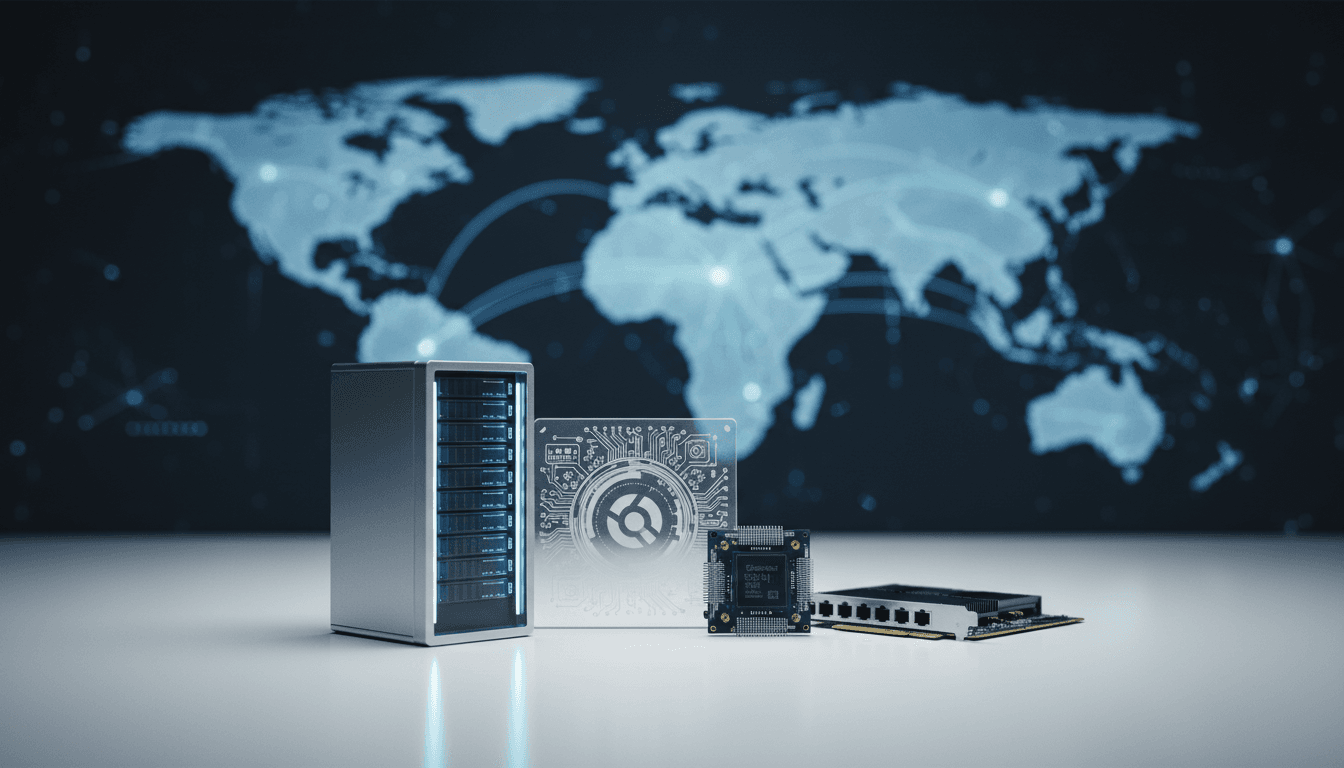
For the gaming industry, Anthropic’s meteoric rise and its aggressive compute infrastructure expansion are critically important. The company has inked a landmark agreement with Google and Broadcom to secure multiple gigawatts of next-generation Tensor Processing Unit (TPU) capacity. This massive investment in compute power directly translates to more powerful, scalable, and accessible AI models, which will inevitably find their way into game development pipelines. As Krishna Rao, an Anthropic executive, stated,
“This ground breaking partnership with Google and Broadcom is a continuation of our disciplined approach to scaling infrastructure: we are building the capacity necessary to serve the exponential growth we have seen in our customer base while also enabling Claude to define the frontier of AI development.”
This commitment to defining the frontier of AI development means that gaming companies utilizing Claude or similar frontier models can expect even more sophisticated tools for creating dynamic worlds, intelligent adversaries, and hyper-realistic simulations.
The bulk of this new AI infrastructure will be deployed in the United States, building on Anthropic’s earlier commitment in November 2025 to invest $50 billion in American AI infrastructure. This geographical concentration could foster innovation hubs, potentially leading to specialized AI applications for U.S.-based game developers. The deepening ties with Google Cloud, alongside its existing strong partnership with Amazon Web Services (AWS) and its presence on Microsoft Azure, ensures that Claude remains the only frontier AI model available across all three major cloud platforms (AWS Bedrock, Google Cloud Vertex AI, and Microsoft Azure Foundry). This multi-platform approach offers unparalleled flexibility and accessibility for game developers, regardless of their preferred cloud environment, facilitating broader integration of advanced AI into game engines and services. Read more about AI in game development here.
Industry Context and Competitor Moves
The gaming industry has been rapidly embracing AI, from generative AI for asset creation to machine learning for anti-cheat systems. Anthropic’s explosive Anthropic growth positions it as a formidable player in this evolving landscape, challenging competitors like OpenAI and Google’s DeepMind for market share in providing foundational AI models. The ability of Claude to operate across all major cloud providers gives it a significant competitive edge, allowing gaming studios to leverage its capabilities without being locked into a single ecosystem. This flexibility is crucial for large-scale publishers managing diverse portfolios and for indie studios seeking cost-effective, scalable AI solutions.
What’s Next for AI in Gaming
The implications of this massive investment in AI infrastructure are profound for the future of gaming. We can anticipate an acceleration in the development of ‘agentic AI’ – AI systems capable of autonomous decision-making and complex task execution, as hinted at in recent discussions about Anthropic and OpenClaw defining new capabilities. This could revolutionize NPC intelligence, enabling characters to learn, adapt, and even generate their own narratives within games. Furthermore, the increased compute capacity will fuel advancements in real-time ray tracing, physics simulations, and hyper-personalized content delivery, pushing the boundaries of immersive experiences. Analysts predict that this scaling of AI infrastructure will enable a new generation of games where AI isn’t just a feature but the core engine driving dynamic, evolving worlds. Explore the impact of AI on game economics.
Key Takeaway for Investors
Anthropic’s journey from a $9 billion to a $30 billion run-rate revenue company in mere months is a clear indicator of the insatiable demand for advanced AI. For investors in the gaming sector, this signals a critical need to evaluate companies based on their AI integration strategies and partnerships. Those leveraging frontier AI models like Claude, especially with its robust, multi-platform infrastructure, are poised for significant competitive advantages. The future of gaming is inextricably linked to the capabilities of AI, and Anthropic’s explosive growth underscores the accelerating pace of this transformation.