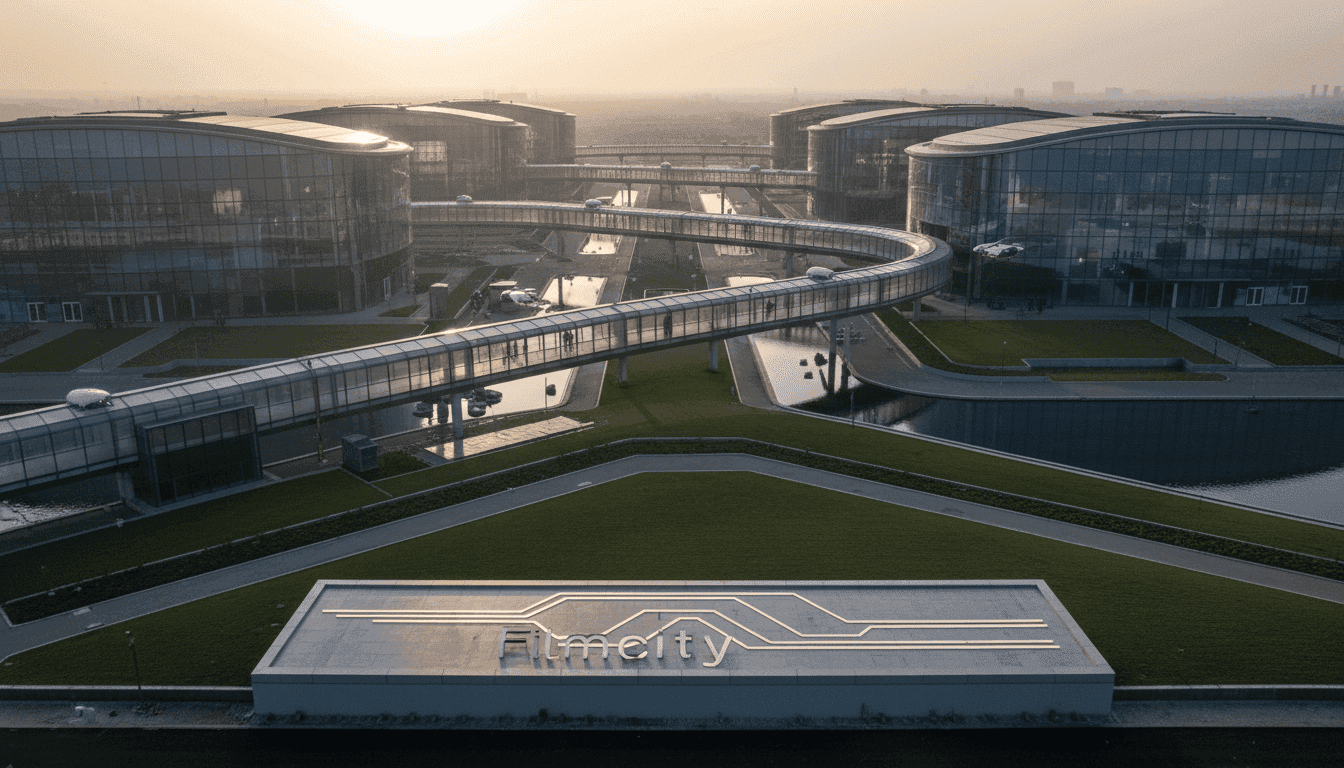
A 50-Acre Film City plan, unveiled by Maryam Nawaz on Sunday, April 26, 2026, promises a significant revival of Pakistan’s entertainment industry. This ambitious project, announced by the prominent political figure, aims to inject new life into a sector that has long sought substantial infrastructure and investment.
The Vision Behind the 50-Acre Film City
The announcement from Maryam Nawaz, detailed in The Nation (Pakistan), outlines a comprehensive strategy to bolster Pakistan’s show business landscape. While specific financial details or timelines were not immediately available, the sheer scale of a 50-acre facility suggests a monumental commitment. This initiative is positioned as a pivotal step towards modernizing film and television production capabilities, fostering local talent, and attracting international collaborations.
The concept of a dedicated film city is not new to global entertainment hubs, providing centralized resources from sound stages and post-production facilities to administrative offices and accommodation. For Pakistan, a 50-Acre Film City could serve as a creative nexus, streamlining production processes and reducing logistical hurdles that have historically challenged filmmakers and content creators.
Impact Analysis
The potential impact of this 50-Acre Film City on the broader show business landscape in Pakistan is profound. It signifies a governmental recognition of the entertainment industry’s economic and cultural importance. For years, Pakistani cinema and television have operated with limited resources and fragmented infrastructure, often leading to production quality challenges and difficulties in competing on a global stage. This new facility could dramatically change that narrative.
Producers, directors, and actors will likely see enhanced opportunities for high-quality content creation. The infrastructure could also attract foreign investment and co-productions, leading to an influx of international expertise and advanced technology. This could, in turn, elevate the technical and artistic standards of local productions. Furthermore, the creation of such a hub is expected to generate significant employment across various sectors, from direct production roles to ancillary services like hospitality, catering, and security.
“This initiative represents a critical turning point for Pakistani entertainment, offering a consolidated platform for creativity and commerce that has been sorely lacking.”
For the independent film scene, often constrained by budget and access to professional facilities, a state-of-the-art film city could provide much-needed resources, fostering innovation and diverse storytelling. This could lead to a renaissance in Pakistani cinema, allowing it to explore new genres and narratives that resonate with both local and international audiences. Related show business articles often highlight the transformative power of dedicated infrastructure in emerging markets.
Context & Background
Pakistan’s entertainment industry has experienced periods of significant growth and decline. The golden age of Pakistani cinema in the 1960s and 70s saw a thriving film culture. However, subsequent decades brought challenges, including censorship, changing audience preferences, and a lack of consistent investment. In recent years, there has been a noticeable resurgence, particularly in television dramas, which have gained considerable popularity domestically and internationally.
Despite this resurgence, the lack of modern, integrated production facilities has remained a bottleneck. Filmmakers often have to piece together locations and equipment, leading to inefficiencies and increased costs. Previous attempts or discussions around similar projects have often failed to materialize or achieve the scale now envisioned. Maryam Nawaz’s announcement, therefore, carries significant weight, signaling a serious governmental push to overcome these historical limitations.
What’s Next
The immediate next steps will involve detailed planning and execution strategies for the 50-Acre Film City. Key decisions will include the exact location within Pakistan, funding mechanisms (whether public, private, or a hybrid model), and the specific facilities to be included. Stakeholder consultations with industry professionals – filmmakers, producers, distributors, and artists – will be crucial to ensure the film city meets the actual needs of the industry. The timeline for construction and operationalization will also be eagerly anticipated.
Success will hinge not just on the physical infrastructure but also on policies that support content creation, intellectual property rights, and market access. The project could also catalyze further private sector investment in related areas, such as film schools, talent agencies, and distribution networks, creating a more robust ecosystem for the entertainment industry.
Key Takeaway
The unveiling of the 50-Acre Film City plan by Maryam Nawaz on April 26, 2026, is a pivotal moment for Pakistan’s entertainment industry. It represents a concrete commitment to providing the necessary infrastructure for growth, innovation, and global competitiveness. If executed effectively, this initiative has the potential to redefine Pakistan’s position on the international entertainment map, fostering a new era of artistic expression and economic prosperity within the creative sector. This ambitious project could well be the catalyst that transforms the aspirations of Pakistani filmmakers and artists into tangible global successes.