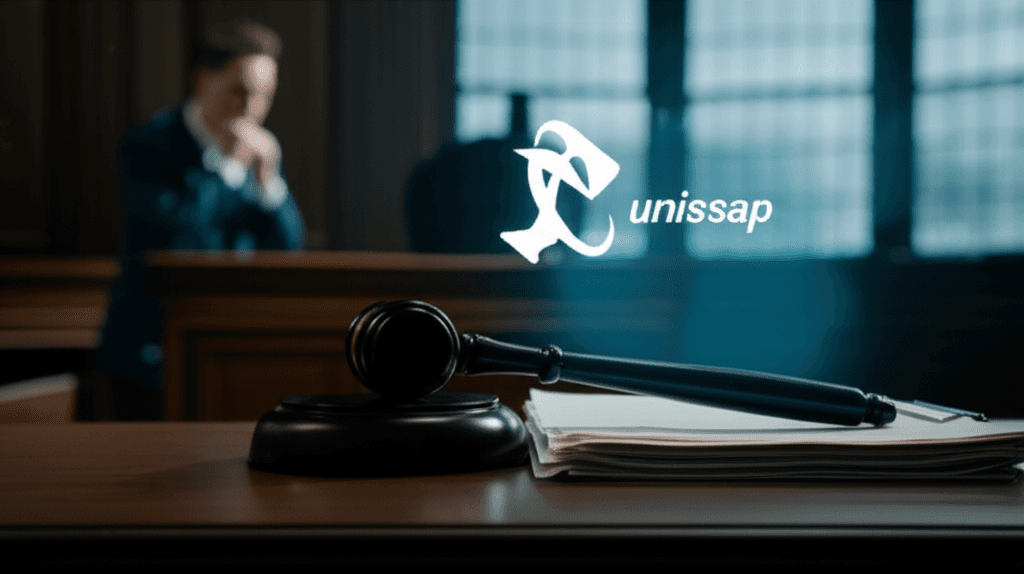
Uniswap Escapes Crypto Rug Pull lawsuit, as a federal judge ruled that Uniswap is not responsible for scam tokens traded on its platform, a decision hailed by founder Hayden Adams as a “sensible outcome.” Manhattan federal judge Katherine Polk Failla dismissed a class action suit against Uniswap on Monday, ending a four-year legal battle and setting a potentially significant precedent for decentralized finance (DeFi) platforms.
The lawsuit, led by Nessa Risley, sought to hold Uniswap Labs and Adams liable for losses incurred by investors who traded scam cryptocurrencies on the platform. The plaintiffs argued that Uniswap facilitated “rug pulls and pump and dump schemes” by allowing the listing and trading of fraudulent tokens. This was the class group’s second attempt to sue Uniswap, which amended their complaint in May to focus on claims of state-level consumer protection violations.
Uniswap Prevails in Rug Pull Case
Judge Polk Failla, however, rejected these arguments, stating that the class group failed to adequately allege that Uniswap “had knowledge of the fraud and substantially assisted in its commission.” The judge emphasized that simply providing a platform where fraud could occur does not equate to actively aiding and abetting the fraudulent activity. She added that Uniswap was providing “ordinary services that anyone could use for lawful purposes, but that some used for unlawful purposes.”
Adams celebrated the ruling on X, stating, “If you write open source smart contract code, and the code is used by scammers, the scammers are liable, not the open source devs.” This sentiment underscores the ongoing debate about the responsibility of developers and platforms in the DeFi space for the actions of malicious actors who exploit their technology.
Implications for the DeFi Industry
This ruling could have significant implications for the broader DeFi industry, potentially shielding decentralized exchanges (DEXs) and other platforms from liability for the actions of third-party token issuers. It reinforces the principle that platforms providing neutral technology should not be held responsible for the misuse of that technology by bad actors. However, the case also highlights the need for greater regulatory clarity and consumer protection measures in the rapidly evolving crypto landscape. Investors should always conduct thorough due diligence before investing in any cryptocurrency, regardless of the platform on which it is traded. For more related Crypto news, stay tuned to The Financial Standard.
The Court’s Reasoning
The judge drew parallels to other scenarios where platforms are not held liable for the illegal activities of their users.
“Simply providing the platform on which a fraud takes place is not the same as substantially assisting that fraud,”
she wrote, comparing Uniswap to a bank used for money laundering or a messaging service used for drug dealing. This analogy underscores the court’s view that Uniswap’s role was purely that of a neutral facilitator, not an active participant in the alleged fraud.
Future of Crypto Regulation
The Uniswap Escapes Crypto Rug Pull lawsuit demonstrates the complexities of regulating decentralized technologies. While the ruling provides some relief for DeFi platforms, it also emphasizes the importance of investor education and risk management. As the crypto industry continues to mature, it is likely that regulators will seek to strike a balance between fostering innovation and protecting consumers from fraud. The outcome of this case could influence future legal challenges and regulatory frameworks in the DeFi space.
In conclusion, the dismissal of the lawsuit against Uniswap represents a significant victory for the platform and potentially for the broader DeFi industry. The court’s decision affirms that platforms providing neutral technology should not be held liable for the actions of third-party scammers, reinforcing the importance of individual responsibility and due diligence in the crypto market.