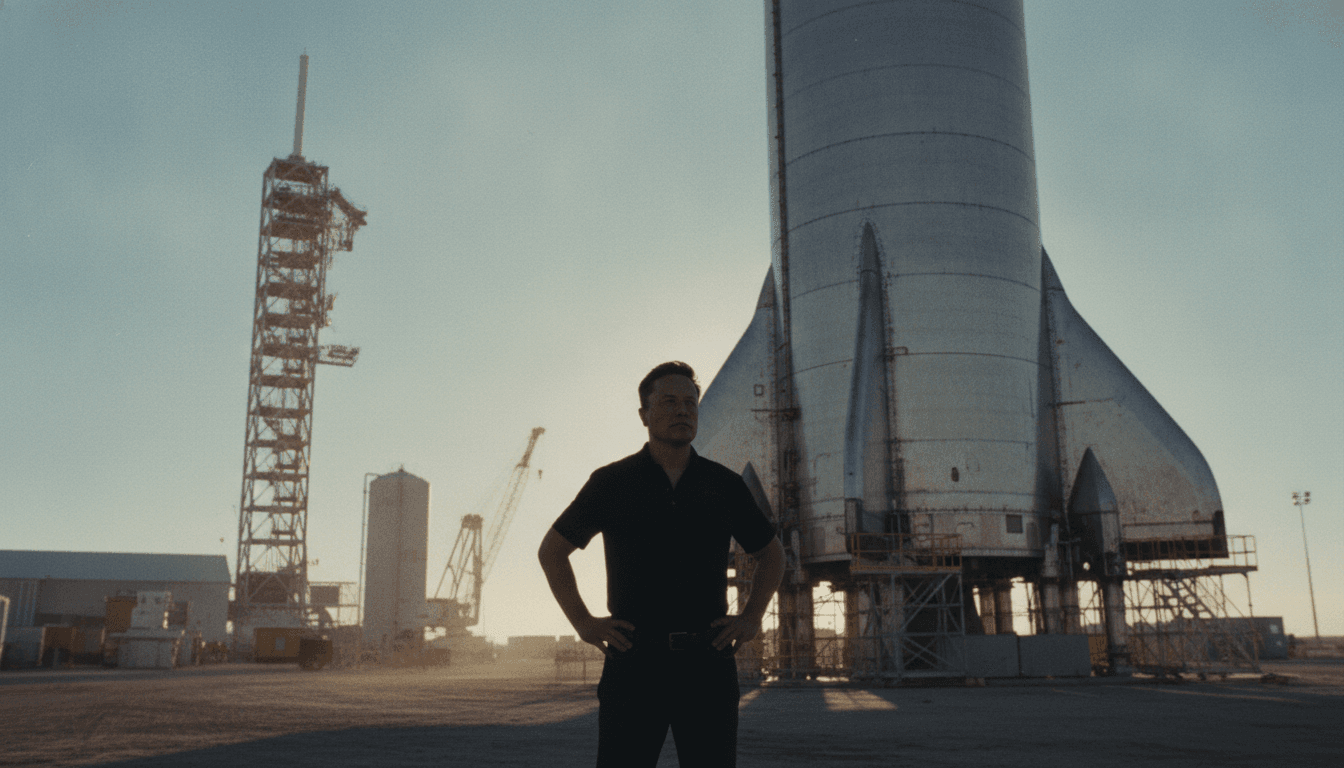
Friday, June 12, 2026, will be etched into financial history as the day Elon Musk officially became the world’s first trillionaire. The highly anticipated Initial Public Offering (IPO) of his aerospace company, SpaceX, on the NASDAQ exchange, trading under the ticker “SPCX,” delivered a colossal valuation that reshaped the global wealth landscape and injected unprecedented capital into humanity’s multi-planetary ambitions. The debut saw shares open at $150, an 11% increase from the initial price of $135, before spiking further to approximately $168 per share, propelling SpaceX’s valuation past the $2 trillion mark and solidifying its position as the sixth-largest U.S. company by market capitalization.
SpaceX IPO Reshapes Financial Markets
The numbers behind this historic event are staggering. SpaceX offered 555.5 million Class A common stock shares, with underwriters holding an option for an additional 83.3 million. This offering raised an astonishing $75 billion, making it the largest IPO in history—nearly three times the previous record set by Saudi Aramco in 2019 ($25.6 billion). At its initial offering price, SpaceX commanded a valuation of $1.77 trillion, a figure that quickly swelled to over $2 trillion within hours of trading. For Elon Musk, the founder and CEO, the IPO translated into an estimated net worth of $1.1 trillion, a monumental leap from his pre-IPO wealth of $813 billion. His approximately 42% ownership stake, comprising 4.8 billion shares and 350 million stock options, served as the primary driver of this unprecedented financial milestone.
Beyond Musk himself, the wealth generation extended deep into the company’s ranks. Over 4,400 current and former SpaceX employees are now expected to become millionaires, with 400 of them securing $100 million or more. This widespread distribution of wealth underscores the long-term commitment and risk-taking involved in building a company that, for nearly two and a half decades, remained privately held.
The capital raised is earmarked for SpaceX’s ambitious roadmap, which extends far beyond its current dominance in rocket launches with the Falcon 9, Falcon Heavy, and Starship. A significant portion will fuel the expansion of its artificial intelligence division, xAI, acquired in February 2026. SpaceX plans to develop advanced hardware and software for the AI industry, including its Grok AI model and, crucially, establish orbit-based AI data center networks. This convergence of aerospace and AI signifies a new frontier for technological development and potential revenue streams. Furthermore, the IPO will accelerate the company’s foundational mission: making humanity multi-planetary, including lunar landings and establishing a one-million-person Martian colony. The highly profitable Starlink satellite constellation, currently SpaceX’s only profitable division, will also see further expansion to provide global broadband internet.
“It is certainly hard to believe that a little company that started in a warehouse in El Segundo is now going public with the largest IPO ever,” Elon Musk stated, reiterating the company’s mission “to make life multi-planetary” and “take the fiction out of science fiction.”
The market’s fervent reception to the SpaceX IPO was not without its detractors. Morningstar analysts, who maintain independence from investment banking fees, expressed significant reservations, deeming the IPO “significantly overvalued.” They estimated the company’s true worth at $780 billion, less than half its IPO valuation, and assigned a share value of $63—a 53% discount to the offering price. Their concerns centered on SpaceX’s unproven technology, particularly its Martian ambitions, and its massive capital requirements. Indeed, SpaceX reported a net loss of $8.7 billion between early 2025 and March 31, 2026, with 2025 revenue at $18.7 billion against a net loss of $4.9 billion. These figures highlight the immense investment required to pursue such groundbreaking, long-term projects.
The IPO was reportedly oversubscribed by three to four times, with investor demand exceeding $250 billion. This drew sharp criticism from Massachusetts Senator Elizabeth Warren, who called on the Securities and Exchange Commission (SEC) to delay the IPO, citing concerns over potentially “inaccurate or misleading accounting or valuation.” She also raised red flags about the potential for individual investors to be unwittingly exposed to financial risk through retirement savings and pension plans, a sentiment echoed by Nabil Ahmed of Oxfam America, who described Musk’s rise to trillionaire status as “a new pinnacle of oligarchy,” rekindling debates on global wealth inequality.
Despite these concerns, the immediate market reaction underscored a powerful belief in SpaceX’s vision and technological prowess. Jeffrey Manber, special representative to the chairman and CEO of Voyager Technologies, hailed the IPO as a “watershed moment for both the industry and the financial markets,” drawing parallels to the transformative impact of Microsoft for software and Google for the internet. SpaceX President Gwynne Shotwell aptly summarized the mood: “Today, we make history again. We have a history of making history.”
The future implications of the SpaceX IPO are vast. The infusion of $75 billion provides a war chest for accelerating development across its diverse portfolio, from next-generation rockets to orbital AI infrastructure. For investors, it represents a high-stakes bet on the future of space exploration, satellite internet, and artificial intelligence, all rolled into one ambitious enterprise. The SpaceX IPO has not only created the world’s first trillionaire but has also set a new benchmark for capital markets and the financing of audacious, long-term technological endeavors, promising to redefine humanity’s place in the cosmos. Readers interested in the broader landscape of market-shaping events can find related trending articles on our platform.