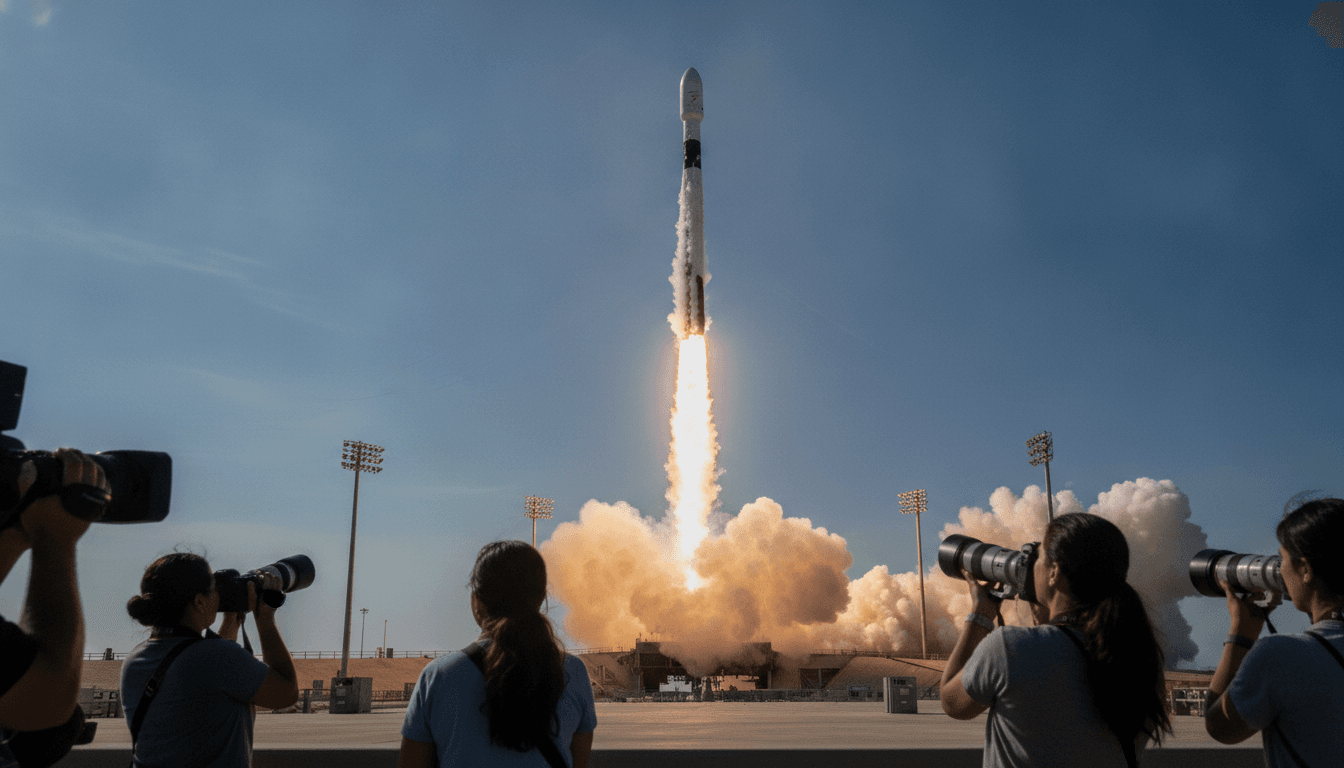
The impending SpaceX IPO valuation is drawing significant scrutiny, with Morningstar analysts suggesting the space and AI giant may be worth less than half its target of $1.77 trillion. As the company gears up for a potential public debut as early as this month, the chasm between SpaceX’s ambitious $28.5 trillion total addressable market (TAM) projection and Morningstar’s $780 billion valuation raises fundamental questions about how investors should approach this high-profile offering.
SpaceX is strategically positioning itself across three lucrative sectors: artificial intelligence (AI), satellite communications, and rocket manufacturing. While its rocket division has revolutionized launch costs and reliability, and its Starlink internet and mobile services are already profitable, the bulk of its projected growth, an astounding $26.5 trillion of its $28.5 trillion TAM, hinges on its AI ventures. This heavy reliance on AI is precisely where Morningstar’s skepticism is most pronounced.
“We don’t see Grok as one of the leading AI labs today,” concludes one of Morningstar’s analysts, referring to SpaceX’s primary AI chatbot product. “We think the company has been significantly overvalued and investors will have opportunities to buy the stock at more attractive levels after the IPO.”
Morningstar’s report advises potential investors to hold off on the initial offering, recommending accumulation of shares only after an anticipated market correction. This cautious stance highlights the inherent difficulties in valuing IPOs, which frequently experience volatile price swings in the immediate aftermath of their public listing. The financial community often grapples with assessing nascent divisions, especially those, like SpaceX’s AI arm, that are currently operating at a loss.
The Disputed SpaceX IPO Valuation
The core of the valuation discrepancy lies in SpaceX’s expansive definition of its total addressable market. The company breaks down its $28.5 trillion TAM into $370 billion from space-enabled solutions, $1.6 trillion from connectivity (Starlink Broadband and Mobile), and a colossal $26.5 trillion from AI. This AI segment, encompassing infrastructure, consumer subscriptions, digital advertising, and enterprise applications, dramatically dwarfs its established space and connectivity businesses in terms of projected market size.
While the company’s rocket and connectivity divisions are lauded for their innovation and profitability, Morningstar analysts express significant doubts about the competitive standing and immediate financial viability of its AI products, such as Grok. Despite the potential for SpaceX to leverage its existing infrastructure for novel AI growth opportunities, like orbital data centers, the current financial performance of its AI division, described as a “heavy money loser,” is a significant red flag for analysts.
Market Impact and Future Implications
The debate surrounding the SpaceX IPO valuation underscores a broader trend in the tech industry: the increasingly speculative nature of AI-driven valuations. As companies like SpaceX attempt to capitalize on the AI boom, investors are tasked with discerning genuine long-term potential from speculative hype. The $75 billion in fresh capital that SpaceX aims to raise through its IPO would undoubtedly provide substantial resources to scale its AI division, potentially accelerating its development and competitive positioning.
However, Morningstar’s warning serves as a crucial reminder that a strong underlying business does not always translate into an immediately attractive stock. The firm’s recommendation to wait for a “greater margin of safety” post-IPO reflects a prudent approach to investing in high-growth, yet unproven, segments of a company’s portfolio. The market’s reaction to SpaceX’s debut will set a precedent for how future multi-sector tech IPOs, particularly those heavily weighted towards emerging technologies like AI, are received and valued.
The coming weeks will reveal whether investors align with SpaceX’s ambitious vision for its AI dominance or heed Morningstar’s cautionary appraisal. The outcome of this high-stakes IPO will not only dictate SpaceX’s immediate financial trajectory but also offer valuable insights into the broader investment community’s appetite for risk in the rapidly evolving space and AI sectors.