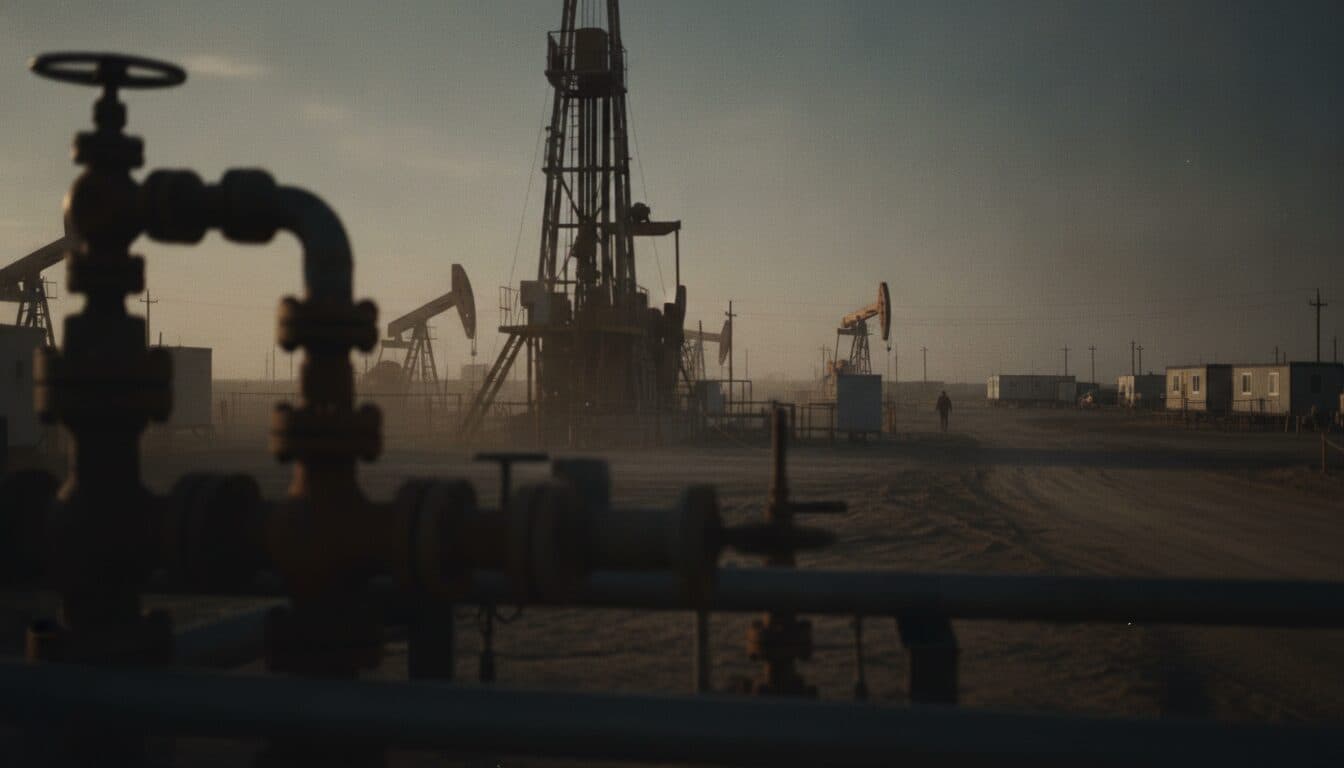
The conflict in Ukraine has dramatically escalated, extending its reach deep into the Caspian Sea with a series of Ukrainian drone strikes on Saturday, July 25, 2026. These long-range attacks targeted a Russian oil field, a missile boat, and crucially, vessels allegedly involved in transporting Iranian drones and military cargo to Russia. The incident marks a significant expansion of the battlefield and a direct assault on a vital, less-exposed supply line between Russia and Iran, carrying substantial geopolitical and economic implications.
Ukrainian President Volodymyr Zelenskyy confirmed the strikes, asserting that Ukrainian forces achieved “very strong results” with long-range attacks in the Caspian Sea. He specifically mentioned hits against “vessels used in military cargo shipments involving Iran, as well as a warship.” The Security Service of Ukraine (SSU) provided further details, identifying the targets as an offshore oil extraction platform at the Filanovsky field, a Project 12418 Molniya missile boat, and two cargo vessels, the Port Olya 2 and the Begey. The SSU maintains these cargo vessels were under international sanctions and actively engaged in military transport between Iran and Russia, solidifying Ukraine’s stance that such vessels are legitimate military targets given Iran’s alleged role as an accomplice in Russian aggression.
The immediate fallout was palpable. Iranian Foreign Minister Abbas Araghchi confirmed the death of one sailor and injuries to several others on an Iranian commercial vessel, identified by the BBC as the “Ana,” an Iran-owned dry cargo ship. Araghchi vehemently condemned the attack as an “act of aggression” and a “blatant UN Charter violation,” issuing a warning of retaliation. He further accused Israel of instigating the attack to “drag Europe into its war,” a claim that adds another layer of complexity to the unfolding crisis. Iran’s Foreign Ministry insisted the attacked vessel was a commercial ship en route from the Russian port of Astrakhan to Iran’s Enzeli Port, denying any intervention in the Russia-Ukraine conflict. Russian Foreign Minister Sergey Lavrov echoed this, stating the “Ana” was carrying civilian cargo and had departed from Astrakhan.
Geopolitical and Economic Impact of Caspian Sea Strikes
The Caspian Sea strikes carry profound geopolitical and economic ramifications. For Russia and Iran, the Caspian Sea has become an increasingly vital and less exposed route for trade, particularly as Western sanctions and supply chain pressures have intensified. Both nations have relied on this waterway as a critical workaround for economic and military exchanges. Ukraine and Western officials have long accused Iran of supplying Russia with Shahed drones and other military technology for use in the war, with military goods reportedly flowing in both directions via this route. This attack directly challenges that reliance, potentially disrupting the flow of crucial military hardware and sanctioned goods.
For Ukraine, the strikes underscore its expanding long-range capabilities and a determined strategy to disrupt industries and logistics supporting Russia’s war efforts. This is not the first time Ukraine has targeted this route; a cargo ship reportedly loaded with Shahed drone components and Iranian munitions was destroyed in the Caspian Sea in August 2025. The recent success in hitting multiple targets demonstrates a clear escalation in both intent and capability, signaling that no route supporting Russia’s war machine is beyond Kyiv’s reach.
“The Caspian Sea has evolved from a relatively quiet regional waterway into a critical artery for a global conflict. Disrupting this route isn’t just about sinking a ship; it’s about severing a lifeline that both Russia and Iran have come to depend on heavily to circumvent international pressure.”
The diplomatic fallout has been swift. Iran summoned Ukraine’s chargé d’affaires in Tehran, expressing its outrage. Despite the heated rhetoric, a phone conversation between Ukrainian Foreign Minister Andrii Sybiha and Iranian Foreign Minister Abbas Araghchi on Tuesday, July 28, 2026, marked their first direct contact since the vessel attack. This dialogue, however fraught, suggests a complex diplomatic tightrope walk, as both sides weigh the consequences of further escalation.
What’s Next: Future Implications and Expert Predictions
The immediate future holds significant uncertainty. Iran’s call for retaliation and accusations against Israel suggest a potential widening of the conflict’s scope, even if such claims are met with skepticism by the international community. The incident also raises questions about the security of commercial shipping in the Caspian Sea, potentially driving up insurance costs and deterring legitimate trade. For Russia, the disruption of this supply route could force a re-evaluation of its logistical strategies and deepen its reliance on more vulnerable overland routes or more costly air transport.
Experts predict that Ukraine will continue to leverage its long-range capabilities to target strategic assets and supply lines, regardless of their proximity to the conventional front lines. The Caspian Sea strikes serve as a powerful message that Ukraine possesses the means and the will to inflict economic and military pain far beyond its borders. Investors should closely monitor the stability of shipping routes and energy infrastructure in the broader Black Sea and Caspian regions, as further disruptions could impact global commodity prices and supply chains. The potential for Iran to be drawn more explicitly into the conflict, beyond its alleged drone supplies, remains a critical wildcard.
Key Takeaway for Readers and Investors
The Ukrainian strikes in the Caspian Sea represent a significant turning point in the ongoing conflict, directly impacting the crucial Russia-Iran supply route. This escalation not only demonstrates Ukraine’s expanding military capabilities but also highlights the increasing interconnectedness of global conflicts and their economic consequences. For businesses and investors, the incident underscores the growing risks to international trade and supply chains, particularly in regions adjacent to geopolitical flashpoints. The disruption of a key supply line between two sanctioned nations reliant on each other suggests a new phase of economic warfare, demanding careful analysis of market vulnerabilities and geopolitical shifts. The Caspian Sea strikes are a stark reminder that the ripple effects of conflict can extend far beyond conventional battlegrounds, reshaping global commerce and political alliances.