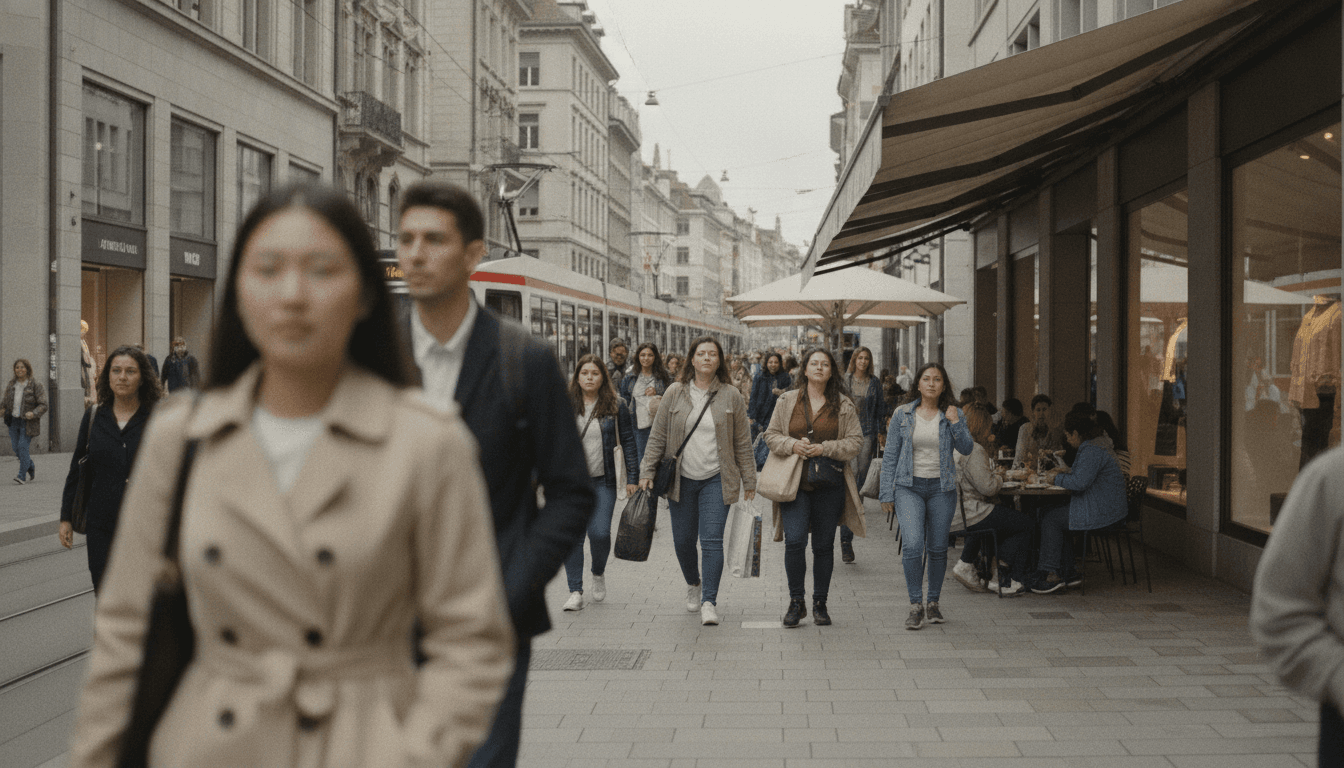
A critical Switzerland population cap vote is set to take place tomorrow, June 14, 2026, a decision that could profoundly reshape the economic and social fabric of one of the world’s most stable nations. This referendum, spearheaded by the right-wing Swiss People’s Party (SVP), proposes to limit Switzerland’s permanent resident population to 10 million by 2050, a contentious move drawing comparisons to a ‘Swiss Brexit’ due to its potential to sever key ties with the European Union and reverberate across global markets.
Switzerland, a nation renowned for its precision engineering, financial prowess, and stunning alpine landscapes, has witnessed rapid demographic shifts. Its population has surged from 7.3 million in 2002 to over 9.1 million by the close of 2025, with foreign nationals now comprising approximately 27-28% of its residents. This growth, largely immigration-driven, has sparked intense debate over resource strain, cultural identity, and economic sustainability.
The ‘No to Ten Million Switzerland’ Initiative
The ‘No to ten million Switzerland’ initiative, also known as the ‘Sustainability Initiative,’ is remarkably specific in its demands. Should the permanent resident population exceed 9.5 million before 2050, the Federal Council and Parliament would be compelled to implement measures to curb growth, focusing on asylum and family reunification. The more drastic clause, however, triggers if the population hits the 10 million mark – a threshold potentially reached between 2033 and 2041. At this point, Switzerland would be obligated to terminate international agreements contributing to population growth, most notably its free-movement agreement with the European Union.
Polling data leading up to the vote paints a picture of a deeply divided electorate. Early polls in late 2025 showed a slight lead for the ‘yes’ camp, with 48% in favor. However, more recent surveys indicate significant fluctuation: a May 2026 GFS Bern poll registered 52% in opposition, while an April 2026 Tamedia and 20 Minuten survey reported 52% in favor. This volatility underscores the profound internal divisions and the uncertainty surrounding tomorrow’s outcome for the Switzerland population cap vote.
Economic and Social Crossroads
The economic implications of a Switzerland population cap are at the forefront of the debate. Proponents, primarily the SVP, argue that unchecked immigration is straining infrastructure – housing, transport, schools, and healthcare – and contributing to rising rents and perceived increases in crime. Thomas Matter, a Swiss banker and parliamentarian, articulated this sentiment, stating,
“More and more people are living in the same space.”
They also voice concerns about the potential erosion of Swiss identity.
Conversely, the Swiss government, parliament, and a broad coalition of political parties and business groups vehemently oppose the initiative. They warn of severe damage to the nation’s economy, which relies heavily on skilled foreign workers for its world-leading pharmaceutical, banking, technology, and advanced manufacturing sectors. Experts like Marianna Griffini and Mindy Marks from Northeastern University have expressed bewilderment, highlighting the potential for “drastic” economic consequences and questioning the long-term strategic wisdom of such a move. Limiting the labor supply could reduce annual GDP growth, affect corporate earnings, and stifle investment activity, with industries like healthcare, hospitality, IT, and construction particularly vulnerable to exacerbated labor shortages.
Global Ramifications of the Switzerland Population Cap Vote
Beyond domestic concerns, the global ramifications of the Switzerland population cap vote are substantial. The potential termination of the free-movement agreement with the EU is a critical concern. This could rupture Switzerland’s relationship with its largest trading partner, jeopardizing access to the EU’s $21 trillion economy and 450 million consumers. Such a move would undoubtedly impact the Swiss franc, a traditional safe-haven currency, as economic expectations shift.
Demographically, Switzerland faces an aging population and falling birth rates, with just 1.3 children per woman in 2024. Opponents of the initiative argue that immigration is vital to sustain the social security system and pension schemes, as younger immigrants contribute significantly more in payroll taxes than they receive in benefits. A reduction in immigration could lead to higher health insurance premiums and a decline in pension funding, creating a demographic time bomb.
Switzerland’s direct democracy system, which allows citizens to force nationwide votes on initiatives gathering over 100,000 signatures, has brought this unique proposal to the fore. While many nations implement immigration controls, Philippe Wanner of the University of Geneva notes that no country has ever explicitly voted to cap its total population. This makes tomorrow’s vote a fascinating and critical test case, reflecting broader European anxieties about immigration, housing, and national identity.
As the world watches, the outcome of the Switzerland population cap vote will not only determine the future trajectory of this Alpine nation but also serve as a barometer for public sentiment on immigration, economic interdependence, and the delicate balance between national sovereignty and global integration. The decision tomorrow will resonate far beyond Switzerland’s borders, offering crucial insights into the evolving political landscape of Europe and beyond.